THE CLASSIC COLLECTION✦An outlaw’s diary: the CommuneCLASSIC FREE BOOKS
An outlaw’s diary: the Commune
Cécile Tormay
THE CLASSIC COLLECTION · 1890
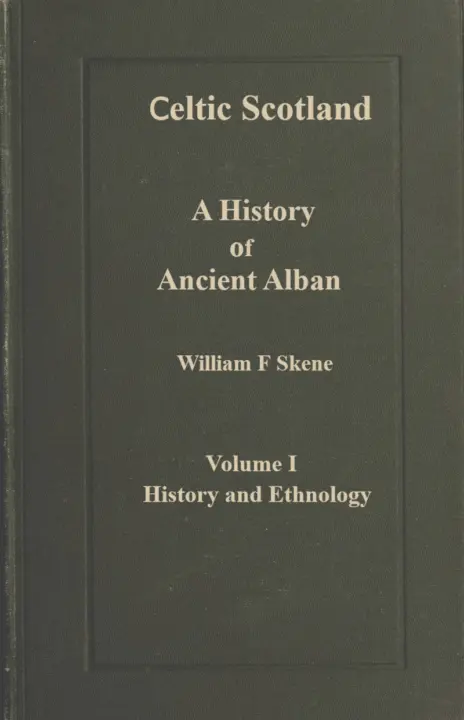
"Celtic Scotland: A History of Ancient Alban" by William F. Skene is a historical account written in the late 19th century. The work delves into the early civil history, ethnology, and the complex cultural landscape of ancient Scotland, known as Alban, during the Celtic period. This meticulous exploration aims to sift through historical inaccuracies to present a clearer picture of Scotland's early historical narratives. At the start of the book, the author outlines the challenging task of revisiting early Scottish history by critically evaluating the sources and narratives that have long been accepted. He expresses a desire to discard the elaborate but often inaccurate histories constructed by earlier writers, such as John of Fordun, in favor of a more authentic representation based on trustworthy authorities. The initial chapters introduce key historical events such as the Roman invasions and the political landscape of ancient Britain, establishing the groundwork for a nuanced discussion of the various tribes and their interactions with one another and with invading forces.
Introduction adapted from the source catalogue; source summaries may be automatically generated.
Free to read · English · 191,540 words · No account needed
MAKE TIME FOR A GOOD BOOK
On by default. Untick to stop anonymous reading totals. Each page counts after 10 seconds in view. How this works.
Anonymous counting is on unless you have switched it off.
The name Bruidhe appears among the kings of O’Faly in Leinster, and in the Annals of the Four Masters in the form of Bruaideadh. We find in Ireland analogous names to these of the thirty Brudes applied to districts. In Leinster we have Tola and Fortola (An. IV. M. 571). In Ulster in Tirconnell, Guill and Irguill (ib. 718). In Alban, Dobhar and Irdobhar. In this list Cal and Urcal, etc., and in one of the Welsh pedigrees Cein, son of Gwrcein, son of Doli, son of Gwrdoli, son of Dubhn, son of Gwrdubhn. In the Manumissions of Bodmin we have as Cornish forms Guest, Wurguest, Ceint, Wurceint. This will show the exact position of this form as between Irish and Cornish. The author is inclined to think that this legend of the thirty Brudes whose names were given to their portions of land is based upon the Irish system of land denominations, as that of the seven sons of Cruithne evidently was. There were thirty townships or baile betaghs in a barony or triocha ced, and the Irish Annals tell us that the mythic King Ollamh Fodla ‘appointed a Taoisech over every triocha ced and a Brughaidh over every baile.’—An. Four Masters, vol. i. p. 53.
Footnote 256:
Brev. Ab., Pars Hyem. f. xxii.
Footnote 257:
The following words may be cited as examples of the interchange of S and D in Gaelic:—Suil, Duil, hope; Seangan, Deangan, an ant; Seas, Deas, stay; Samh, Damh, learning; Seirc, Deirc, almsgiving; Sonnach, Tonnach, a wall.
Footnote 258:
Welsh G passes into D in Gel, W., Daoil, Ir., a leech; Gloin, W., Dealan, Ir., coal; Gwneyd, W., Deanadh, Ir., do.; Gobaith, W., Dobhchais, Ir., hope. St. Drostan was son of Cosgrich, and nephew of Saint Columba, and a Scot by descent.
Footnote 259:
F, or as it is written in Welsh Ff, passes into P in Irish, as in Kyf, lame, Ir. ceap, etc. Of the two Alpins in the list, the father of the first is not given, but, as we shall see afterwards, his father was a Dalriadic Scot. The father of the second was Wroid; this is near the Cornish form, which would be Uored. In this form the name appears in an inscription on one of the sculptured stones at St. Vigeans. Mr. Whitley Stokes thus reads it:—
Drosten:
Ipe uoret
Elt For
Cus.
It is a good specimen of the mixture of forms we find in this part of the Pictish territory. Drosten is not a Welsh form but Gaelic; Ipe Uoret, Cornish; and Forcus unmistakably Irish. See Adamnan, ed. 1874, p. 120, for Forcus. An Ogham inscription on a stone at Aboyne has been thus read:—
Neahhtla robbait ceanneff
Maqqoi Talluorrh.
Your reading position is saved on this browser. Take it to another device with a library code. Reading pages adapt to text, rather than matching a printed edition.
BEHIND THE BOOK
This eBook is for the use of anyone anywhere in the United States and most other parts of the world at no cost and with almost no restrictions whatsoever. You may copy it, give it away or re-use it under the terms of the Project Gutenberg License included with this eBook or online at www.gutenberg.org. If you are not located in the United States, you will have to check the laws of the country where you are located before using this eBook. Read the source licence.
The original source file, including credits and licence, is retained by this library. Request an original-format copy at no charge. Please include the book title and Project Gutenberg identifier #71258.
KEEP YOUR CURIOSITY GOING
Cécile Tormay

Moritz Busch
John L. Ransom
Frances Wright
Cécile Tormay

Mabel Potter Daggett