THE CLASSIC COLLECTION✦An outlaw’s diary: the CommuneCLASSIC FREE BOOKS
An outlaw’s diary: the Commune
Cécile Tormay
THE CLASSIC COLLECTION · 1890
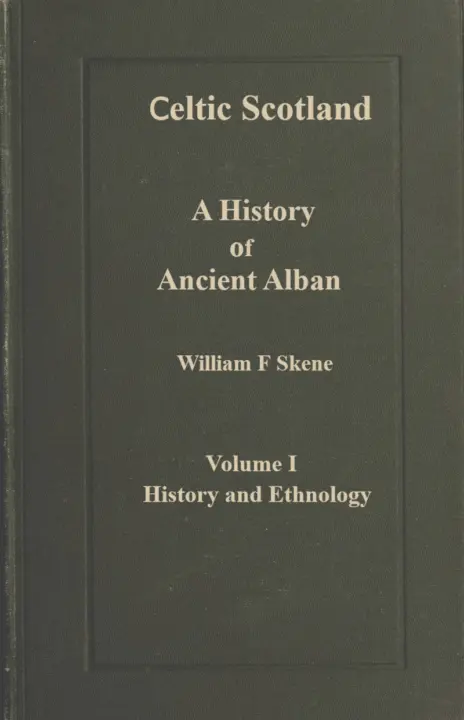
"Celtic Scotland: A History of Ancient Alban" by William F. Skene is a historical account written in the late 19th century. The work delves into the early civil history, ethnology, and the complex cultural landscape of ancient Scotland, known as Alban, during the Celtic period. This meticulous exploration aims to sift through historical inaccuracies to present a clearer picture of Scotland's early historical narratives. At the start of the book, the author outlines the challenging task of revisiting early Scottish history by critically evaluating the sources and narratives that have long been accepted. He expresses a desire to discard the elaborate but often inaccurate histories constructed by earlier writers, such as John of Fordun, in favor of a more authentic representation based on trustworthy authorities. The initial chapters introduce key historical events such as the Roman invasions and the political landscape of ancient Britain, establishing the groundwork for a nuanced discussion of the various tribes and their interactions with one another and with invading forces.
Introduction adapted from the source catalogue; source summaries may be automatically generated.
Free to read · English · 191,540 words · No account needed
MAKE TIME FOR A GOOD BOOK
On by default. Untick to stop anonymous reading totals. Each page counts after 10 seconds in view. How this works.
Anonymous counting is on unless you have switched it off.
Fluviusque ejusdem loci in quo idem baptisma acceperat, ex nomine ejus, Dobur Artbranani usque in hodiernum nominatus diem, ab accolis vocitatur (B. i. c. 27). An old Irish Glossary, quoted by O’Reilly, under Aidhbheis, has
Bior, is An agas Dobhar
Tri hanmann d’uisce an domhain.
Bior and An and Dobar,
Three names for water in the world.
Footnote 239:
Quidam cum tota plebeius familia (B. ii. c. 33).
Footnote 240:
Ibidemque quidam repertus senex, Emchatus nomine, audiens a Sancto verbum Dei prædicatum, et credens, baptizatus est (B. iii. c. 15).
Footnote 241:
Acceptisque eorum uxoribus et filiabus in conjugium, omnes earum linguas amputaverunt, ne eorum successio maternam linguam disceret.
Footnote 242:
Chron. Picts and Scots, p. 160.
Footnote 243:
Sure condicioun qe lour issu parlascent Irrays, quel patois demurt a iour de huy du haute pays entre lez uns, qest dit Escotoys.—Ib. p. 199.
Footnote 244:
Reginald of Durham, writing in the last half of the twelfth century, mentions, in 1164, Kirkcudbright as being ‘in terra Pictorum,’ and calls their language ‘sermo Pictorum.’—Libellus, c. lxxxiv.
Footnote 245:
Sequitur in eodem latere, et littore occidentali, Gallovidia.... Ea magna ex parte patrio sermone adhuc utitur.—Buchanan, Rerum Scoticarum Hist., Lib. ii. 27.
Footnote 246:
Laing’s Poems of William Dunbar. Chalmers’s Poems of Sir David Lyndesay, vol. ii. p. 350. Mr. Burton, in his chapter on ‘The Early Races’ (Hist. vol. i. p. 206), makes the assertion that the Gaelic of Scotland ‘was ever called by the Teutonic Scots, Irish, Ersch, or Erse.’ In this he is mistaken. It was not so called before the fifteenth century, but invariably ‘Lingua Scotica,’ or Scotch.
Footnote 247:
The inference as to the language of the Picts is the same, even though Chalmers’ imaginary colony of Irish Cruithne in the seventh century really took place.
Footnote 248:
The author has thrown these materials into the form of an alphabetical list, which will be found in the Appendix I., with a comparison with similar words and names in the other dialects.
Footnote 249:
The names of the primary colours which enter into the composition both of names, persons, and places will illustrate this:—
Gaelic. Welsh.
Ban } white Cán } white
Finn } Gwyn }
Breac } speckled Brych } speckled
Brit } Brith }
Ciar } black Du black
Dubh
Glas green Glas green, blue
Gorm blue Gwrm brown
Liath grey Llwyd gray
Dearg } red Coch } red
Ruadh } Rhudd }
Here some are so alike as to afford no test, others again are different from each other; but those in which the phonetic differences occur—as Finn, Gwyn; Ban, Cán—afford at once a test of the dialect. Again, the features of the face and form enter both into epithets and names of places. We may take a few—
Your reading position is saved on this browser. Take it to another device with a library code. Reading pages adapt to text, rather than matching a printed edition.
BEHIND THE BOOK
This eBook is for the use of anyone anywhere in the United States and most other parts of the world at no cost and with almost no restrictions whatsoever. You may copy it, give it away or re-use it under the terms of the Project Gutenberg License included with this eBook or online at www.gutenberg.org. If you are not located in the United States, you will have to check the laws of the country where you are located before using this eBook. Read the source licence.
The original source file, including credits and licence, is retained by this library. Request an original-format copy at no charge. Please include the book title and Project Gutenberg identifier #71258.
KEEP YOUR CURIOSITY GOING
Cécile Tormay

Moritz Busch
John L. Ransom
Frances Wright
Cécile Tormay

Mabel Potter Daggett