THE CLASSIC COLLECTION✦An outlaw’s diary: the CommuneCLASSIC FREE BOOKS
An outlaw’s diary: the Commune
Cécile Tormay
THE CLASSIC COLLECTION · 1890
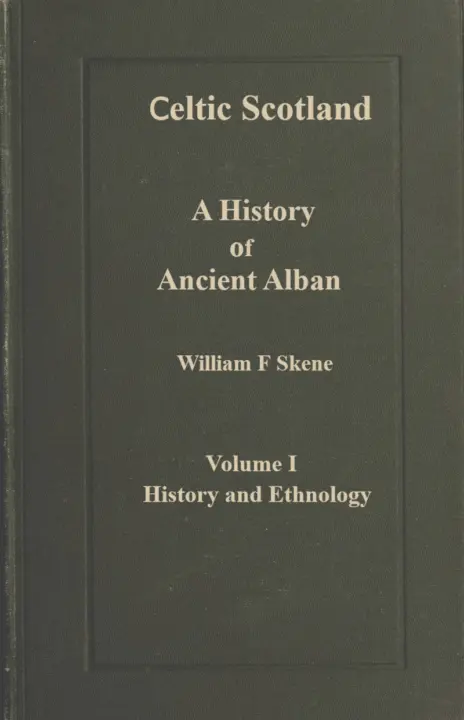
"Celtic Scotland: A History of Ancient Alban" by William F. Skene is a historical account written in the late 19th century. The work delves into the early civil history, ethnology, and the complex cultural landscape of ancient Scotland, known as Alban, during the Celtic period. This meticulous exploration aims to sift through historical inaccuracies to present a clearer picture of Scotland's early historical narratives. At the start of the book, the author outlines the challenging task of revisiting early Scottish history by critically evaluating the sources and narratives that have long been accepted. He expresses a desire to discard the elaborate but often inaccurate histories constructed by earlier writers, such as John of Fordun, in favor of a more authentic representation based on trustworthy authorities. The initial chapters introduce key historical events such as the Roman invasions and the political landscape of ancient Britain, establishing the groundwork for a nuanced discussion of the various tribes and their interactions with one another and with invading forces.
Introduction adapted from the source catalogue; source summaries may be automatically generated.
Free to read · English · 191,540 words · No account needed
MAKE TIME FOR A GOOD BOOK
On by default. Untick to stop anonymous reading totals. Each page counts after 10 seconds in view. How this works.
Anonymous counting is on unless you have switched it off.
Colgan considers that it was Ireland which was formerly called Chorischia and not Scotia; but as the sentence follows the settlements in Scotland, it seems more applicable to that country, and elsewhere in the Acts Scotia is used for Scotland. The word Chorischia is probably taken from what Tacitus says of the Horesti. The passage is this: ‘Nec satis, post pelagus Britanniæ contiguum perlegentes, per Rosim amnem, Rossiam regionem manserunt; Rigmonath quoque Bellethor urbes, a se procul positas, petentes, possessuri vicerunt; sicque totam terram suo nomine Chorischiam nominatam, post cujusdam Lacedemonii Aeneæ filium nomine Nelum seu Niulum, qui princeps eorum fuerat, et olim Ægyptiam conjugem bello meruerat, nomine Scottam, ex vocabulo conjugis, patrio sermone depravato, Scotiam vocaverunt.’
Footnote 212:
Æneas the Lacedæmonian is obviously the Fenius Farsadh of the other
legend.
Footnote 213:
The Albanic Duan gives him a reign of ten years, and to Fergus twenty-seven in place of three. Taking A.D. 501 as the date of Fergus’s death, this would place the settlement of the Dalriads in 461.
Footnote 214:
There is a native fort in the island of St. Kilda called Dunfhirbolg.
Footnote 215:
Scotti qui nunc corrupte vocantur Hibernienses quasi Sciti, quia a Scithia regione venerunt et inde originem duxerunt; sive a Scotta filia Pharaonis regis Egypti, que fuit, ut fertur, regina Scottorum.—Chron. Picts and Scots, p. 3.
Albani de quibus originem duxerunt Scoti et Picti.—Ib.
Footnote 216:
See Chron. Picts and Scots, pp. 4 and 24.
Footnote 217:
Chronicles of the Picts and Scots, p. 319.
Footnote 218:
602 Cath Cuile Cail in quo Fiachaidh mac Baedan victor erat.
608 Bass Fiachach chraich mic Baedan la Cruithnachu, p. 68.
Footnote 219:
Chron. Picts and Scots, p. 52.
Footnote 220:
The word is Ruirig, plural of Ruire, a champion, a knight; also
Dominus, a lord.
Footnote 221:
Bede, Ec. Hist. B. i. c. xv.
Footnote 222:
Nennius implies in a part of his legend of Hengist and Guorthegirn that Hengist’s people came ‘de insula Oghgul,’ which is probably Heligoland.
Footnote 223:
There are two poems which preserve Saxon traditions connected with the mainland. These are the Battle of Finnesburgh, and Beowulf. Kemble considers that they were nearly contemporary with the events they relate, and not far removed from the coming of Hengist and Horsa into Britain. They describe a war between Hengist, an Eoten and vassal of the king of Denmark, and Finn, son of Folcwald, king of the Frisians. Nennius makes Finn, son of Folcgwald, grandfather of his Woden.
Footnote 224:
Zeuss, Die Deutschen und die Nachbarstämme, p. 141. Nennius has ‘Omne genus Ambronum, id est Aldsaxonum Saxonum;’ and again, ‘Et nunquam addiderunt Saxones Ambronem ut a Pictis vectigal exigerent.’
Footnote 225:
Mannert, Geographie, iii. 330.
Footnote 226:
Zeuss inclines to the latter view; see Nachbarstamme, p. 938.
Footnote 227:
Your reading position is saved on this browser. Take it to another device with a library code. Reading pages adapt to text, rather than matching a printed edition.
BEHIND THE BOOK
This eBook is for the use of anyone anywhere in the United States and most other parts of the world at no cost and with almost no restrictions whatsoever. You may copy it, give it away or re-use it under the terms of the Project Gutenberg License included with this eBook or online at www.gutenberg.org. If you are not located in the United States, you will have to check the laws of the country where you are located before using this eBook. Read the source licence.
The original source file, including credits and licence, is retained by this library. Request an original-format copy at no charge. Please include the book title and Project Gutenberg identifier #71258.
KEEP YOUR CURIOSITY GOING
Cécile Tormay

Moritz Busch
John L. Ransom
Frances Wright
Cécile Tormay

Mabel Potter Daggett