THE CLASSIC COLLECTION✦An outlaw’s diary: the CommuneCLASSIC FREE BOOKS
An outlaw’s diary: the Commune
Cécile Tormay
THE CLASSIC COLLECTION · 1890
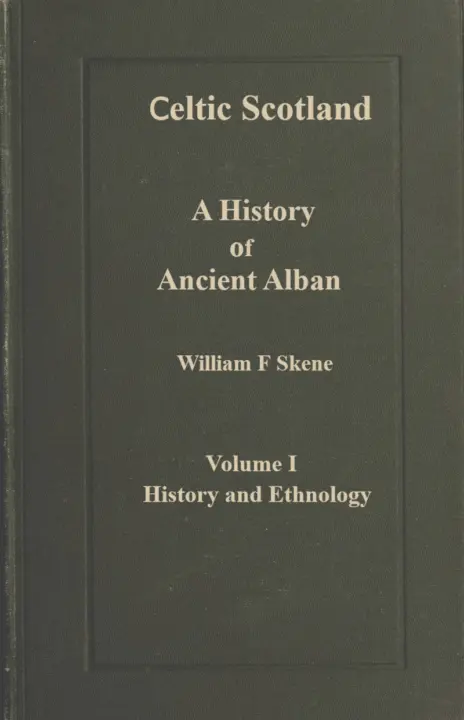
"Celtic Scotland: A History of Ancient Alban" by William F. Skene is a historical account written in the late 19th century. The work delves into the early civil history, ethnology, and the complex cultural landscape of ancient Scotland, known as Alban, during the Celtic period. This meticulous exploration aims to sift through historical inaccuracies to present a clearer picture of Scotland's early historical narratives. At the start of the book, the author outlines the challenging task of revisiting early Scottish history by critically evaluating the sources and narratives that have long been accepted. He expresses a desire to discard the elaborate but often inaccurate histories constructed by earlier writers, such as John of Fordun, in favor of a more authentic representation based on trustworthy authorities. The initial chapters introduce key historical events such as the Roman invasions and the political landscape of ancient Britain, establishing the groundwork for a nuanced discussion of the various tribes and their interactions with one another and with invading forces.
Introduction adapted from the source catalogue; source summaries may be automatically generated.
Free to read · English · 191,540 words · No account needed
MAKE TIME FOR A GOOD BOOK
On by default. Untick to stop anonymous reading totals. Each page counts after 10 seconds in view. How this works.
Anonymous counting is on unless you have switched it off.
Sub hujus autem prominentis vertice Sinus dehiscit incolis Oestrymnicus, In quo insulæ sese exserunt Oestrymnides Laxe jacentes, et metallo divites Stanni atque plumbi. Multa vis hic gentis est, Superbus animus, efficax sollertia, Negotiandi cura jugis omnibus: Notisque cymbis turbidum late fretum, Et belluosi gurgitem Oceani secant: Non hi carinas quippe pinu texere, Acereve norunt, non abiete, ut usus est, Curvant faselos; sed rei ad miraculum, Navigia junctis semper aptant pellibus Corioque vastum sæpe percurrunt salum. * * * * * Tartessiisque in terminos Oestrymnidem Negotiandi mos erat.
Footnote 190:
Sed summum contra sacram cognomine, dicunt quam Caput Europae, sunt Stanni pondere plenae Hesperides: populus tenuit quas fortes Iberi.—Prisc. Per.
Footnote 191:
Cave Hunting, by W. Boyd Dawkins, M.A., 1874, p. 191.
Footnote 192:
See The Beauties of the Boyne, by Sir William R. Wilde, 1850, p. 228, for an account of the Irish skulls.
Footnote 193:
Cave Hunting, p. 214. For the facts on which these conclusions are based, reference is made to this work and that of Sir William Wilde.
Footnote 194:
The author does not import anything from the Bards, as it is difficult to say how far they contain genuine tradition, or have been manipulated by Geoffrey of Monmouth. The author confines himself as much as possible to Welsh documents before his time, and the so-called Historical Triads he rejects as entirely spurious.
Footnote 195:
The Leabhar Gabhala, or Book of Conquests, is, strictly speaking, the work of Michael O’Clery, one of the compilers of the Annals of the Four Masters, but it is founded upon older documents, and upon a more ancient Book of Invasions, a fragment of which is contained in the Leabhar na Huidhri and the Book of Leinster, and complete editions in the Books of Ballimote and Leacan. A full account of it will be found in O’Curry’s Lectures on the MS. Materials, p. 168. It is much to be desired that this ancient tract should be published.
Footnote 196:
This account of these legendary colonies is abridged from Keating, who takes it from the Book of Conquests.
Footnote 197:
Chronicles of the Picts and Scots, p. 30.
Footnote 198:
See Irish Nennius, p. 221.
Footnote 199:
Chron. Picts and Scots, p. 45.
Footnote 200:
This seems clearly implied. Gillacaoman, in a poem quoted by Colgan, A.SS. p. 198, also identifies the Nemedians with the Tuatha de Danaan. Two of the three bands of the Nemedians who left Erin, according to the Book of Conquests, seem obviously the same—the one under Fergus Leth Derg settling in a district in Alban called Dobhar and Iardobhar, and the Tuatha De Danaan coming to Erin from the same district.
Footnote 201:
O’Curry, Lectures on MS. Materials, p. 223.
Footnote 202:
Your reading position is saved on this browser. Take it to another device with a library code. Reading pages adapt to text, rather than matching a printed edition.
BEHIND THE BOOK
This eBook is for the use of anyone anywhere in the United States and most other parts of the world at no cost and with almost no restrictions whatsoever. You may copy it, give it away or re-use it under the terms of the Project Gutenberg License included with this eBook or online at www.gutenberg.org. If you are not located in the United States, you will have to check the laws of the country where you are located before using this eBook. Read the source licence.
The original source file, including credits and licence, is retained by this library. Request an original-format copy at no charge. Please include the book title and Project Gutenberg identifier #71258.
KEEP YOUR CURIOSITY GOING
Cécile Tormay

Moritz Busch
John L. Ransom
Frances Wright
Cécile Tormay

Mabel Potter Daggett