THE CLASSIC COLLECTION✦An outlaw’s diary: the CommuneCLASSIC FREE BOOKS
An outlaw’s diary: the Commune
Cécile Tormay
THE CLASSIC COLLECTION · 1890
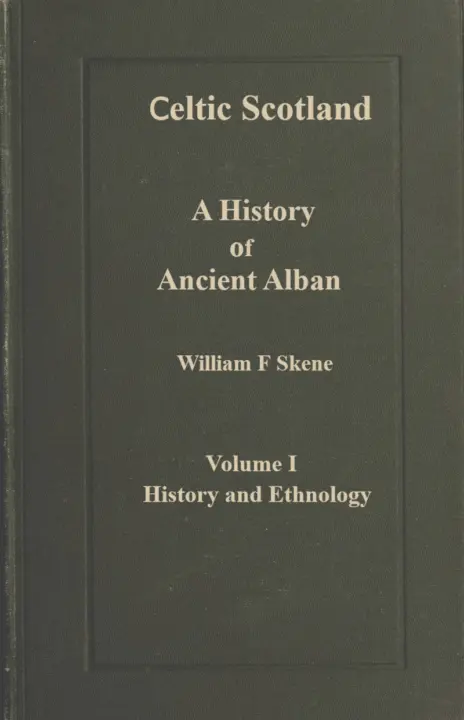
"Celtic Scotland: A History of Ancient Alban" by William F. Skene is a historical account written in the late 19th century. The work delves into the early civil history, ethnology, and the complex cultural landscape of ancient Scotland, known as Alban, during the Celtic period. This meticulous exploration aims to sift through historical inaccuracies to present a clearer picture of Scotland's early historical narratives. At the start of the book, the author outlines the challenging task of revisiting early Scottish history by critically evaluating the sources and narratives that have long been accepted. He expresses a desire to discard the elaborate but often inaccurate histories constructed by earlier writers, such as John of Fordun, in favor of a more authentic representation based on trustworthy authorities. The initial chapters introduce key historical events such as the Roman invasions and the political landscape of ancient Britain, establishing the groundwork for a nuanced discussion of the various tribes and their interactions with one another and with invading forces.
Introduction adapted from the source catalogue; source summaries may be automatically generated.
Free to read · English · 191,540 words · No account needed
MAKE TIME FOR A GOOD BOOK
On by default. Untick to stop anonymous reading totals. Each page counts after 10 seconds in view. How this works.
Anonymous counting is on unless you have switched it off.
The Irish Nennius gives us three words as the three old names of Ireland—Eire, Fodla, Banba—derived from three queens of the Tuatha De Danann. According to the legend, however, these Tuatha De Danann came to Ireland from Alban, or Scotland, where they inhabited a territory called Dohbar and Iardohbar, obviously of Gaelic form; and in the north-eastern Lowlands we find these three words entering into the topography. On the south shore of the Moray Firth we have the river Eren, now the Findhorn, and Banbh, now Banff. The word Fodla enters into the name of Atholl; and in Perthshire we have again Banbh, or Banff, and Ereann, now the river Earn.[274]
Having thus passed rapidly under review the local names reported to us by these early writers, we come now to deal with the topography of these districts, as it presents itself in the present day, and to consider what light we may derive from it as to the race and language of those who imposed these local names. Here, at the outset, we are met by the argument which is usually urged and popularly considered to be conclusive. It may be thus stated in the words of Mr. Isaac Taylor:—‘Inver and Aber are also useful test words in discriminating between the two branches of the Celts (the Cymric and the Gaelic).... If we draw a line across the map from a point a little south of Inveraray to one a little north of Aberdeen, we shall find that (with very few exceptions) the Invers lie to the north of the line, and the Abers to the south of it. This line nearly coincides with the present southern limit of the Gaelic tongue, and probably also with the ancient division between the Picts and the Scots.’[275] This would be a plausible view if it were true, but unfortunately there is no such line of demarcation between the two words; and though it may be true that it would nearly coincide with the present southern limit of the Gaelic, it is historically false that it was the ancient division between the Picts and the Scots. When we examine, however, the real distribution of these words, we find it very different from the representation of it given either by Mr. Kemble or by Mr. Taylor. South of Mr. Taylor’s line there are in Aberdeenshire thirteen Abers and twenty-six Invers; in Forfarshire eight Abers and eight Invers; in Perthshire nine Abers and eight Invers; and in Fifeshire four Abers and nine Invers. Again, on the north side of this supposed line there are twelve Abers extending across to the west coast, where they terminate with Abercrossan, now Applecross, in Rossshire. In Argyllshire alone, which was occupied by the Dalriadic Scots, there are no Abers. The true picture of the distribution of these two words north of the Firths of Forth and Clyde is this—in Argyllshire, Invers alone; in Inverness-shire and Ross-shire, Invers and Abers in the proportion of three to one and two to one; and on the south side of the supposed line, Abers and Invers in about equal proportions. But the distribution south of the Firths must not be overlooked. It has a material bearing on this question. If these words afford a test between British and Gadhelic, we might naturally expect to find as many Abers in what was the Strathclyde kingdom as in Wales; but there are no Abers in the counties of Selkirk, Peebles, Ayr, Renfrew, Lanark, Stirling, and Dumbarton, occupied by the Damnonii; four Abers in Dumfriesshire, and six in Lothian, occupied by the Selgovæ and Ottadeni, and none in Galloway occupied by the Picts; and when we proceed farther south we find nothing but Abers in Wales, and no appearance of them in Cornwall. These words, therefore, afford no test of dialectic difference, and do not possess those phonetic changes which would enable us to use them as a test. There were in fact three words used to express the position of rivers towards each other, or towards the sea—Aber, Inbher, and Cumber or Cymmer, which were originally common to both branches of the Celtic language. They obviously come from the same root, ‘Ber,’ and they do not show any phonetic differences. These words are severally retained in some dialects, and become obsolete in others.[276] Aber and Inver were both used by the southern Picts, though not quite in the same way, Inver being generally at the mouth of a river, Aber at the ford usually some distance from the mouth. Aber has become almost obsolete in Cornwall, part of Strathclyde, and among the northern Picts, where we can almost see the process by which it passes over into Apple, or Obair, in Scotland, and into Apple in Cornwall.[277] In Ireland Inver seems undergoing a similar process, being once very numerous, but now reduced to comparatively few names.
Your reading position is saved on this browser. Take it to another device with a library code. Reading pages adapt to text, rather than matching a printed edition.
BEHIND THE BOOK
This eBook is for the use of anyone anywhere in the United States and most other parts of the world at no cost and with almost no restrictions whatsoever. You may copy it, give it away or re-use it under the terms of the Project Gutenberg License included with this eBook or online at www.gutenberg.org. If you are not located in the United States, you will have to check the laws of the country where you are located before using this eBook. Read the source licence.
The original source file, including credits and licence, is retained by this library. Request an original-format copy at no charge. Please include the book title and Project Gutenberg identifier #71258.
KEEP YOUR CURIOSITY GOING
Cécile Tormay

Moritz Busch
John L. Ransom
Frances Wright
Cécile Tormay

Mabel Potter Daggett