THE CLASSIC COLLECTION✦Salve Venetia, gleanings from Venetian history; vol. IICLASSIC FREE BOOKS
Salve Venetia, gleanings from Venetian history; vol. II
F. Marion (Francis Marion) Crawford
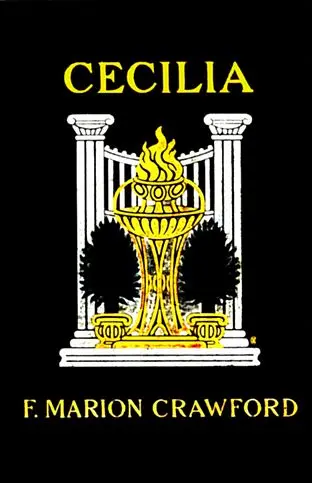
THE CLASSIC COLLECTION · 1902
“Cecilia: A Story of Modern Rome” by F. Marion Crawford is a novel written in the early 20th century. The story unfolds in the picturesque setting of Rome, focusing on the character of Cecilia Palladio, a modern Italian girl grappling with the complexities of love, identity, and societal expectations. The narrative touches on themes of duty, desire, and the conflict between personal aspirations and family obligations, particularly as Cecilia navigates her relationships with her friends and family. The opening of the novel introduces two central characters: Lamberto Lamberti, a rugged sailor and man of action, and Guido d'Este, an introspective dreamer with royal connections. They meet in a tranquil garden in Rome, where their conversation reveals the tension in Guido's life due to the demanding and exploitative nature of his aunt, the Princess Anatolie. As Lamberti offers his loyal friendship, Guido reveals his struggles with familial pressure and the threat of disgrace, highlighting the emotional depths both characters face. Their friendship contrasts with the expectations placed upon Guido by his aristocratic lineage, setting the stage for the ensuing complexities when Cecilia enters their lives and further intertwines their fates.
Introduction adapted from the source catalogue; source summaries may be automatically generated.
Free to read · English · 108,964 words · No account needed
MAKE TIME FOR A GOOD BOOK
On by default. Untick to stop anonymous reading totals. Each page counts after 10 seconds in view. How this works.
Anonymous counting is on unless you have switched it off.
Cecilia shrank a little in her corner of the deep phaeton and instinctively drew the edges of her little silk mantle together over her chest, as if to protect herself from something.
"You know," she said, almost sharply.
"I shall never understand you," her mother sighed.
"Give me time to understand myself, mother," answered the young girl, suddenly unbending. "I am only eighteen; I have never been into the world, and the mere idea of marrying----"
She stopped short, and her firm lips closed tightly.
"No, I do not understand," said the Countess. "The thought of marriage was never disagreeable to me, even when I was quite young. It is the natural object of a woman's life."
"There are exceptions, surely! There are nuns, for instance."
"Oh, if you wish to go into a convent----"
"I have no religious vocation," Cecilia answered gravely. "Or if I have, it is not of that sort."
"I am glad to hear it!" The Countess was beginning to lose her temper. "If you thought you had, you would be quite capable of taking the veil."
"Yes," the young girl replied. "If I wished to be a nun, and if I were sure that I should be a good nun, I would enter a convent at once. But I am not naturally devout, I suppose."
"In my time," said the Countess, with emphasis, "when young girls did not take the veil, they married."
As an argument, this was weak and lacked logic, and Cecilia felt rather
pitiless just then.
"There are only two possible ways of living," she said; "either by religion, if you have any, and that is the easier, or by rule."
"And pray what sort of rule can there be to take the place of religion?"
"Act so that the reason for your actions may be considered a universal
law."
"That is nonsense!" cried the Countess.
"No," replied Cecilia, unmoved, "it is Kant's Categorical Imperative."
"It makes no difference," retorted her mother. "It is nonsense."
Cecilia said nothing, and her expression did not change, for she knew that her mother could not understand her, and she was not at all sure that she understood herself, as she had almost confessed. Seeing that she did not answer, the excellent Countess took the opportunity of telling her that her head had been turned by too much reading, though it was all her poor, dear stepfather's fault, since he had filled her head with ideas. What she meant by "ideas" was not clear, except that they were of course dangerous in themselves and utterly subversive of social order, and that the main purpose of all education should be to discourage them in the young.
Your reading position is saved on this browser. Take it to another device with a library code. Reading pages adapt to text, rather than matching a printed edition.
F. Marion (Francis Marion) Crawford
F. Marion (Francis Marion) Crawford

F. Marion (Francis Marion) Crawford

F. Marion (Francis Marion) Crawford
BEHIND THE BOOK
This eBook is for the use of anyone anywhere in the United States and most other parts of the world at no cost and with almost no restrictions whatsoever. You may copy it, give it away or re-use it under the terms of the Project Gutenberg License included with this eBook or online at www.gutenberg.org. If you are not located in the United States, you will have to check the laws of the country where you are located before using this eBook. Read the source licence.
The original source file, including credits and licence, is retained by this library. Request an original-format copy at no charge. Please include the book title and Project Gutenberg identifier #31723.
KEEP YOUR CURIOSITY GOING
Coulson Kernahan

Maurice Baring
Frances Wright
Cécile Tormay

Frederic Jesup Stimson

W. H. P. (William Henry Pope) Jarvis