THE CLASSIC COLLECTION✦An outlaw’s diary: the CommuneCLASSIC FREE BOOKS
An outlaw’s diary: the Commune
Cécile Tormay
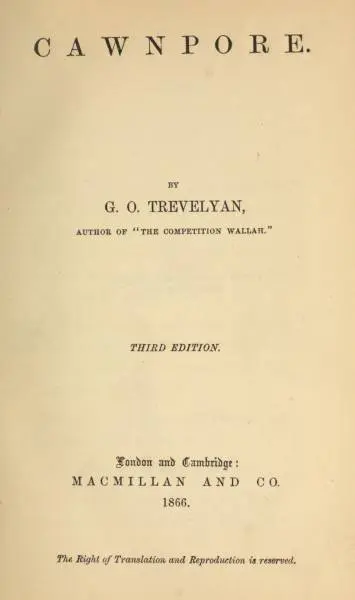
THE CLASSIC COLLECTION · 1866
"Cawnpore" by George Otto Trevelyan is a historical account written in the mid-19th century. The book delves into the events surrounding the violent upheaval at Cawnpore during the Indian Rebellion of 1857, focusing on the tensions between British colonial forces and local sepoy troops. Trevelyan's exploration is rich in details, particularly regarding the complexities of colonial power dynamics and human relationships in a time of growing unrest." "The opening of "Cawnpore" introduces the geographical and historical context of Cawnpore, emphasizing its significance as a military station and detailing the diverse population comprising British soldiers, civilians, and native troops. Trevelyan sets the stage for the looming crisis by discussing the uneasy state of relations between these groups, highlighting the underlying tensions festering among the sepoys. As the narrative unfolds, there are hints at unrest due to a combination of various grievances, including rumors about greased cartridges and other perceived insults to religious faiths, laying the groundwork for the insurrection that is to come."
Introduction adapted from the source catalogue; source summaries may be automatically generated.
Free to read · English · 82,027 words · No account needed
MAKE TIME FOR A GOOD BOOK
On by default. Untick to stop anonymous reading totals. Each page counts after 10 seconds in view. How this works.
Anonymous counting is on unless you have switched it off.
The mutineers showed every intention of enjoying their spell of liberty and domination. These revolted regiments were rapidly turning into mobs. The work of the batteries was left to the retainers of ambitious Rajahs; to pensioned gunners; and to such amateurs as had a stomach for fighting, and a taste for the shawls and cash lavished by the Nunhey Nawab. The sepoys, meanwhile, lounged in the shops which fringed the canal, eating sweetstuff with schoolboy avidity, and drinking sherbet to their hearts' content; or swaggered along the streets with a nonchalance copied from their reminiscences of the fashionable frequenters of the band-stand, criticizing the driving of those among their comrades who had been fortunate enough to lay their hands upon a buggy belonging to a British officer. No decent people were to be seen in the public places. No business was done in the main thoroughfares. The tradesmen, in piteous trepidation, eyed the passing scamps from behind their shutters, consoling their enforced idleness by recollecting in what angle of the garden their money was interred, and framing excuses against the probable visit of the Nana's tax-collector, or the possible return of the English authorities. The opium-sellers and the innkeepers, who in these days anterior to Mr. Wilson's budget had not attained to the dignity of licensed victuallers, alone drove a thriving trade. The warriors of the Religions smoked, and chewed, and snored supine, clad in cotton drawers and a pair of clumsy shoes; their necks encircled by the Brahminical thread, token of their privileged and sacred extraction. To this costume they superadded a red coat, at such times as the stings of conscience, or the reproaches of priest and paramour, drove them out to get a lazy shot at the infidels and an appetite for their curry.
The earliest care of the Nana had been to set on foot a respectable municipal organization. With this object in view, he appointed to the chief magistracy in the city one Hoolass Sing, who may have been a traitor, but was, apparently, only a time-server. This person was chosen by the advice of a deputation composed of the leading townsmen; a tent-maker, a jeweller, and a dealer in opiates. Hoolass Sing had no sinecure. It was only by the exercise of judicious firmness, alternating with seasonable pliability, that he contrived to protect Cawnpore from the rapacity of the soldiery, and the wrath of those rural nobles whose paternal acres had been sold by the English Government to recover arrears of land-tax, and purchased by moneyed cits, who wished to cut a figure in country society. The duty of victualling the troops was committed to a blind gentleman of the name of Moolla, who, doubtless, saw quite well enough to water the rice and omit to sift the meal. A burlesque judicial court was formed of Azimoolah, Jwala, Pershad, and other creatures of the Maharaja; and presided over by Baba Bliut, who delivered his decisions seated on a billiard-table in Mr. Duncan's hotel. This tribunal passed a variety of sentences without establishing any very valuable precedent. Once, in an unaccountable fit of morality, it sentenced a luckless rogue to lose his hand for theft; but, for obvious and selfish reasons, the judges appear to have refrained from again taking cognizance of this crime. A Mahomedan butcher was condemned to mutilation for having killed a cow; and certain individuals were paraded through the town on donkeys, "for disreputable livelihood:" a punishment which, when the charge was made known, must have excited very general sympathy and indignation. Gradually this body, like the Committee of Public Safety in the French Revolution, assumed to itself a supervision over every department of the administration. When the powder ran short, the principal dealer in saltpetre was thrown into prison, until he produced the requisite quantity of that article. A native merchant was required to provide cloaks for half a battalion, at the rate of two and threepence a-piece; a scale of payment which must have inspired him with an unaffected regret for the liberal contracts of the old Company. With a keener relish, Baba Bhut undertook to account for the Englishmen who still lurked about, watching for an opportunity of slipping away to Allahabad or Agra. On the eleventh of June, Mr. Williams, a writer in one of the public offices, was traced out and slaughtered. Two days subsequently, the head of young Mr. Duncan was brought into his own father's house. The murderer was rewarded with the present of a pound, and the porter got a couple of rupees.
Your reading position is saved on this browser. Take it to another device with a library code. Reading pages adapt to text, rather than matching a printed edition.
BEHIND THE BOOK
This eBook is for the use of anyone anywhere in the United States and most other parts of the world at no cost and with almost no restrictions whatsoever. You may copy it, give it away or re-use it under the terms of the Project Gutenberg License included with this eBook or online at www.gutenberg.org. If you are not located in the United States, you will have to check the laws of the country where you are located before using this eBook. Read the source licence.
The original source file, including credits and licence, is retained by this library. Request an original-format copy at no charge. Please include the book title and Project Gutenberg identifier #51383.
KEEP YOUR CURIOSITY GOING
Cécile Tormay

Moritz Busch
John L. Ransom
Frances Wright
Cécile Tormay

Mabel Potter Daggett