THE CLASSIC COLLECTION✦Salve Venetia, gleanings from Venetian history; vol. IICLASSIC FREE BOOKS
Salve Venetia, gleanings from Venetian history; vol. II
F. Marion (Francis Marion) Crawford
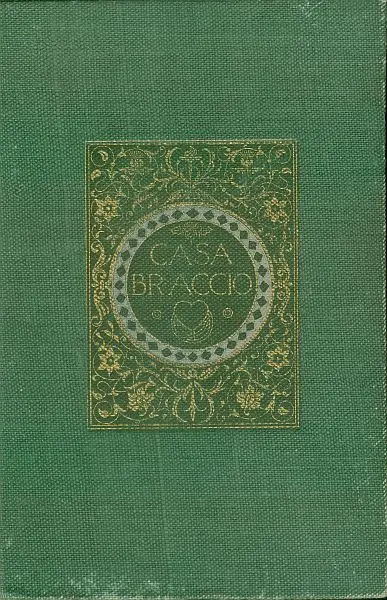
THE CLASSIC COLLECTION · 1894
"Casa Braccio, Volumes 1 and 2" by F. Marion Crawford is a historical novel set in the mid-19th century. The story primarily revolves around Sister Maria Addolorata, a young woman from the noble Braccio family, who is thrust into a life in a Carmelite convent against her wishes, laden with themes of duty, repression, and personal sacrifice in a rigid patriarchal society. The narrative begins by painting a vivid picture of Subiaco, its history, and the struggle of its inhabitants, introducing the reader to the melding of personal anguish with broader societal constraints. The opening of the novel establishes its historical context and the central character's plight as Maria Addolorata grapples with her forced commitment to a life of seclusion and the weight of family tradition that demands her presence in the convent. It unfolds her internal conflict vividly; while she possesses beauty and a longing for life outside the convent walls, she is resigned to her fate owing to familial pressure and societal norms. The dynamics between Maria and the abbess, her aunt, foreshadow the tension and conflict to come, as they represent contrasting views on faith, duty, and individuality. Additionally, the narrative introduces other key figures, such as the passionate Annetta and the enigmatic doctor, Angus Dalrymple, hinting at a broader web of relationships that will develop as the story progresses.
Introduction adapted from the source catalogue; source summaries may be automatically generated.
Free to read · English · 152,025 words · No account needed
MAKE TIME FOR A GOOD BOOK
On by default. Untick to stop anonymous reading totals. Each page counts after 10 seconds in view. How this works.
Anonymous counting is on unless you have switched it off.
"It was worth while to pay ten baiocchi for another man's bad wine, for the sake of winning so much!" replied Sora Nanna, who was a careful soul. "Of course you paid for the wine?"
"Eh--of course. They pay for wine when they come here. One takes a little and one gives a little. This is life."
Annetta busied herself with the simple preparations for supper, while they talked. Dalrymple watched her idly, and he thought she was pale, and that her eyes were very bright. She had set a plate for herself, but had forgotten her glass.
"And you? Do you not drink?" asked Stefanone. "You have no glass."
"What does it matter?" She sat down between her father and mother.
"Drink out of mine, my little daughter," said Stefanone, holding his glass to her lips with a laugh, as though she had been a little child.
She looked quietly into his eyes for a moment, before she touched the
wine with her lips.
"Yes," she answered, with a little emphasis. "I will drink out of your
glass now."
"Better so," laughed Stefanone, who was glad to be reconciled, for he loved the girl, in spite of his occasional violence of temper.
"What does it mean?" asked Sora Nanna, her cunning peasant's eyes looking from one to the other, and seeming to belie her stupid face.
"Nothing," answered Stefanone. "We were playing together. Signor Englishman," he said, turning to Dalrymple, "you must sometimes wish that you were married, and had a wife like Nanna, and a daughter like Annetta."
"Of course I do," said Dalrymple, with a smile.
Before very long, he took his book and went upstairs to bed, being tired and sleepy after a long day spent on the hillside in a fruitless search for certain plants which, according to his books, were to be found in that part of Italy, but which he had not yet seen. He fell asleep, thinking of Maria Addolorata's lovely face and fair hair, on which he had never laid eyes. In his dreams he heard a rare voice ringing true, that touched him strangely. The gusty wind made the panes of his bedroom window rattle, and in the dream he was tapping on Maria Addolorata's casement and calling softly to her, to open it and speak to him, or calling her by name, with his extraordinary foreign accent. And he thought he was tapping louder and louder, upon the glass and upon the wooden frame, louder and louder still. Then he heard his name called out, and his heart jumped as though it would have turned upside down in its place, and then seemed to sink again like a heavy stone falling into deep water; for he was awake, and the voice that was calling him was certainly not that of the beautiful nun, but gruff and manly; also the tapping was not tapping any more upon a casement, but was a vigorous pounding against his own bolted door.
Your reading position is saved on this browser. Take it to another device with a library code. Reading pages adapt to text, rather than matching a printed edition.
F. Marion (Francis Marion) Crawford
F. Marion (Francis Marion) Crawford

F. Marion (Francis Marion) Crawford

F. Marion (Francis Marion) Crawford
BEHIND THE BOOK
This eBook is for the use of anyone anywhere in the United States and most other parts of the world at no cost and with almost no restrictions whatsoever. You may copy it, give it away or re-use it under the terms of the Project Gutenberg License included with this eBook or online at www.gutenberg.org. If you are not located in the United States, you will have to check the laws of the country where you are located before using this eBook. Read the source licence.
The original source file, including credits and licence, is retained by this library. Request an original-format copy at no charge. Please include the book title and Project Gutenberg identifier #26327.
KEEP YOUR CURIOSITY GOING
Cécile Tormay

Moritz Busch
Coulson Kernahan
John L. Ransom

Maurice Baring
Frances Wright