THE CLASSIC COLLECTION✦Salve Venetia, gleanings from Venetian history; vol. IICLASSIC FREE BOOKS
Salve Venetia, gleanings from Venetian history; vol. II
F. Marion (Francis Marion) Crawford
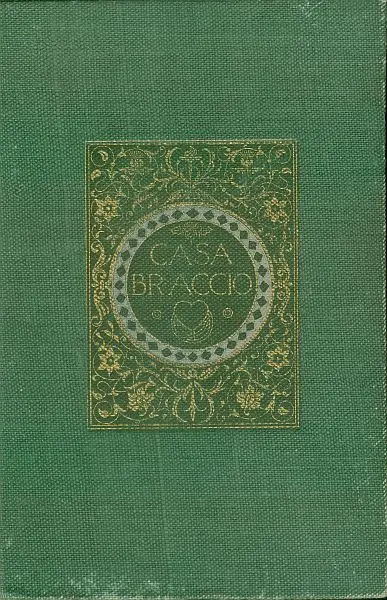
THE CLASSIC COLLECTION · 1894
"Casa Braccio, Volumes 1 and 2" by F. Marion Crawford is a historical novel set in the mid-19th century. The story primarily revolves around Sister Maria Addolorata, a young woman from the noble Braccio family, who is thrust into a life in a Carmelite convent against her wishes, laden with themes of duty, repression, and personal sacrifice in a rigid patriarchal society. The narrative begins by painting a vivid picture of Subiaco, its history, and the struggle of its inhabitants, introducing the reader to the melding of personal anguish with broader societal constraints. The opening of the novel establishes its historical context and the central character's plight as Maria Addolorata grapples with her forced commitment to a life of seclusion and the weight of family tradition that demands her presence in the convent. It unfolds her internal conflict vividly; while she possesses beauty and a longing for life outside the convent walls, she is resigned to her fate owing to familial pressure and societal norms. The dynamics between Maria and the abbess, her aunt, foreshadow the tension and conflict to come, as they represent contrasting views on faith, duty, and individuality. Additionally, the narrative introduces other key figures, such as the passionate Annetta and the enigmatic doctor, Angus Dalrymple, hinting at a broader web of relationships that will develop as the story progresses.
Introduction adapted from the source catalogue; source summaries may be automatically generated.
Free to read · English · 152,025 words · No account needed
MAKE TIME FOR A GOOD BOOK
On by default. Untick to stop anonymous reading totals. Each page counts after 10 seconds in view. How this works.
Anonymous counting is on unless you have switched it off.
He turned his back, and went out into the night. It was now almost quite dark, and Annetta stood still by the chair, listening to his retreating footsteps. Then she slowly turned and gazed at the flaring wicks of the lamp. With a gesture that suggested the movement of a young animal, she rubbed the back of her neck with one hand and leisurely turned her head first to one side and then to the other. Her brown skin was unusually pale, but there was no moisture in her eyes as she stared at the lamp.
"But I will pay you, Sor Tommaso," she said thoughtfully and softly.
Then turning her eyes from the lamp at last, she took up one of the knives from the table, looked at it, felt the edge, and laid it down contemptuously. In those days all the respectable peasants in the Roman villages had solid silver forks and spoons, which have long since gone to the melting-pot to pay taxes. But they used the same blunt, pointless knives with wooden handles, which they use to-day.
Annetta started, as she heard Dalrymple's tread upon the stone steps of the staircase, but she recovered herself instantly, gave a finishing touch to the table, rubbed the back of her head quickly once more, and met him with a smile.
"Is the beefsteak of mutton ready?" inquired the Scotchman, cheerfully, with his extraordinary accent.
Annetta ran past him, and returned almost before he was seated, bringing the food. The girl sat down at the end of the table, opposite the street door, and watched him as he swallowed one mouthful of meat after another, now and then stopping to drink a tumbler of wine at a draught.
"You must be very strong, Signore," said Annetta, at last, her chin
resting on her doubled hand.
"Why?" inquired Dalrymple, carelessly, between two mouthfuls.
"Because you eat so much. It must be a fine thing to eat so much meat. We eat very little of it."
"Why?" asked the Scotchman, again between his mouthfuls.
"Oh, who knows? It costs much. That must be the reason. Besides, it does not go down. I should not care for it."
"It is a habit." Dalrymple drank. "In my country most of the people eat oats," he said, as he set down his glass.
"Oats!" laughed the girl. "Like horses! But horses will eat meat, too, like you. As for me--good bread, fresh cheese, a little salad, a drink of wine and water--that is enough."
"Like the nuns," observed Dalrymple, attacking the ham of the
'Grape-eater.'
Your reading position is saved on this browser. Take it to another device with a library code. Reading pages adapt to text, rather than matching a printed edition.
F. Marion (Francis Marion) Crawford
F. Marion (Francis Marion) Crawford

F. Marion (Francis Marion) Crawford

F. Marion (Francis Marion) Crawford
BEHIND THE BOOK
This eBook is for the use of anyone anywhere in the United States and most other parts of the world at no cost and with almost no restrictions whatsoever. You may copy it, give it away or re-use it under the terms of the Project Gutenberg License included with this eBook or online at www.gutenberg.org. If you are not located in the United States, you will have to check the laws of the country where you are located before using this eBook. Read the source licence.
The original source file, including credits and licence, is retained by this library. Request an original-format copy at no charge. Please include the book title and Project Gutenberg identifier #26327.
KEEP YOUR CURIOSITY GOING
Cécile Tormay

Moritz Busch
Coulson Kernahan
John L. Ransom

Maurice Baring
Frances Wright