THE CLASSIC COLLECTION✦Salve Venetia, gleanings from Venetian history; vol. IICLASSIC FREE BOOKS
Salve Venetia, gleanings from Venetian history; vol. II
F. Marion (Francis Marion) Crawford
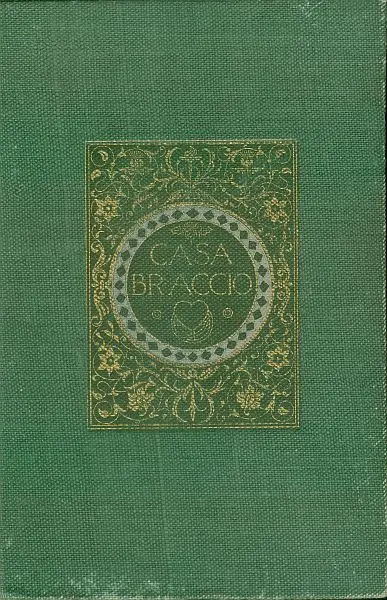
THE CLASSIC COLLECTION · 1894
"Casa Braccio, Volumes 1 and 2" by F. Marion Crawford is a historical novel set in the mid-19th century. The story primarily revolves around Sister Maria Addolorata, a young woman from the noble Braccio family, who is thrust into a life in a Carmelite convent against her wishes, laden with themes of duty, repression, and personal sacrifice in a rigid patriarchal society. The narrative begins by painting a vivid picture of Subiaco, its history, and the struggle of its inhabitants, introducing the reader to the melding of personal anguish with broader societal constraints. The opening of the novel establishes its historical context and the central character's plight as Maria Addolorata grapples with her forced commitment to a life of seclusion and the weight of family tradition that demands her presence in the convent. It unfolds her internal conflict vividly; while she possesses beauty and a longing for life outside the convent walls, she is resigned to her fate owing to familial pressure and societal norms. The dynamics between Maria and the abbess, her aunt, foreshadow the tension and conflict to come, as they represent contrasting views on faith, duty, and individuality. Additionally, the narrative introduces other key figures, such as the passionate Annetta and the enigmatic doctor, Angus Dalrymple, hinting at a broader web of relationships that will develop as the story progresses.
Introduction adapted from the source catalogue; source summaries may be automatically generated.
Free to read · English · 152,025 words · No account needed
MAKE TIME FOR A GOOD BOOK
On by default. Untick to stop anonymous reading totals. Each page counts after 10 seconds in view. How this works.
Anonymous counting is on unless you have switched it off.
"Do you know what you have done?" she asked, finishing a stitch and looking quietly into the man's deep eyes.
He met her glance calmly, but said nothing, merely bending his head
again, very slightly.
"It is very wicked," said she, and she began to make another stitch,
looking down again.
"I have no doubt that you think so," answered Paul Griggs, slowly
nodding a third time.
"It is not a question of opinion. It is a matter of fact. You have ruined the life of an innocent woman."
"If social position is the object of existence, you are right," he replied. "I have nothing to say."
"I am not speaking of social position," said Donna Francesca, continuing
to make stitches.
"Then I am afraid that I do not understand you."
"Can you conceive of nothing more important to the welfare of men and women than social position?"
"It is precisely because I do, that I care so little what society thinks. I do not understand you."
"I have known you some time," said Francesca. "I had not supposed that you were a man without a sense of right and wrong. That is the question which is concerned now."
"It is a question which may be answered from more than one point of view. You look at it in one way, and I in another. With your permission, we will differ about it, since we can never agree."
"There is no such thing as differing about right and wrong," answered Donna Francesca, with a little impatience. "Right is right, and wrong is wrong. You cannot possibly believe that you have done right. Therefore you know that you have done wrong."
"That sort of logic assumes God at the expense of man," said Griggs,
calmly.
Francesca looked up with a startled expression in her eyes, for she was shocked, though she did not understand him.
"God is good, and man is sinful," she answered, in the words of her
simple faith.
"Why?" asked Griggs, gravely.
He waited for her answer to the most tremendous question which man can ask, and he knew that she could not answer him, though she might satisfy herself.
"I have never talked about religion with an atheist," she said at last, slowly pushing her needle through the heavy satin.
"I am not an atheist, Princess."
"A Protestant, then--"
"I am not a Protestant. I am a Catholic, as you are."
She looked up suddenly and faced him with earnest eyes.
"Then you are not a good Catholic," she said. "No good Catholic could
speak as you do."
Your reading position is saved on this browser. Take it to another device with a library code. Reading pages adapt to text, rather than matching a printed edition.
F. Marion (Francis Marion) Crawford
F. Marion (Francis Marion) Crawford

F. Marion (Francis Marion) Crawford

F. Marion (Francis Marion) Crawford
BEHIND THE BOOK
This eBook is for the use of anyone anywhere in the United States and most other parts of the world at no cost and with almost no restrictions whatsoever. You may copy it, give it away or re-use it under the terms of the Project Gutenberg License included with this eBook or online at www.gutenberg.org. If you are not located in the United States, you will have to check the laws of the country where you are located before using this eBook. Read the source licence.
The original source file, including credits and licence, is retained by this library. Request an original-format copy at no charge. Please include the book title and Project Gutenberg identifier #26327.
KEEP YOUR CURIOSITY GOING
Cécile Tormay

Moritz Busch
Coulson Kernahan
John L. Ransom

Maurice Baring
Frances Wright