THE CLASSIC COLLECTION✦Salve Venetia, gleanings from Venetian history; vol. IICLASSIC FREE BOOKS
Salve Venetia, gleanings from Venetian history; vol. II
F. Marion (Francis Marion) Crawford
THE CLASSIC COLLECTION · 1894
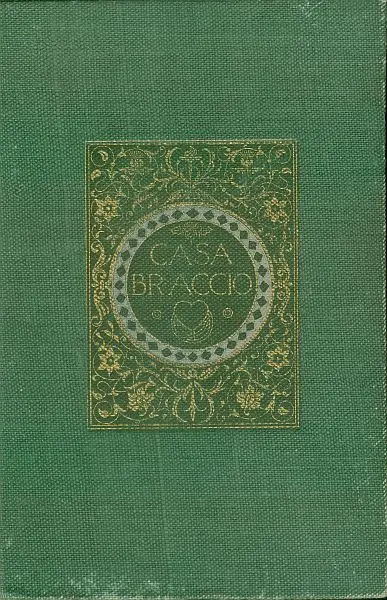
"Casa Braccio, Volumes 1 and 2" by F. Marion Crawford is a historical novel set in the mid-19th century. The story primarily revolves around Sister Maria Addolorata, a young woman from the noble Braccio family, who is thrust into a life in a Carmelite convent against her wishes, laden with themes of duty, repression, and personal sacrifice in a rigid patriarchal society. The narrative begins by painting a vivid picture of Subiaco, its history, and the struggle of its inhabitants, introducing the reader to the melding of personal anguish with broader societal constraints. The opening of the novel establishes its historical context and the central character's plight as Maria Addolorata grapples with her forced commitment to a life of seclusion and the weight of family tradition that demands her presence in the convent. It unfolds her internal conflict vividly; while she possesses beauty and a longing for life outside the convent walls, she is resigned to her fate owing to familial pressure and societal norms. The dynamics between Maria and the abbess, her aunt, foreshadow the tension and conflict to come, as they represent contrasting views on faith, duty, and individuality. Additionally, the narrative introduces other key figures, such as the passionate Annetta and the enigmatic doctor, Angus Dalrymple, hinting at a broader web of relationships that will develop as the story progresses.
Introduction adapted from the source catalogue; source summaries may be automatically generated.
Free to read · English · 152,025 words · No account needed
MAKE TIME FOR A GOOD BOOK
On by default. Untick to stop anonymous reading totals. Each page counts after 10 seconds in view. How this works.
Anonymous counting is on unless you have switched it off.
"How you say it!" she exclaimed, with a little laugh that could not laugh itself out, for there was a strange tension in the air, and on her and on him. "You might say it better," she added, the pupils of her eyes dilating a little so that the room looked suddenly larger and less distinct.
She knew the sensation of coming emotion, and she loved it. She had never thought before that she could get it by talking with Paul Griggs. He did not answer her.
"Perhaps you meant it," she said presently. "I hardly know. Did you?"
"Please be reasonable," said Griggs, indistinctly, and his hands gripped
each other on his knee.
"How oddly you talk!" she exclaimed. "What have I said that was
unreasonable?"
She felt that the emotion she had expected was slipping from her, and her nerves unconsciously resented the disappointment. She was out of temper in an instant.
"You cannot understand," he answered. "There is no reason why you should. Forgive me. I am nervous to-day."
"You? Nervous?" She laughed again, with a little scorn. "You are not
capable of being nervous."
She was dimly conscious that she was provoking him to something, she knew not what, and that he was resisting her. He did not answer her last words. She went back to the starting-point again, dropping her voice to a sadder key.
"Honestly, will you be my friend?" she asked, with a gentle smile.
"Heart and soul--and hand, too, if you want it," he said, for he had recovered his speech. "Tell me what the trouble is. If I can, I will take you out of it."
It was rather an odd speech, and she was struck by the turn of the phrase, which expressed more strength than doubt of power to do anything he undertook.
"I believe you could," she said, looking at him. "You are so strong. You
could do anything."
"Things are never so hard as they look, if one is willing to risk everything," he answered. "And when one has nothing to lose," he added, as an after-thought.
She sighed, and turned away again, half satisfied.
"There is nothing to risk," she said. "It is not a case of danger. And you cannot take my trouble and tear it up like a pack of cards with those hands of yours. I wish you could. I am unhappy--yes, I have told you so. But what can you do to help me? You cannot make my surroundings what they are not, you know."
"No--I cannot change your husband," said Griggs.
She started a little, but still looked away.
"No. You cannot make him love me," she said, softly and sadly.
Your reading position is saved on this browser. Take it to another device with a library code. Reading pages adapt to text, rather than matching a printed edition.
F. Marion (Francis Marion) Crawford
F. Marion (Francis Marion) Crawford

F. Marion (Francis Marion) Crawford

F. Marion (Francis Marion) Crawford
BEHIND THE BOOK
This eBook is for the use of anyone anywhere in the United States and most other parts of the world at no cost and with almost no restrictions whatsoever. You may copy it, give it away or re-use it under the terms of the Project Gutenberg License included with this eBook or online at www.gutenberg.org. If you are not located in the United States, you will have to check the laws of the country where you are located before using this eBook. Read the source licence.
The original source file, including credits and licence, is retained by this library. Request an original-format copy at no charge. Please include the book title and Project Gutenberg identifier #26327.
KEEP YOUR CURIOSITY GOING
Cécile Tormay

Moritz Busch
Coulson Kernahan
John L. Ransom

Maurice Baring
Frances Wright