THE CLASSIC COLLECTION✦Salve Venetia, gleanings from Venetian history; vol. IICLASSIC FREE BOOKS
Salve Venetia, gleanings from Venetian history; vol. II
F. Marion (Francis Marion) Crawford
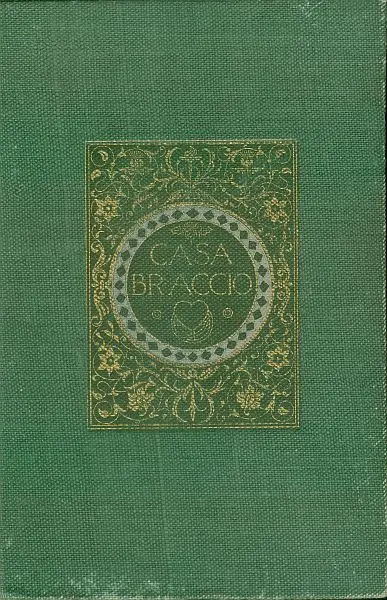
THE CLASSIC COLLECTION · 1894
"Casa Braccio, Volumes 1 and 2" by F. Marion Crawford is a historical novel set in the mid-19th century. The story primarily revolves around Sister Maria Addolorata, a young woman from the noble Braccio family, who is thrust into a life in a Carmelite convent against her wishes, laden with themes of duty, repression, and personal sacrifice in a rigid patriarchal society. The narrative begins by painting a vivid picture of Subiaco, its history, and the struggle of its inhabitants, introducing the reader to the melding of personal anguish with broader societal constraints. The opening of the novel establishes its historical context and the central character's plight as Maria Addolorata grapples with her forced commitment to a life of seclusion and the weight of family tradition that demands her presence in the convent. It unfolds her internal conflict vividly; while she possesses beauty and a longing for life outside the convent walls, she is resigned to her fate owing to familial pressure and societal norms. The dynamics between Maria and the abbess, her aunt, foreshadow the tension and conflict to come, as they represent contrasting views on faith, duty, and individuality. Additionally, the narrative introduces other key figures, such as the passionate Annetta and the enigmatic doctor, Angus Dalrymple, hinting at a broader web of relationships that will develop as the story progresses.
Introduction adapted from the source catalogue; source summaries may be automatically generated.
Free to read · English · 152,025 words · No account needed
MAKE TIME FOR A GOOD BOOK
On by default. Untick to stop anonymous reading totals. Each page counts after 10 seconds in view. How this works.
Anonymous counting is on unless you have switched it off.
"I think they are suited to marry. Of course, Reanda is very much older, but he is comparatively a young man still."
"Comparatively. He will make a better husband for having had experience,
I daresay."
"That depends on what experience he has had. When I first saw him I thought he was in love with Donna Francesca. It would have been like an artist. They are mostly fools. But I was mistaken. He worships at a distance."
"And she preserves the distance," Griggs remarked. "You are not drinking fair. My glass is empty."
Dalrymple finished his and refilled both.
"I have been here some time," he observed, half apologetically. "But as I was saying--or rather, as you were saying--Donna Francesca preserves the distance. These Italians do that admirably. They know the difference between intimacy and familiarity."
"That is a nice distinction," said Griggs. "I will use it in my next letter. No. Donna Francesca could never be familiar with any one. They learn it when they are young, I suppose, and it becomes a race-characteristic."
"What?" asked Dalrymple, abruptly.
"A certain graceful loftiness," answered the younger man.
The Scotchman's wrinkled eyelids contracted, and he was silent for a few
moments.
"A certain graceful loftiness," he repeated slowly. "Yes, perhaps so. A certain graceful loftiness."
"You seem struck by the expression," said Griggs.
"I am. Drink, man, drink!" added Dalrymple, suddenly, in a different tone. "There's no time to be lost if we mean to drink enough to hurt us before those beggars go to bed."
"Never fear. They will be up all night. Not that it is a reason for
wasting time, as you say."
He drank his glass and watched Dalrymple as the latter did likewise, with that deliberate intention which few but Scotchmen can maintain on such occasions. The wine might have been poured into a quicksand, for any effect it had as yet produced.
"Those race-characteristics of families are very curious," continued
Griggs, thoughtfully.
"Are they?" Dalrymple looked at him suspiciously.
"Very. Especially voices. They run in families, like resemblance of
features."
"So they do," answered the other, thoughtfully. "So they do."
He had of late years got into the habit of often repeating such short phrases, in an absent-minded way.
"Yes," said Griggs. "I noticed Donna Francesca's voice, the first time I ever heard it. It is one of those voices which must be inherited. I am sure that all her family have spoken as she does. It reminds me of something--of some one--"
Dalrymple raised his eyes suddenly again, as though he were irritated.
"I say," he began, interrupting his companion. "Do you feel anything? Anything queer in your head?"
"No. Why?"
Your reading position is saved on this browser. Take it to another device with a library code. Reading pages adapt to text, rather than matching a printed edition.
F. Marion (Francis Marion) Crawford
F. Marion (Francis Marion) Crawford

F. Marion (Francis Marion) Crawford

F. Marion (Francis Marion) Crawford
BEHIND THE BOOK
This eBook is for the use of anyone anywhere in the United States and most other parts of the world at no cost and with almost no restrictions whatsoever. You may copy it, give it away or re-use it under the terms of the Project Gutenberg License included with this eBook or online at www.gutenberg.org. If you are not located in the United States, you will have to check the laws of the country where you are located before using this eBook. Read the source licence.
The original source file, including credits and licence, is retained by this library. Request an original-format copy at no charge. Please include the book title and Project Gutenberg identifier #26327.
KEEP YOUR CURIOSITY GOING
Cécile Tormay

Moritz Busch
Coulson Kernahan
John L. Ransom

Maurice Baring
Frances Wright