THE CLASSIC COLLECTION✦Salve Venetia, gleanings from Venetian history; vol. IICLASSIC FREE BOOKS
Salve Venetia, gleanings from Venetian history; vol. II
F. Marion (Francis Marion) Crawford
THE CLASSIC COLLECTION · 1894
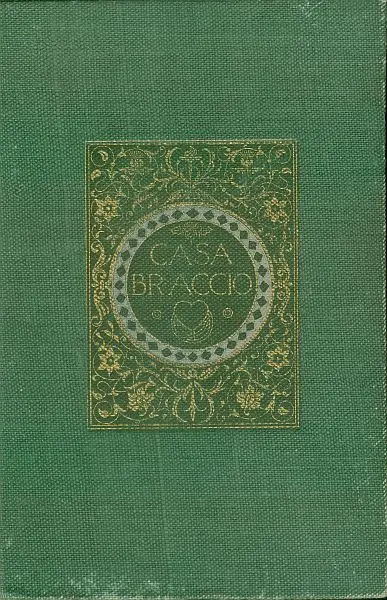
"Casa Braccio, Volumes 1 and 2" by F. Marion Crawford is a historical novel set in the mid-19th century. The story primarily revolves around Sister Maria Addolorata, a young woman from the noble Braccio family, who is thrust into a life in a Carmelite convent against her wishes, laden with themes of duty, repression, and personal sacrifice in a rigid patriarchal society. The narrative begins by painting a vivid picture of Subiaco, its history, and the struggle of its inhabitants, introducing the reader to the melding of personal anguish with broader societal constraints. The opening of the novel establishes its historical context and the central character's plight as Maria Addolorata grapples with her forced commitment to a life of seclusion and the weight of family tradition that demands her presence in the convent. It unfolds her internal conflict vividly; while she possesses beauty and a longing for life outside the convent walls, she is resigned to her fate owing to familial pressure and societal norms. The dynamics between Maria and the abbess, her aunt, foreshadow the tension and conflict to come, as they represent contrasting views on faith, duty, and individuality. Additionally, the narrative introduces other key figures, such as the passionate Annetta and the enigmatic doctor, Angus Dalrymple, hinting at a broader web of relationships that will develop as the story progresses.
Introduction adapted from the source catalogue; source summaries may be automatically generated.
Free to read · English · 152,025 words · No account needed
MAKE TIME FOR A GOOD BOOK
On by default. Untick to stop anonymous reading totals. Each page counts after 10 seconds in view. How this works.
Anonymous counting is on unless you have switched it off.
"I was born here," answered Griggs. "It is much more remarkable that Miss Dalrymple should speak Italian as she does, having been born in Scotland."
"Are you talking about me?" asked the young girl, turning her head quickly, though she was standing with Reanda at some distance from the others.
"I was speaking of your accent in Italian," said Griggs.
"Is there anything wrong about it?" asked Gloria, with an anxiety that
seemed exaggerated.
"On the contrary," answered Donna Francesca, "Mr. Griggs was telling me how perfectly you speak. But I had noticed it."
"Oh! I thought Mr. Griggs was finding fault," answered Gloria, turning
to Reanda again.
Dalrymple looked at his daughter as though he were annoyed. The eyes of Francesca and Griggs met for a moment. All three were aware that they resented the young girl's quick question as one which they themselves would not have asked in her place, had they accidentally heard their names mentioned in a distant conversation. But Francesca instantly went on with the subject.
"To us Italians," she said, "it seems incredible that any one should speak our language and English equally well. It is as though you were two persons, Mr. Griggs," she added, smiling at the covered expression of her thought about him.
"I sometimes think so myself," answered Griggs, with one of his steady looks. "In a way, every one must have a sort of duality--a good and evil principle."
"God and the devil," suggested Francesca, simply.
"Body and soul would do, I suppose. The one is always in slavery to the other. The result is a sinner or a saint, as the case may be. One never can tell," he added more carelessly. "I am not sure that it matters. But one can see it. The battle is fought in the face."
"I do not understand. What battle?"
"The battle between body and soul. The face tells which way the fight is
going."
She looked at his own, and she felt that she could not tell. But to a certain extent she understood him.
"Griggs is full of theories," observed Dalrymple. "Gloria, come down!" he cried in English, suddenly.
Gloria, intent upon understanding how fresco-painting was done, was boldly mounting the steps of the ladder towards the top of the little scaffolding, which might have been fourteen feet high. For the vault had long been finished, and Reanda was painting the walls.
"Nonsense, papa!" answered the young girl, also in English. "There's no
danger at all."
"Well--don't break your neck," said Dalrymple. "I wish you would come
down, though."
Your reading position is saved on this browser. Take it to another device with a library code. Reading pages adapt to text, rather than matching a printed edition.
F. Marion (Francis Marion) Crawford
F. Marion (Francis Marion) Crawford

F. Marion (Francis Marion) Crawford

F. Marion (Francis Marion) Crawford
BEHIND THE BOOK
This eBook is for the use of anyone anywhere in the United States and most other parts of the world at no cost and with almost no restrictions whatsoever. You may copy it, give it away or re-use it under the terms of the Project Gutenberg License included with this eBook or online at www.gutenberg.org. If you are not located in the United States, you will have to check the laws of the country where you are located before using this eBook. Read the source licence.
The original source file, including credits and licence, is retained by this library. Request an original-format copy at no charge. Please include the book title and Project Gutenberg identifier #26327.
KEEP YOUR CURIOSITY GOING
Cécile Tormay

Moritz Busch
Coulson Kernahan
John L. Ransom

Maurice Baring
Frances Wright