THE CLASSIC COLLECTION✦Sunshine and snowCLASSIC FREE BOOKS
Sunshine and snow
Harold Bindloss
THE CLASSIC COLLECTION · 1917
"Carmen's Messenger" by Harold Bindloss is a novel set in the early 20th century, likely around the time of World War I. The narrative unfolds in the North Ontario wilderness, where the main character, Jake Foster, interacts with his partner Featherstone amid the backdrop of an emerging industrial town affected by personal and corporate tragedies. The story suggests themes of friendship, ambition, and the quest for identity as Foster prepares for a trip to England, while dealing with the mysterious circumstances surrounding the death of a local factory owner's son. At the start of the novel, Jake Foster, a successful lumberman enjoying a brief respite from work, awaits his partner Featherstone at a bustling train station. The narrative plunges into the tension surrounding the recent death of Fred Hulton, the factory owner's son, suspected to be a suicide but surrounded by unanswered questions. As Featherstone returns from a visit to the doctor, he reveals his concerns about a figure from their past, hinting at a complicated backstory. Their friendship deepens as they discuss plans and mutual acquaintances, particularly involving Carmen Austin, a young woman of society whose mysterious intentions involve Foster. The opening effectively sets the tone for a story blended with personal journeys and external conflicts, promising intrigue and character development as the plot unfolds.
Introduction adapted from the source catalogue; source summaries may be automatically generated.
Free to read · English · 94,284 words · No account needed
MAKE TIME FOR A GOOD BOOK
On by default. Untick to stop anonymous reading totals. Each page counts after 10 seconds in view. How this works.
Anonymous counting is on unless you have switched it off.
"He ought. Well, I'm going to warn Lawrence, and no doubt the proper thing would be to be satisfied with this, but somehow I'm not. You see, Walters probably doesn't know we suspect him."
The girl's eyes narrowed and Foster knew she was afraid, but did not think fear was her strongest emotion.
"You mean he may try again?"
"That is what I mean. If he comes back, you must watch him, but keep him here until I arrive. If it's impossible for me to come, send for the police."
"Yes," said Lucy quietly, "I'll try."
"There's another risk," said Foster. "He may send an accomplice; they're a well-organized gang. In this matter, I'd sooner trust you than Lawrence." He stopped for a moment and gave her an apologetic glance. "Perhaps I've done wrong to alarm and put this heavy load on you."
"No," she said resolutely. "I have promised to marry Lawrence and must
help him."
Then she rose and gave Foster her hand. "I must thank you for your confidence. If the need comes, I don't think I'll fail you."
Foster felt satisfied when she left him. Lucy was clever and had pluck. He had given her a hard part, but she would not shrink. One could trust a woman who was fighting for her lover.
After breakfast next morning, Mrs. Stephen showed Foster some photographs of the mountains, in one or two of which Lucy and Lawrence had a place, and he asked: "Have you a portrait of Walters?"
"No; the man who took these was staying here, and one day asked Walters to join the group he was posing, but he refused."
"How did he get out of it?"
Lawrence, who had come in with Lucy, laughed. "Rather neatly. Said he was a modest sentimentalist and would sooner leave his memory printed on our hearts!"
"One must admit that he did something of the kind," Lucy remarked.
"Will you or Mrs. Stephen describe his looks?" Foster asked.
The girl did so and then inquired: "Why didn't you ask Lawrence?"
"If you want an accurate description of a man, it's better to ask a women. Our classifications are rather vague; we say he's all right, a good sport, or perhaps an outsider. You note all his idiosyncrasies, the way he talks, the color of his hair----"
"I suppose we do," Mrs. Stephen agreed with a smile. "You are rather
shrewd."
"I don't see why that should surprise my friends, but it sometimes
does," Foster rejoined and went to the flag station to ask about the
train.
Your reading position is saved on this browser. Take it to another device with a library code. Reading pages adapt to text, rather than matching a printed edition.
Harold Bindloss
Harold Bindloss
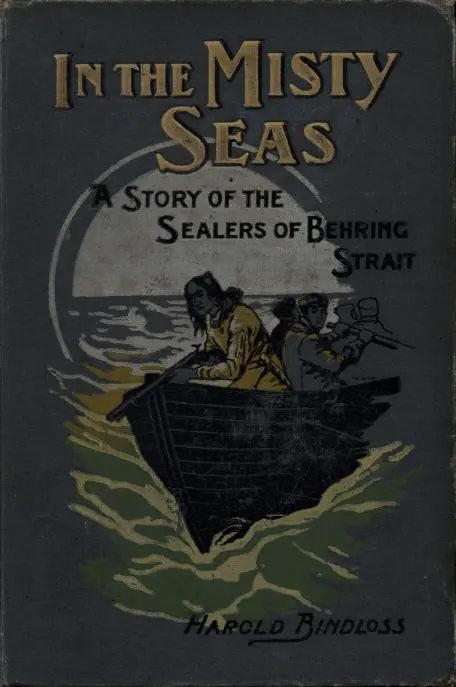
Harold Bindloss

Harold Bindloss
BEHIND THE BOOK
This eBook is for the use of anyone anywhere in the United States and most other parts of the world at no cost and with almost no restrictions whatsoever. You may copy it, give it away or re-use it under the terms of the Project Gutenberg License included with this eBook or online at www.gutenberg.org. If you are not located in the United States, you will have to check the laws of the country where you are located before using this eBook. Read the source licence.
The original source file, including credits and licence, is retained by this library. Request an original-format copy at no charge. Please include the book title and Project Gutenberg identifier #14361.
KEEP YOUR CURIOSITY GOING
Coulson Kernahan

Maurice Baring
Frances Wright
Cécile Tormay

Frederic Jesup Stimson

W. H. P. (William Henry Pope) Jarvis