
Jocelyn
John Galsworthy
THE CLASSIC COLLECTION · 1923
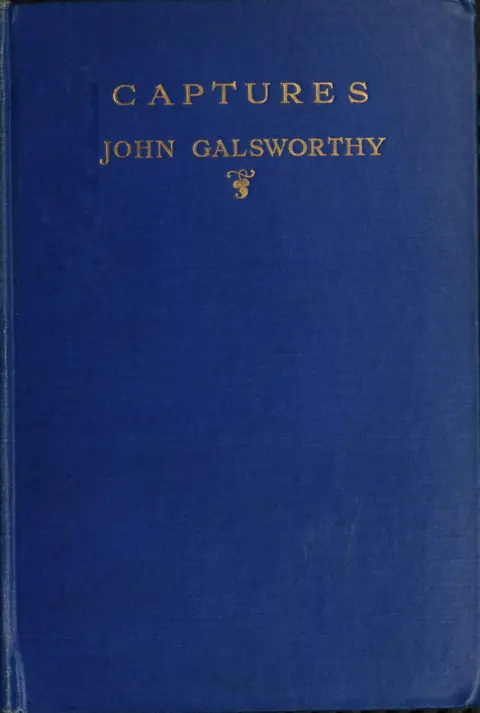
"Captures" by John Galsworthy is a novel written in the early 20th century. The story revolves around the lives of two neighboring farmers, Bowden and Steer, whose relationship deteriorates after a tragic event involving Bowden's dog being shot. The narrative unfolds themes of social class, rural identity, and the complexity of human relationships within a close-knit community. The opening of "Captures" introduces Bowden as a laid-back farmer who is affected deeply by the loss of his dog, a pain exacerbated by his neighbor Steer’s actions. Galsworthy intricately depicts Bowden's feelings and daily life as he grapples with the emotional aftermath of the incident. Tensions begin to rise between the two men, setting the stage for a feud that highlights the entangled fates of their families, including Steer's niece Molly and Bowden’s son, Ned, whose relationships further complicate the conflict. This initial exploration of rural life, character struggles, and interpersonal dynamics effectively draws readers into the heart of the narrative.
Introduction adapted from the source catalogue; source summaries may be automatically generated.
Free to read · English · 63,853 words · No account needed
MAKE TIME FOR A GOOD BOOK
On by default. Untick to stop anonymous reading totals. Each page counts after 10 seconds in view. How this works.
Anonymous counting is on unless you have switched it off.
His first sensation in ‘the rooms’ was disappointing. The decorations were florid, the people foreign, queer, ugly! For some time he stood still listening to the chink of rake against coin, and the nasal twang of the croupiers’ voices. Then he had gone up to a table to watch the game, which he had never played. That, at all events, was the same as now; that and the expression on the gamblers’ faces--the sharp, blind, crab-like absorption like no other human expression. And what a lot of old women! A nervous excitement had crept into his brain while he stood there, an itch into his fingers. But he was shy. All these people played with such deadly calm, seemed so utterly familiar with it all. At last he had reached over the shoulder of a dark-haired woman sitting in front of him, put down a five-franc piece, and called out the word ‘Vingt.’ A rake shovelled it forward on to the number with an indifferent click. The ball rolled. “Quatorze, rouge pair et manque.” His five-franc piece was raked away. But he, Philip Trevillian, had gambled at Monte Carlo, and at once he had seemed to see Varvara’s eyes with something of amusement in their candour, and to hear her voice: “But to gamble! How silly, Philip Philipovitch!” Then the man sitting to his left got up, and he had slipped down into the empty chair. Once seated, he knew that he must play. So he pushed another five-franc piece on to black and received its counterpart. Now he was quits; and, continuing that simple stake with varying success, he began taking in the faces of his neighbours. On his left he had an old Englishman in evening dress, ruddy, with chubby lips, who played in gold pieces and seemed winning rather heavily. Opposite, in a fabulous shawl, a bird-like old woman, with a hook nose, and a man who looked like a Greek bandit in a frock-coat. To his right was the dark-haired woman over whose shoulder he had leaned. An agreeable perfume, as of jasmine blossoms, floated from her. She had some tablets and six or seven gold pieces before her, but seemed to have stopped playing. Out of the tail of his eye Trevillian scrutinised her profile. She was by far the most attractive woman he had seen in here. And he felt suddenly uninterested in the fate of his five-franc pieces. Under the thin, dark brows, a little drawn down, he could see that her eyes were dark and velvety. Her face was rather pointed, delicate, faintly powdered in the foreign fashion. She wore a low dress, but with a black lace scarf thrown over her gleaming shoulders, and something that glimmered in her dark hair. She was not English, but what he could not tell. He won twice running on black, left his stake untouched, and was conscious that she pushed one of her own gold pieces on to black. Again black won. Again he left his stake, and she hers. To be linked with her by that following of his luck was agreeable to young Trevillian. The devil might care--he would leave his winnings down. Again and again, till he had won eight times on black, he left his stake, and his neighbour followed suit. A pile of gold was mounting in front of each of them. The eyes of the hawk-like old woman opposite, like those of a crustacean in some book of natural history, seemed pushed out from her face; a little hard smile on her thin lips seemed saying, ‘Wait; it will all go back!’ The jasmine perfume from his neighbour grew stronger, as though disengaged by increasing emotion; he could see her white neck heave under its black lace. She reached her hand out as though to gather in her winnings. In bravado Trevillian sat unmoving. Her eyes slid round to his; she withdrew her hand. The little ball rolled. Black! He heard her sigh of relief. She touched his arm. “Retirez!” she whispered, “Retirez, monsieur!” and, sweeping in her winnings, she got up. Trevillian hesitated just a moment, then with the thought, ‘If I stay I lose sight of her,’ he, too, reached out, and, gathering in his pile, left the table. Starting with a five-franc piece, in nine successful coups he had won just over a hundred pounds. His neighbour, who had started with a louis, in seven coups--he calculated rapidly--must have won the same. “Seize, rouge pair et manque!” Just in time! Elated, Trevillian turned away. There was the graceful figure of his dark neighbour threading the throng, and without deliberate intention, yet longing not to lose sight of her, he followed. A check in her progress brought him so close, however, that he was at infinite pains to seem unconscious. She turned and saw him. “Ah! Merci, monsieur! I tank you moch.” “It’s for me to thank you!” he stammered. The dark lady smiled. “I have the instinct,” she said in her broken English, “for others, not for myself. I am unlucky. It is the first time you play, sare? I tought so. Do not play again. Give me that promise; it will make me ’appy.”
Your reading position is saved on this browser. Take it to another device with a library code. Reading pages adapt to text, rather than matching a printed edition.
John Galsworthy
John Galsworthy
John Galsworthy

John Galsworthy
BEHIND THE BOOK
This eBook is for the use of anyone anywhere in the United States and most other parts of the world at no cost and with almost no restrictions whatsoever. You may copy it, give it away or re-use it under the terms of the Project Gutenberg License included with this eBook or online at www.gutenberg.org. If you are not located in the United States, you will have to check the laws of the country where you are located before using this eBook. Read the source licence.
The original source file, including credits and licence, is retained by this library. Request an original-format copy at no charge. Please include the book title and Project Gutenberg identifier #65252.
KEEP YOUR CURIOSITY GOING
Coulson Kernahan

Maurice Baring
Frances Wright
Cécile Tormay

Frederic Jesup Stimson

W. H. P. (William Henry Pope) Jarvis