
Jocelyn
John Galsworthy
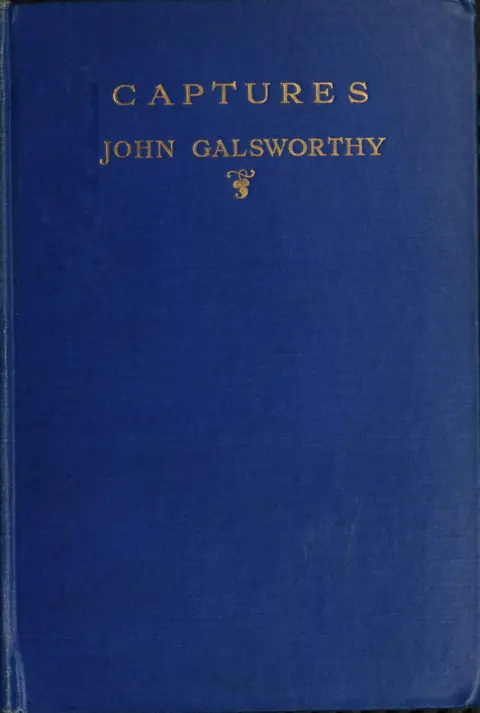
THE CLASSIC COLLECTION · 1923
"Captures" by John Galsworthy is a novel written in the early 20th century. The story revolves around the lives of two neighboring farmers, Bowden and Steer, whose relationship deteriorates after a tragic event involving Bowden's dog being shot. The narrative unfolds themes of social class, rural identity, and the complexity of human relationships within a close-knit community. The opening of "Captures" introduces Bowden as a laid-back farmer who is affected deeply by the loss of his dog, a pain exacerbated by his neighbor Steer’s actions. Galsworthy intricately depicts Bowden's feelings and daily life as he grapples with the emotional aftermath of the incident. Tensions begin to rise between the two men, setting the stage for a feud that highlights the entangled fates of their families, including Steer's niece Molly and Bowden’s son, Ned, whose relationships further complicate the conflict. This initial exploration of rural life, character struggles, and interpersonal dynamics effectively draws readers into the heart of the narrative.
Introduction adapted from the source catalogue; source summaries may be automatically generated.
Free to read · English · 63,853 words · No account needed
MAKE TIME FOR A GOOD BOOK
On by default. Untick to stop anonymous reading totals. Each page counts after 10 seconds in view. How this works.
Anonymous counting is on unless you have switched it off.
... “‘But at last in the drift of time Hadleyburg had the ill-luck to offend a passing stranger, possibly without knowing it, certainly without caring, for Hadleyburg was sufficient unto itself and cared not a rap for strangers and their opinions. Still, it would have been well to make an exception in this one’s case, for he was a bitter man and revengeful.’”
“Ah!” interjected the blind man deeply, “there you ’ave it. Talkin’ of feelin’s, what gave you a fellow-feelin’ for me, if I may ask?”
“I can look at you, my friend, without your seeing me.”
“Eh! What about it with other people, then?”
“They can look at me without my seeing them.”
“I see! Misanthropical. Any reason for that?”
“Prison.”
“What oh! Outcast and rejected of men.”
“No. The other way on.”
The blind man ceased to whittle and scoop.
“I like independence,” he said; “I like a man that can go his own way. Ever noticed cats? Men are like dogs, mostly; only once in a way you get a man that’s like a cat. What were you, if it’s not a rude question. In the taxes?”
“Medico.”
“What’s a good thing for ’eartburn?”
“Which kind?”
“Wind, ain’t it? But I see your meanin’. Losin’ my sight used to burn my ’eart a lot; but I got over that. What’s the use? You couldn’t have any worse misfortune. It gives you a feelin’ of bein’ insured--like.”
“You’re right,” said Late--299, rising to go.
The blind man lifted his face in unison. “Got your smile on?” he said. “Just let me ’ave another feel at it, will you?”
Late--299 bent to the outstretched fingers.
“Yes,” said the blind man, “same with you--touched bottom. Next time you come I’ll ’ave something on show that’ll please you, I think; and thank you for readin’.”
“Let me know if it bores you.”
“I will,” said the blind man, following without movement the footsteps of his visitor that died away.
Christmas night--wild and windy, a shower spattering down in the street; Late--299 walking two yards before his wife, their son walking two yards behind his mother. A light figure, furred to the ears, in a doorway watching for them.
“Come along, darling. Sorry we had to bring him.”
“Of course you had to, Jack!”
“Look! He can’t even walk with mother. It’s a disease. He went to church to-day, and all through the sermon never took his eyes off--the poor old vicar nearly broke down.”
“What was it about?”
“Brotherly love. Mother says he doesn’t mean it--but it’s like--what’s that thing that stares?”
Your reading position is saved on this browser. Take it to another device with a library code. Reading pages adapt to text, rather than matching a printed edition.
John Galsworthy
John Galsworthy
John Galsworthy

John Galsworthy
BEHIND THE BOOK
This eBook is for the use of anyone anywhere in the United States and most other parts of the world at no cost and with almost no restrictions whatsoever. You may copy it, give it away or re-use it under the terms of the Project Gutenberg License included with this eBook or online at www.gutenberg.org. If you are not located in the United States, you will have to check the laws of the country where you are located before using this eBook. Read the source licence.
The original source file, including credits and licence, is retained by this library. Request an original-format copy at no charge. Please include the book title and Project Gutenberg identifier #65252.
KEEP YOUR CURIOSITY GOING
Coulson Kernahan

Maurice Baring
Frances Wright
Cécile Tormay

Frederic Jesup Stimson

W. H. P. (William Henry Pope) Jarvis