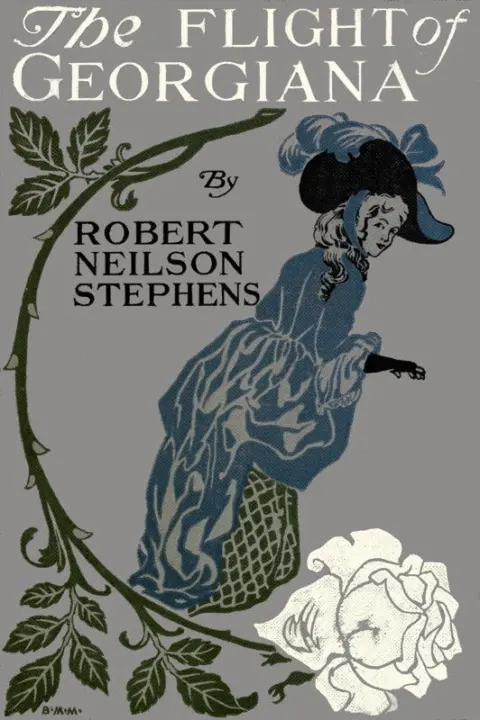
The Flight of Georgiana: A Story of Love and Peril in England in 1746
Robert Neilson Stephens
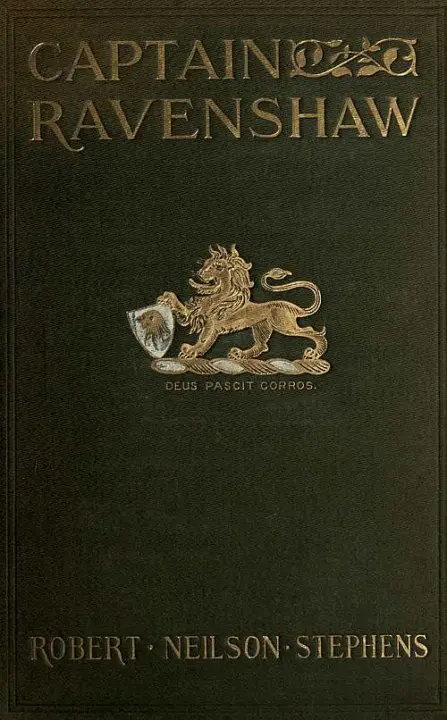
THE CLASSIC COLLECTION · 1901
"Captain Ravenshaw; Or, The Maid of Cheapside" by Robert Neilson Stephens is a historical novel written in the early 20th century. Set in the Elizabethan era, it explores the lives of ordinary Londoners, focusing on the titular character, Captain Ravenshaw, a soldier who navigates the complexities of his reputation as a swaggering braggart while seeking a meaningful life. The novel immerses readers in a rich tapestry of the time, blending adventure and romance against the backdrop of 16th-century London. At the start of the story, we find Captain Ravenshaw at the Windmill tavern, drinking with a group of young gentlemen. Despite his bravado and tales of past exploits, Ravenshaw's status as a "roaring boy" draws scorn from one of the gentlemen present, leading to a humorous altercation over supper. As he storms out, the narrative shifts focus to a scholar named Ralph Holyday, who inadvertently captures a roast fowl flung in the heat of the argument. This chance encounter sets in motion the intertwining stories of various characters, including Captain Ravenshaw, as they navigate love, reputation, and the bustling life of Elizabethan London. The opening captures the lively spirit of the time and introduces themes of camaraderie, conflict, and the quest for personal redemption.
Introduction adapted from the source catalogue; source summaries may be automatically generated.
Free to read · English · 82,310 words · No account needed
MAKE TIME FOR A GOOD BOOK
On by default. Untick to stop anonymous reading totals. Each page counts after 10 seconds in view. How this works.
Anonymous counting is on unless you have switched it off.
"We must e'en change to the other boat," said Holyday, despairingly.
"Oh, heaven, there is not time!" cried Millicent.
"If you be in haste," said the waterman, "stay where ye are. Whither
shall we carry ye?"
"Nay, nay, I durst not!" cried Holyday, and yet stood in helpless
indecision.
"Come, then!" said Millicent, and leaped from the boat to the stairs. Reaching back for Holyday's hand, she pulled him after her, dragged him up the steps, and led him around the three sides of the basin, their five protectors following close.
A larger boat, manned with a more numerous crew, was in waiting at the western stairs. The waterman with whom Ravenshaw had bargained in the morning, making sure of Holyday's face in the light of a lantern, guided the fugitives aboard with orderly swiftness. But already the noise of pursuit was in Thames Street; ere the last man--a slim fellow with a thickly bearded face, which he carried well forward from his body--was embarked, the cries, swelling suddenly as the pursuers emerged from the narrow passage, were upon the wharf, and the red flare of torches came with them.
The party in chase was headed by the goldsmith himself, no covering on his head, his gray hair standing out in the breeze; then came his apprentices, and sundry persons who had joined in the hue and cry; the rear was brought up by Sir Peregrine, lamed and winded. Master Etheridge made out the party in the boat at once, and, with threatening commands to the waterman to stop, led his people around to the stairs.
"Cast off!" growled Bill Tooby, the waterman, pulling the slim fellow aboard. The order was obeyed, and Millicent, who had sat more dead than alive since her father had come into sight, saw the wharf recede, and a strip of black water spread between the boat and the torch-lit party that stood gazing from the stairs.
"Oh, wench, I'll make thee rue this day!" cried the goldsmith, shaking his arms after the boat. As for Sir Peregrine, he looked utterly nonplussed.
Then her father spoke hurriedly to his followers, and called loudly for a boat. The waterman to whom Holyday had first led his own party was quick to respond. Meanwhile Tooby's craft headed down-stream. Millicent, looking anxiously back over the water, saw the other boat, or its lantern and one of the torches, shoot out from the stairs.
"Think you they will catch us?" she asked Master Holyday.
"I think nothing," said the poet, dejectedly, really thinking very small of himself for the mistake which had enabled the goldsmith to come upon their heels.
Your reading position is saved on this browser. Take it to another device with a library code. Reading pages adapt to text, rather than matching a printed edition.
Robert Neilson Stephens
Robert Neilson Stephens
Robert Neilson Stephens
Robert Neilson Stephens
BEHIND THE BOOK
This eBook is for the use of anyone anywhere in the United States and most other parts of the world at no cost and with almost no restrictions whatsoever. You may copy it, give it away or re-use it under the terms of the Project Gutenberg License included with this eBook or online at www.gutenberg.org. If you are not located in the United States, you will have to check the laws of the country where you are located before using this eBook. Read the source licence.
The original source file, including credits and licence, is retained by this library. Request an original-format copy at no charge. Please include the book title and Project Gutenberg identifier #47738.
KEEP YOUR CURIOSITY GOING
Cécile Tormay

Moritz Busch
Coulson Kernahan
John L. Ransom

Maurice Baring
Frances Wright