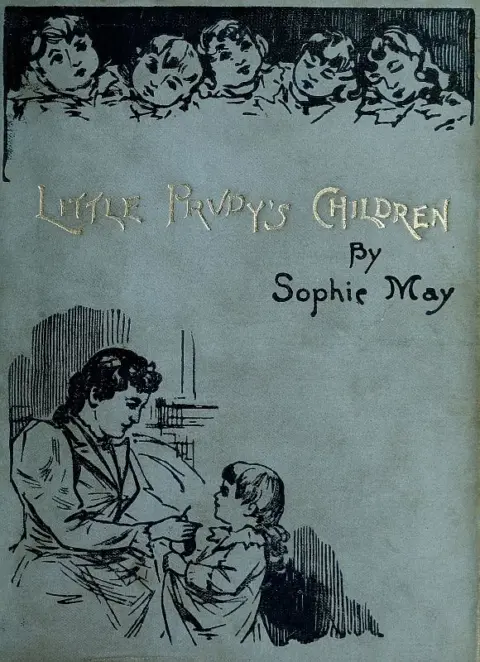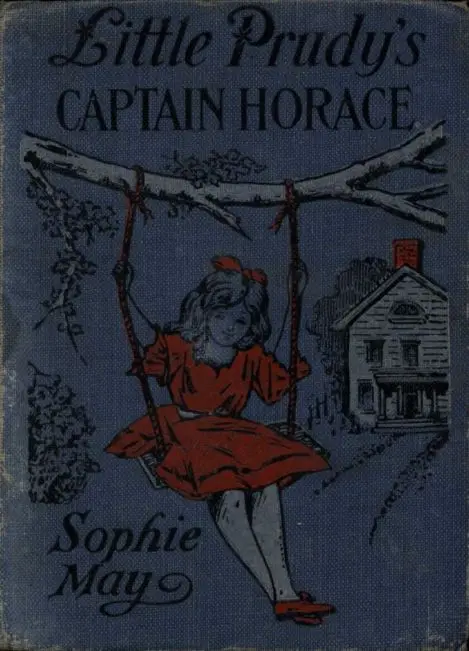
Little Prudy’s Captain Horace
Sophie May
THE CLASSIC COLLECTION · 1892
"Captain Horace" by Sophie May is a children's novel written in the late 19th century. The story revolves around young Horace Clifford, a spirited boy living in Indiana with his family, who dreams of being a soldier. Throughout the narrative, Horace navigates childhood adventures, including mischief, friendship, and the challenges of growing up, while grappling with the realities of war as his father serves as a captain in the army. At the start of the novel, we meet Horace and his sister Grace as they enjoy a lovely evening, looking at the stars and discussing their dreams. Horace's desire to become a soldier is evident as he engages in playful banter and lively imaginations about their father’s role in the army. Their innocent childhood is contrasted with the mention of impending dangers, as Mr. Clifford prepares for battle. The opening sets the stage for both lighthearted adventures—including making candy and camping out—and foreshadows the themes of loss and responsibility that will significantly shape Horace’s character as the story progresses.
Introduction adapted from the source catalogue; source summaries may be automatically generated.
Free to read · English · 24,177 words · No account needed
MAKE TIME FOR A GOOD BOOK
On by default. Untick to stop anonymous reading totals. Each page counts after 10 seconds in view. How this works.
Anonymous counting is on unless you have switched it off.
"That indeed!" said Mr. Clifford, with a good-natured laugh, which made Horace wince a little. "But the eating of dry bread is only a small part of the soldier's tough times, my boy. Soldiers have to sleep on the hard ground, with knapsacks for pillows; they have to march, through wet and dry, with heavy muskets, which make their arms ache."
"Look here, Barby," said Horace, that evening; "I want a knapsack, to learn to be a soldier with. If I have 'tough times' now, I'll get used to it. Can't you find my carpet-bag, Barby?"
"Carpet-bag? And what for a thing is that?" said Barbara, rousing from a nap, and beginning to click her knitting-needles. "Here I was asleep again. Now, if I did keep working in the kitchen, I could sit up just what time I wants to; but when I sits down, I goes to sleep right off."
And Barbara went on knitting, putting the yarn over the needle with her left hand, after the German fashion.
"But the carpet-bag, Barby: there's a black one 'some place,' in the trunk-closet or up-attic. Now, Barby, you know I helped pick those quails yesterday."
"Yes, yes, dear, when I gets my eyes open."
"I would sleep out doors, but ma says I'd get cold; so I'll lie on the floor in the bathing-room. O, Barby, I'll sleep like a trooper!"
But Horace was a little mistaken. A hard, unyielding floor makes a poor bed; and when, at the same time, one's neck is almost put out of joint by a carpet-bag stuffed with newspaper, it is not easy to go to sleep.
In a short time the little boy began to feel tired of "camping out;" and I am sorry to say that he employed some of the moon-light hours in studying the workmanship of his mother's watch, which had been left, by accident, hanging on a nail in the bathing-room.
He felt very guilty all the while; and when, at last, a chirr-chirr from the watch told that mischief had been done, his heart gave a quick throb of fright, and he stole off to his chamber, undressed, and went to bed in the dark.
Next morning he did not awake as early as usual, and, to his great dismay, came very near being late to breakfast.
"Good morning, little buzzard-lark," said his sister, coming into his room just as he was thrusting his arms into his jacket.
"Ho, Gracie! why didn't you wake me up?"
"I spoke to you seven times, Horace."
"Well, why didn't you pinch me, or shake me awake, or something?"
Your reading position is saved on this browser. Take it to another device with a library code. Reading pages adapt to text, rather than matching a printed edition.
BEHIND THE BOOK
This eBook is for the use of anyone anywhere in the United States and most other parts of the world at no cost and with almost no restrictions whatsoever. You may copy it, give it away or re-use it under the terms of the Project Gutenberg License included with this eBook or online at www.gutenberg.org. If you are not located in the United States, you will have to check the laws of the country where you are located before using this eBook. Read the source licence.
The original source file, including credits and licence, is retained by this library. Request an original-format copy at no charge. Please include the book title and Project Gutenberg identifier #25484.
KEEP YOUR CURIOSITY GOING
Cécile Tormay

Moritz Busch
Coulson Kernahan
John L. Ransom

Maurice Baring
Frances Wright