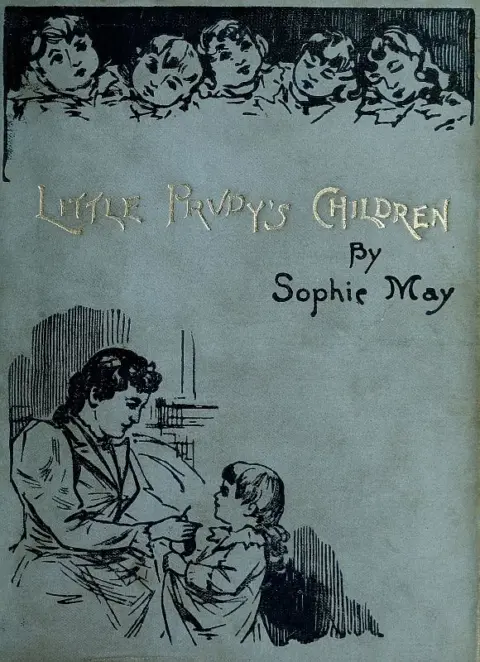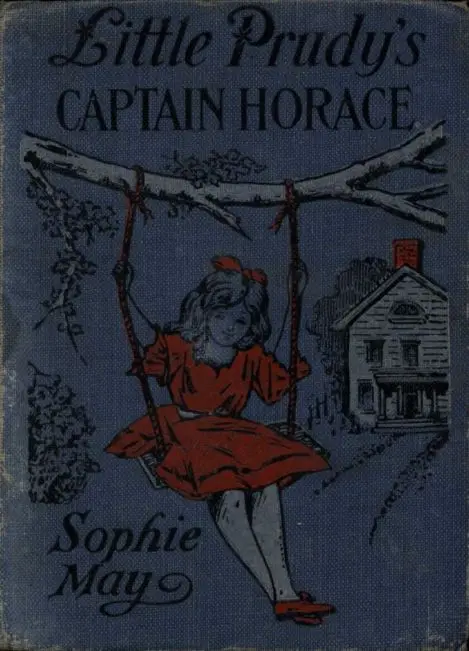
Little Prudy’s Captain Horace
Sophie May
THE CLASSIC COLLECTION · 1892
"Captain Horace" by Sophie May is a children's novel written in the late 19th century. The story revolves around young Horace Clifford, a spirited boy living in Indiana with his family, who dreams of being a soldier. Throughout the narrative, Horace navigates childhood adventures, including mischief, friendship, and the challenges of growing up, while grappling with the realities of war as his father serves as a captain in the army. At the start of the novel, we meet Horace and his sister Grace as they enjoy a lovely evening, looking at the stars and discussing their dreams. Horace's desire to become a soldier is evident as he engages in playful banter and lively imaginations about their father’s role in the army. Their innocent childhood is contrasted with the mention of impending dangers, as Mr. Clifford prepares for battle. The opening sets the stage for both lighthearted adventures—including making candy and camping out—and foreshadows the themes of loss and responsibility that will significantly shape Horace’s character as the story progresses.
Introduction adapted from the source catalogue; source summaries may be automatically generated.
Free to read · English · 24,177 words · No account needed
MAKE TIME FOR A GOOD BOOK
On by default. Untick to stop anonymous reading totals. Each page counts after 10 seconds in view. How this works.
Anonymous counting is on unless you have switched it off.
At the door of Mrs. Clifford's room they met aunt Louise coming out. The sight of Horace and Grace walking tearfully, hand in hand, was very touching to her.
"You dear little fatherless children," she whispered, throwing her arms around them both, and dropping tears and kisses on their faces.
"O, I can't, I can't bear it," cried Grace; "my own dear papa, that I love best of any one in all the world!"
Horace ran to his mother, and throwing himself on the bed beside her, buried his face in the pillows.
"O, ma! I reckon 'tisn't true. It's another Captain Clifford."
His mother lay so very white and still that Horace drew away when he had touched her: there was something awful in the coldness of her face. Her beautiful brown eyes shone bright and tearless; but there were dark hollows under them, deep enough to hold many tears, if the time should ever come when she might shed them.
"O, little Horace," whispered she, "mother's little Horace!"
"Darling mamma!" responded the boy, kissing her pale lips and smoothing the hair away from her cheeks with his small fingers, which meant to move gently, but did not know how. And then the young, childish heart, with its little load of grief, was pressed close to the larger heart, whose deep, deep sorrow only God could heal.
They are wrong who say that little children cannot receive lasting impressions. There are some hours of joy or agony which they never forget. This was such an hour for Horace. He could almost feel again on his forehead the warm good-by kisses of his father; he could almost hear again the words,--
"Always obey your mother, my son, and remember that God sees all you
do."
Ah, he had not obeyed, he had not remembered.
And that dear father would never kiss him, never speak to him again! He had not thought before what a long word Never was.
O, it was dreadful to shut his eyes and fancy him lying so cold and still on that bloody battle-field! Would all this awful thing be true to-morrow morning, when he waked up?
"O, mamma," sobbed the desolate child, "I and Grace will take care of you! Just forgive me, ma, and I'll be the best kind of a boy. I will, I will!"
Grandma had already led Grace away into the green chamber, where aunt Madge sat with the baby. The poor little girl would not be comforted.
Your reading position is saved on this browser. Take it to another device with a library code. Reading pages adapt to text, rather than matching a printed edition.
BEHIND THE BOOK
This eBook is for the use of anyone anywhere in the United States and most other parts of the world at no cost and with almost no restrictions whatsoever. You may copy it, give it away or re-use it under the terms of the Project Gutenberg License included with this eBook or online at www.gutenberg.org. If you are not located in the United States, you will have to check the laws of the country where you are located before using this eBook. Read the source licence.
The original source file, including credits and licence, is retained by this library. Request an original-format copy at no charge. Please include the book title and Project Gutenberg identifier #25484.
KEEP YOUR CURIOSITY GOING
Cécile Tormay

Moritz Busch
Coulson Kernahan
John L. Ransom

Maurice Baring
Frances Wright