
Van Zorn
Edwin Arlington Robinson
THE CLASSIC COLLECTION · 1902
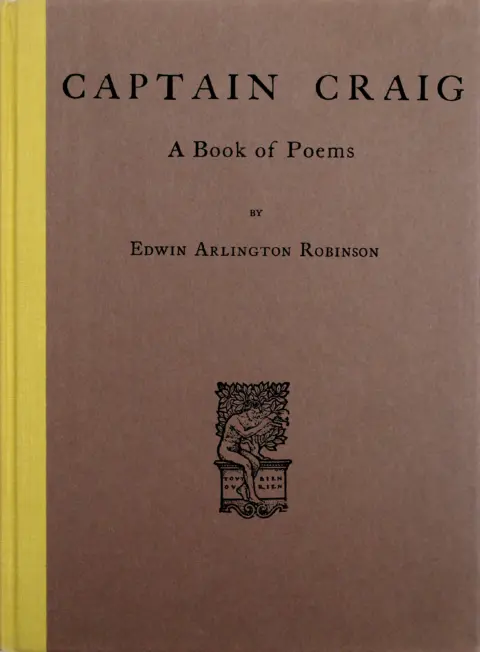
"Captain Craig" by Edwin Arlington Robinson is a collection of poems written in the early 20th century. It is anchored by a long narrative in verse set in Tilbury Town, following an eccentric, destitute philosopher named Captain Craig as observed by a young narrator and his friends. Through talk, letters, and character sketches, it meditates on truth, art, faith, failure, and the stubborn spark of joy amid want. Readers drawn to character-driven, philosophical poetry with a dry New England wit may find it compelling.
The opening of the work introduces Tilbury Town and the shabby, hungry Captain, whom only a few men befriend; the narrator visits his attic and hears bold, ruminative talk on gratitude, sunlight, laughter with God, and sincerity. After the narrator departs, letters arrive in which the Captain celebrates spring, quotes Sophocles, names his three hens after the Fates, recounts odd dreams (including a carpenter’s counsel to “find Nazareth”), tells an anecdote of Count Pretzel, and playfully critiques a friend’s ballad. Returning, the narrator finds the Captain failing; the old man reads a grandly humorous “testament” that bequeaths “God’s universe” and urges courage, climbing, and truth, then drifts through fevered dreams and dies with a final whimsical word about “trombones.” The friends gather at their tavern before escorting his funeral with the Tilbury band. The section closes by turning to a new poem, where the speaker fondly recalls Isaac and Archibald and a country walk to check on oats.
Introduction adapted from the source catalogue; source summaries may be automatically generated.
Free to read · English · 29,828 words · No account needed
MAKE TIME FOR A GOOD BOOK
On by default. Untick to stop anonymous reading totals. Each page counts after 10 seconds in view. How this works.
Anonymous counting is on unless you have switched it off.
“’Tis easy to compound a dirge like that,
And it is easy too to be deceived
And alienated by the fleshless note
Of half-world yearning in it; but the truth
To which we all are tending,--charlatans
And architects alike, artificers
In tinsel as in gold, evangelists
Of ruin and redemption, all alike,--
The truth we seek and equally the truth
We do not seek, but yet may not escape,
Was never found alone through flesh contempt
Or through flesh reverence. Look east and west
And we may read the story: where the light
Shone first the shade now darkens; where the shade
Clung first, the light fights westward--though the shade
Still feeds, and there is yet the Orient.
“But there is this to be remembered always:
Whatever be the altitude you reach,
You do not rise alone; nor do you fall
But you drag others down to more or less
Than your preferred abasement. God forbid
That ever I should preach, and in my zeal
Forget that I was born an humorist;
But now, for once, before I go away,
I beg of you to be magnanimous
A moment, while I speak to please myself--
The moment now for flowers; and your patience:
“Though I have heard it variously sung
That even in the fury and the clash
Of battles, and the closer fights of men
When silence gives the knowing world no sign,
One flower there is, though crushed and cursed it be,
Keeps rooted through all tumult and all scorn,--
Still do I find, when I look sharply down,
There’s yet another flower that grows well
And has the most unconscionable roots
Of any weed on earth. Perennial
It grows, and has the name of Selfishness;
No doubt you call it Love. In either case,
You propagate it with a diligence
That hardly were outmeasured had its leaf
The very juice in it of that famed herb
Which gave back breath to Glaucus; and I know
That in the twilight, after the day’s work,
You take your little children in your arms,
Or lead them by their credulous frail hands
Benignly out and through the garden-gate
And show them there the things that you have raised;
Not everything, perchance, but always one
Miraculously rooted flower plot
Which is your pride, their pattern. Socrates,
Could he be with you there at such a time,
Would have some unsolicited shrewd words
To say that you might hearken to; but I
Say nothing, for I am not Socrates.--
So much, good friends, for flowers; and I thank you.
“There was a poet once who would have roared
Away the world and had an end of stars.
Where was he when I quoted him?--oh, yes:
’Tis easy for a man to link loud words
With woeful pomp and unschooled emphasis
And add one thundered contribution more
To the dirges of all-hollowness, I said;
But here again I find the question set
Before me, after turning books on books
And looking soulward through man after man,
If there indeed be more determining
Play-service in remotely sounding down
The world’s one-sidedness. If I judge right,
Your pounding protestations, echoing
Their burden of unfraught futility,
Surge back to mute forgetfulness at last
And have a kind of sunny, sullen end,
Like any cold north storm.--But there are few
Still seas that have no life to profit them,
And even in such currents of the mind
As have no tide-rush to them, but are drowsed,
Crude thoughts may dart in armor and upspring
With a waking sound, when all is dim with peace,
Like sturgeons in the twilight out of Lethe;
And though they be discordant, hard, grotesque,
And all unwelcome to the lethargy
That you think means repose, you know as well
As if your names were shouted when they leap,
And when they leap you listen.--Ah! friends, friends,
There are these things we do not like to know:
They trouble us, they make us hesitate,
They touch us, and we try to put them off.
We banish one another and then say
That we are left alone: the midnight leaf
That rattles when it hangs above the snow--
Gaunt, fluttering, forlorn--scarcely may seem
So cold in all its palsied loneliness
As we, we frozen brothers, who have yet
Profoundly and severely to find out
That there is more of unpermitted love
In most men’s reticence than most men think.
Your reading position is saved on this browser. Take it to another device with a library code. Reading pages adapt to text, rather than matching a printed edition.
Edwin Arlington Robinson
Edwin Arlington Robinson
Edwin Arlington Robinson
BEHIND THE BOOK
This eBook is for the use of anyone anywhere in the United States and most other parts of the world at no cost and with almost no restrictions whatsoever. You may copy it, give it away or re-use it under the terms of the Project Gutenberg License included with this eBook or online at www.gutenberg.org. If you are not located in the United States, you will have to check the laws of the country where you are located before using this eBook. Read the source licence.
The original source file, including credits and licence, is retained by this library. Request an original-format copy at no charge. Please include the book title and Project Gutenberg identifier #77544.
KEEP YOUR CURIOSITY GOING
Eric Mackay
Edmund Gosse
Sophia Margaretta Hensley
Gilbert Parker
George MacDonald

Elizabeth Bibesco