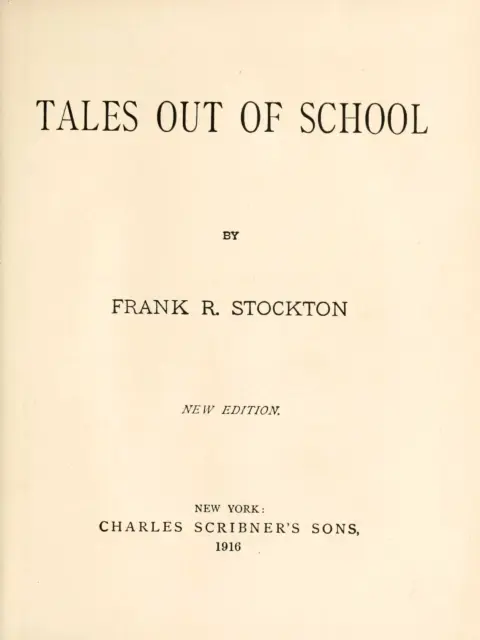
Pomona’s Travels A Series of Letters to the Mistress of Rudder Grange from her Former Handmaiden
Frank R. Stockton
THE CLASSIC COLLECTION · 1882
"Captain Chap; or, The Rolling Stones" by Frank R. Stockton is a novel written in the late 19th century. The story follows three boys—Philip Berkeley, Chapman Webster (Chap), and Phineas Poole (Phœnix)—who set off on an exciting adventure involving a tug-boat voyage and subsequent escapades. Their youthful enthusiasm and ambition take them into unexpected situations, highlighting themes of friendship and adventure. At the start of the novel, the boys find themselves in an extended summer vacation while their school is closed due to their teacher's illness. They quickly seize the opportunity for a thrilling trip on a tug-boat, which leads to a series of incidents including a mishap at sea that forces them onto a rescue steamer. As their journey unfolds, they meet interesting characters, encounter wildlife, and tackle challenges that test their resourcefulness. The opening sets a whimsical yet adventurous tone as Captain Chap emerges as a natural leader eager to guide his friends through their escapades.
Introduction adapted from the source catalogue; source summaries may be automatically generated.
Free to read · English · 65,722 words · No account needed
MAKE TIME FOR A GOOD BOOK
On by default. Untick to stop anonymous reading totals. Each page counts after 10 seconds in view. How this works.
Anonymous counting is on unless you have switched it off.
The dirty little boat sailed slowly toward the town, and when it reached The Rolling Stone, which was moored some little distance out in the river, it stopped, and the two young men seemed to be carefully examining her. Apparently satisfied that everything belonging to our friends had been taken out, and that they had probably gone on their way, they came up to the pier, and soon reached the hotel. The colonel was sitting on the piazza, not far from the dining-room window.
“Well,” said he, as the two fellows, now more untidy than ever, ascended the steps, “you’ve got back, have you?”
“Yes,” said one of them, “here we are.”
“Did you shoot much?” asked the colonel, gazing at them steadfastly.
“Shoot!” cried the one who did the talking. “We didn’t do none at all. Our guns was stole. The fellers that took ’em said they’d leave ’em with you, and I hope you’ve got ’em.”
A number of persons had now collected on the piazza, and the three boys and Adam were listening intently in the dining-room.
“Your guns stolen!” shouted the colonel. “You must be a pretty couple of fellows to let your guns be taken from you.”
“There was four of ’em that took ’em,” said the other, “and they was too many for us.”
“I should think half a good man would be too many for you two,” said the colonel, who was beginning to talk louder and louder. “How did they come to steal them?”
“They just wanted ’em, and they took ’em,” was the answer.
The other young man now considered it necessary to put in a word:
“We wasn’t just about when they took ’em. If we had been, they
wouldn’t----”
“Shut up!” roared the colonel. “I can’t stand any more such lying. I know all about you, and I know your guns were not stolen from you, and that you stole John Brewer’s sail-boat, with everything in it.”
“We didn’t steal no boat,” was the surly reply. “That was a lie them
fellers made up.”
“You didn’t, eh?” cried the colonel. “I’ve some witnesses on hand that’ll say something about that.”
Then, turning to the dining-room window, he shouted, “Come out here!” and immediately Adam and the three boys appeared.
“Now, then,” said the colonel, “will you say before these persons that you did not steal a boat from them?”
Your reading position is saved on this browser. Take it to another device with a library code. Reading pages adapt to text, rather than matching a printed edition.
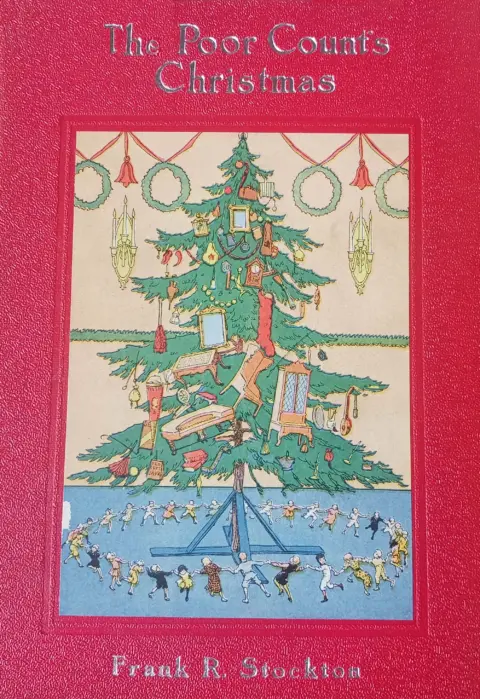
Frank R. Stockton

Frank R. Stockton

Frank R. Stockton

Frank R. Stockton
BEHIND THE BOOK
This eBook is for the use of anyone anywhere in the United States and most other parts of the world at no cost and with almost no restrictions whatsoever. You may copy it, give it away or re-use it under the terms of the Project Gutenberg License included with this eBook or online at www.gutenberg.org. If you are not located in the United States, you will have to check the laws of the country where you are located before using this eBook. Read the source licence.
The original source file, including credits and licence, is retained by this library. Request an original-format copy at no charge. Please include the book title and Project Gutenberg identifier #69838.
KEEP YOUR CURIOSITY GOING
Coulson Kernahan

Maurice Baring
Frances Wright
Cécile Tormay

Frederic Jesup Stimson

W. H. P. (William Henry Pope) Jarvis