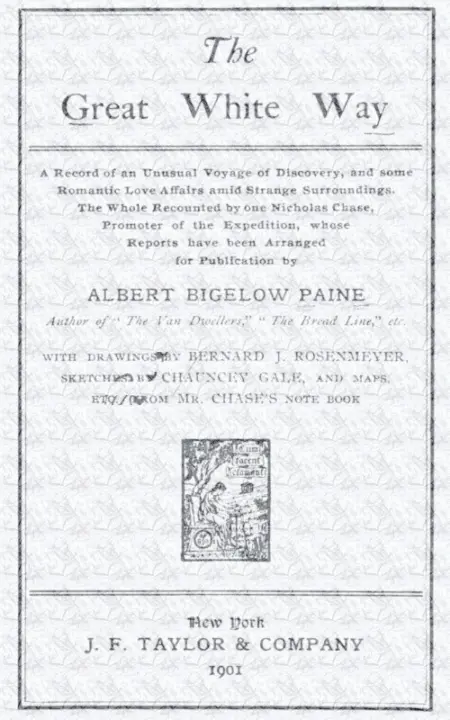
The great white way; a record of an unusual voyage of discovery, and some romantic love affairs amid strange surroundings
Albert Bigelow Paine
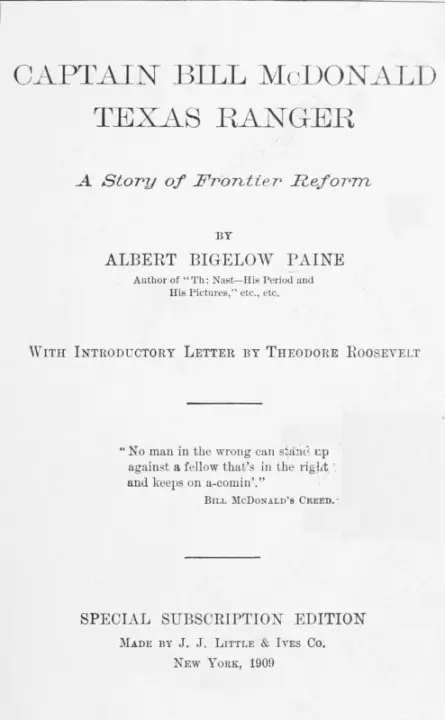
THE CLASSIC COLLECTION · 1909
"Captain Bill McDonald, Texas Ranger: A Story of Frontier Reform" by Albert Bigelow Paine is a historical account written in the early 20th century. The work chronicles the life and career of Captain Bill McDonald, a renowned Texas Ranger known for his formidable law enforcement efforts in the turbulent frontier days of Texas, particularly in areas plagued by outlaws and lawlessness. The narrative focuses on McDonald's fierce commitment to restoring order during a time of crime, violence, and social upheaval. The beginning of the story introduces Captain Bill McDonald as a legendary figure in Texas, his reputation inspiring both respect among good citizens and fear among criminals. The text describes his upbringing in Mississippi, the impact of the Civil War on his family, and his eventual move to Texas. It highlights his early experiences that honed his skills in marksmanship and leadership, setting the stage for his future endeavors as a lawman. As the text unfolds, it paints a vivid picture of the challenges he faced and the reformative actions he undertook to combat the rampant crime in various regions, culminating in his distinguished service in the Texas Rangers.
Introduction adapted from the source catalogue; source summaries may be automatically generated.
Free to read · English · 109,334 words · No account needed
MAKE TIME FOR A GOOD BOOK
On by default. Untick to stop anonymous reading totals. Each page counts after 10 seconds in view. How this works.
Anonymous counting is on unless you have switched it off.
"Corporal Miller was in the barracks. He was present at both
roll-calls."
"Very well, send for Corporal Miller. Send and get that Miller nigger
and let me talk to him."
Corporal Miller came promptly. He carried his gun and wore the air of a major general. His manner was distinctly defiant and insolent. Nobody said anything for a moment, but Captain Bill's X-ray eyes were boring him through. Miller grew uneasy, shifted his feet and seemed to be shriveling. Major Blocksom said:
"Corporal, Captain McDonald wants to ask you some questions. Set your
gun down over there."
Miller obeyed rather sullenly, and came to attention.
"Miller," said Captain Bill, "where were you on the night this murder
was committed?"
The tone and directness of the question dazed the man. He did not immediately find words. The Captain repeated:
"I want you to tell me, Miller, where you were when this murder was committed, on the night of August the 13th."
If Corporal Miller had any other story to tell, he had forgotten it.
"I was down town," he said.
"How long had you been down there?"
"All the evening, ever since dark."
"Where were you before that?"
"I was over in Matamoras. I came back to Mack Hamilton's house (Hamilton was the ex-soldier already in jail), and sat talking to his wife. Then I went up town. When the shooting happened, I was down the other side the beef market, at a saloon."
Captain Bill's eyes gleamed a little. All of this was in direct contradiction to the testimony of Major Penrose and Captain Macklin.
"Now, Miller," he said, "you couldn't have been anywhere you say, because you were here at eight o'clock and eleven o'clock, and answered to roll-call."
It was impossible for the man to reason, just then. He only realized that his statement was being contradicted, and that he was on the defensive.
"I reckon I know where I was!" he said sullenly.
Captain Bill was seemingly aroused.
"You scoundrel, don't you give me any of your back talk! You answer my
questions, sir!"
At this point Major Penrose interposed a query as to the whereabouts of Miller at some previous time--during a shooting affair that had occurred ten years before. Captain Bill promptly checked this diversion. He said:
"Hold on there, Penrose, we don't care for that now. I'm investigating what happened last week. You-all failed to find out anything. I'm finding out something. When I get through with Miller you can ask him about ninety-six or seventy-six, if you want to." Then, to Miller: "What did you do after the shooting?"
Your reading position is saved on this browser. Take it to another device with a library code. Reading pages adapt to text, rather than matching a printed edition.
Albert Bigelow Paine
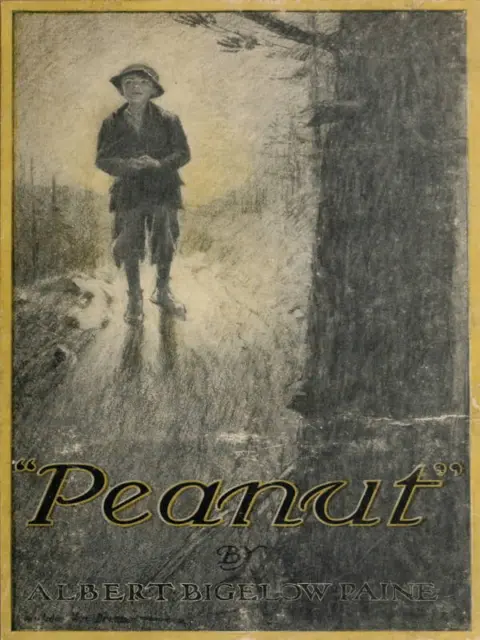
Albert Bigelow Paine

Albert Bigelow Paine
Albert Bigelow Paine
BEHIND THE BOOK
This eBook is for the use of anyone anywhere in the United States and most other parts of the world at no cost and with almost no restrictions whatsoever. You may copy it, give it away or re-use it under the terms of the Project Gutenberg License included with this eBook or online at www.gutenberg.org. If you are not located in the United States, you will have to check the laws of the country where you are located before using this eBook. Read the source licence.
The original source file, including credits and licence, is retained by this library. Request an original-format copy at no charge. Please include the book title and Project Gutenberg identifier #66849.
KEEP YOUR CURIOSITY GOING
Cécile Tormay

Moritz Busch
John L. Ransom
Frances Wright
Cécile Tormay

Mabel Potter Daggett