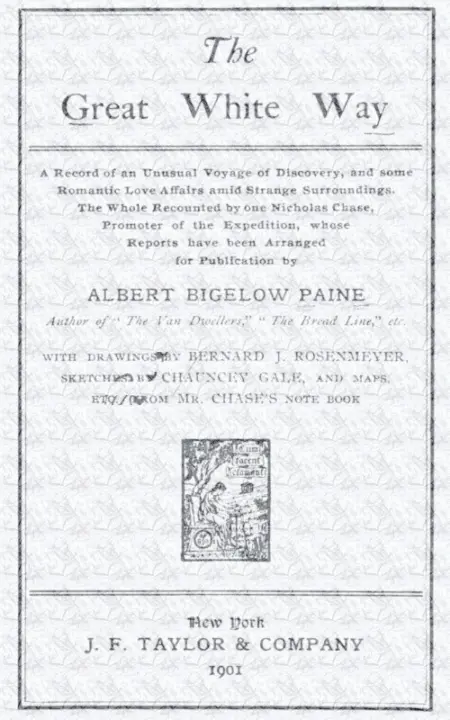
The great white way; a record of an unusual voyage of discovery, and some romantic love affairs amid strange surroundings
Albert Bigelow Paine
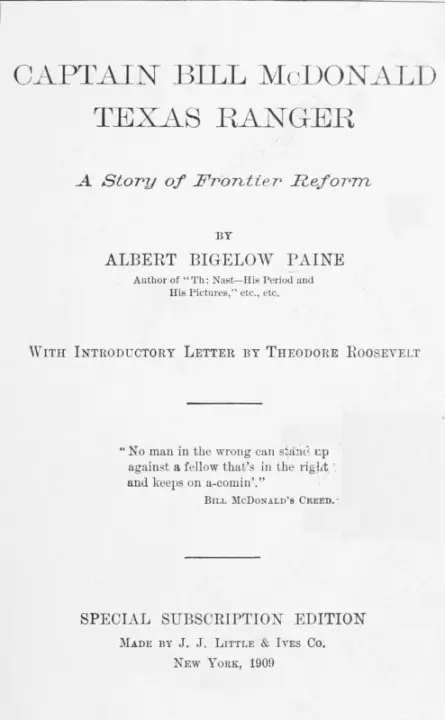
THE CLASSIC COLLECTION · 1909
"Captain Bill McDonald, Texas Ranger: A Story of Frontier Reform" by Albert Bigelow Paine is a historical account written in the early 20th century. The work chronicles the life and career of Captain Bill McDonald, a renowned Texas Ranger known for his formidable law enforcement efforts in the turbulent frontier days of Texas, particularly in areas plagued by outlaws and lawlessness. The narrative focuses on McDonald's fierce commitment to restoring order during a time of crime, violence, and social upheaval. The beginning of the story introduces Captain Bill McDonald as a legendary figure in Texas, his reputation inspiring both respect among good citizens and fear among criminals. The text describes his upbringing in Mississippi, the impact of the Civil War on his family, and his eventual move to Texas. It highlights his early experiences that honed his skills in marksmanship and leadership, setting the stage for his future endeavors as a lawman. As the text unfolds, it paints a vivid picture of the challenges he faced and the reformative actions he undertook to combat the rampant crime in various regions, culminating in his distinguished service in the Texas Rangers.
Introduction adapted from the source catalogue; source summaries may be automatically generated.
Free to read · English · 109,334 words · No account needed
MAKE TIME FOR A GOOD BOOK
On by default. Untick to stop anonymous reading totals. Each page counts after 10 seconds in view. How this works.
Anonymous counting is on unless you have switched it off.
Port Arthur, also on the Sabine River, below Orange, is a city of oil refineries, and is a port of entry, as its name implies, its outlet being through Sabine Pass. In March, 1902, trouble broke out there between the longshoremen and the operators of the refineries. As a result the longshoremen struck, and when the operators introduced Mexican laborers, the strikers, numbering about four hundred, drove them away and issued a manifesto, declaring that no more Mexicans need apply.
It was at this stage of the proceedings that Captain Bill was ordered by Adjutant-General Scurry to take several men and be on hand when the next Mexicans arrived. He took four--Privates Grude Brittain, Jim Keeton, John Blanton and Blaze Delling--picked men--and arrived on the ground a day in advance of the next hundred Mexicans, then on the way.
The Rangers proceeded immediately to the refineries, which are located several miles from the city, and saw nothing of the longshoremen that day. It was likely they would be on hand next morning when the Mexicans would arrive. Threats had been made that these Mexicans would not be allowed to leave the train for the refineries, and that if any such attempt was made, blood would flow.
When the train pulled in next morning Captain Bill and his men were on hand, fully expecting trouble. Everything was quiet, and the Mexicans were marched by the "Rangers to the refineries and went immediately to work. Then, there still being no sign of interference, Captain Bill said:
"Well, boys, let's go down in town now and see what's become of the
mob."
The mob was not hard to find. It had assembled on the street and was a good deal excited. Men were talking, and gesticulating, and denouncing, in words noisy and violent. As Captain Bill and his men drew up, a voice loud enough for them to hear said:
"There are them damned Rangers, now."
The little company of five continued to advance until within easy talking distance; then McDonald said:
"What are you men doing here, gathered in a crowd this way, on the
street?"
A longshoreman asked:
"Are you the Rangers?"
"That's what we are," said Captain Bill.
"Come down to protect the Mexicans, I guess."
"That's what the Adjutant-General sent us for," returned Captain Bill
pleasantly.
"Well, we're not going to let them work."
"They're already working," smiled Captain Bill.
"How many men did you bring with you?" asked the leader of the rioters.
"Enough to whip this crowd, if a fight is what you're looking for," Captain Bill answered--still pleasant.
"Where are they?"
"Here," said Captain Bill, indicating his brigade of four--five with
himself.
Your reading position is saved on this browser. Take it to another device with a library code. Reading pages adapt to text, rather than matching a printed edition.
Albert Bigelow Paine
Albert Bigelow Paine

Albert Bigelow Paine
Albert Bigelow Paine
BEHIND THE BOOK
This eBook is for the use of anyone anywhere in the United States and most other parts of the world at no cost and with almost no restrictions whatsoever. You may copy it, give it away or re-use it under the terms of the Project Gutenberg License included with this eBook or online at www.gutenberg.org. If you are not located in the United States, you will have to check the laws of the country where you are located before using this eBook. Read the source licence.
The original source file, including credits and licence, is retained by this library. Request an original-format copy at no charge. Please include the book title and Project Gutenberg identifier #66849.
KEEP YOUR CURIOSITY GOING
Cécile Tormay

Moritz Busch
John L. Ransom
Frances Wright
Cécile Tormay

Mabel Potter Daggett