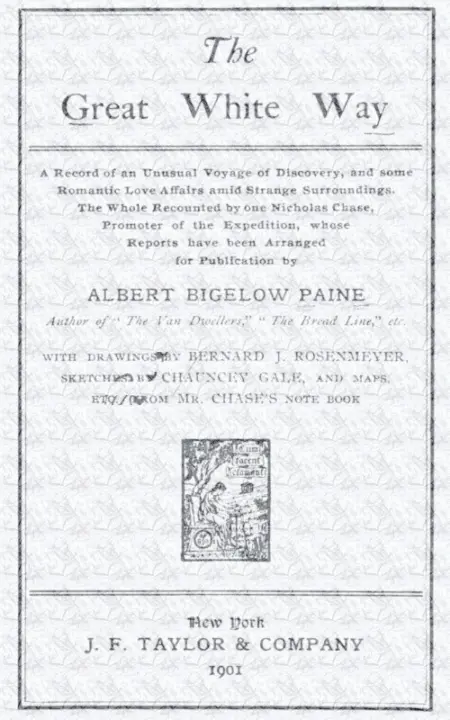
The great white way; a record of an unusual voyage of discovery, and some romantic love affairs amid strange surroundings
Albert Bigelow Paine
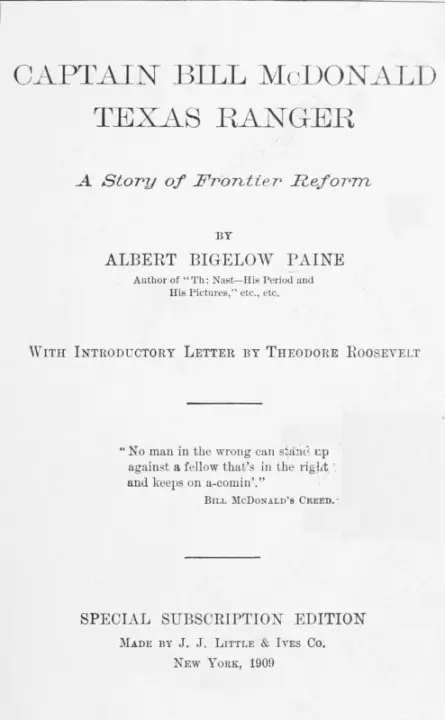
THE CLASSIC COLLECTION · 1909
"Captain Bill McDonald, Texas Ranger: A Story of Frontier Reform" by Albert Bigelow Paine is a historical account written in the early 20th century. The work chronicles the life and career of Captain Bill McDonald, a renowned Texas Ranger known for his formidable law enforcement efforts in the turbulent frontier days of Texas, particularly in areas plagued by outlaws and lawlessness. The narrative focuses on McDonald's fierce commitment to restoring order during a time of crime, violence, and social upheaval. The beginning of the story introduces Captain Bill McDonald as a legendary figure in Texas, his reputation inspiring both respect among good citizens and fear among criminals. The text describes his upbringing in Mississippi, the impact of the Civil War on his family, and his eventual move to Texas. It highlights his early experiences that honed his skills in marksmanship and leadership, setting the stage for his future endeavors as a lawman. As the text unfolds, it paints a vivid picture of the challenges he faced and the reformative actions he undertook to combat the rampant crime in various regions, culminating in his distinguished service in the Texas Rangers.
Introduction adapted from the source catalogue; source summaries may be automatically generated.
Free to read · English · 109,334 words · No account needed
MAKE TIME FOR A GOOD BOOK
On by default. Untick to stop anonymous reading totals. Each page counts after 10 seconds in view. How this works.
Anonymous counting is on unless you have switched it off.
Captain Bill stepped into the creek, about three feet deep, and waded across. He noticed a bag, doubtless containing the stolen money, and observed that the robbers had laid their cartridges out on a log for convenient use. At that moment McCauley and McClure came hurrying up, apparently ready to shoot.
"Hold up boys! It's all right," said McDonald, "I've got 'em!"
McCauley and McClure waded across and assisted in searching the prisoners. A purse of gold was found in one of the men's pockets; the sack on the ground contained silver.
"Now, let's get out of this," said McDonald, "and get where it's warm."
"You're not going to make us wade that cold creek, are you" said Lewis,
shivering.
"Look here," said Captain Bill. "If you don't get across there and pretty quick, too, I'll duck you, head first. You've made me wade water up to my neck, all the afternoon."
They all crossed, then--the fifth time in the cold water that day for McDonald--and made their way to where he and McCauley had left their horses. Here they got a rope and bound the prisoners, their arms behind them. Captain Bill then called to the posse, still waiting in the road a quarter of a mile away listening for the sound of the shots that would probably bring down Rangers.
"Come on, boys," he yelled, "we've got em!"
So they came "lickety brindle," but presently stopped.
"Captain, are you sure you got 'em!"
"Yes, I've got 'em, and got 'em tied. Come on--there's no danger, now!"
The crowd tore through the brush to get over there, and some of them began abusing the captured men, declaring they had murdered the best man in Wichita Falls, and furnishing a graphic outline of what would happen to them, in consequence. What they said was all true enough, maybe, but the saying of it seemed in rather poor taste to Captain Bill.
"Look here," he said, "these men are my prisoners, now; you let them
alone."
He marched Lewis and Crawford over to Mart Boger's ranch, where all got some hot coffee and something to eat. Boger also supplied a wagon in which to haul the prisoners.
It was McDonald's first intention to take the men to Henrietta, for safe keeping, but against his judgment he was persuaded to take them to Wichita Falls. He gave orders, however, that none of the crowd should leave, as he did not wish the news of the capture to travel ahead of them--realizing that a mob of citizens would be likely to gather.
Your reading position is saved on this browser. Take it to another device with a library code. Reading pages adapt to text, rather than matching a printed edition.
Albert Bigelow Paine
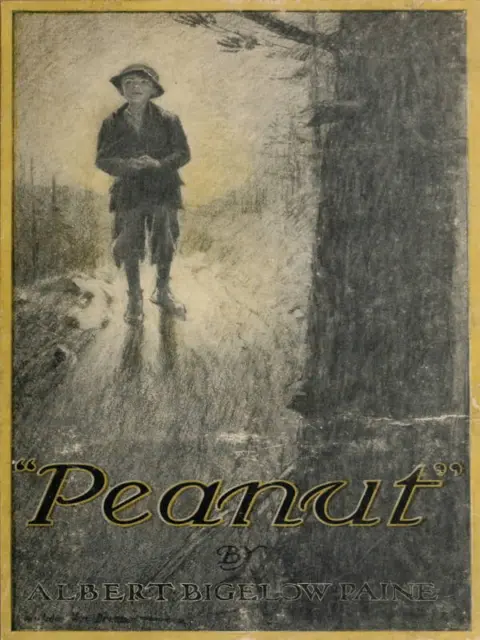
Albert Bigelow Paine

Albert Bigelow Paine
Albert Bigelow Paine
BEHIND THE BOOK
This eBook is for the use of anyone anywhere in the United States and most other parts of the world at no cost and with almost no restrictions whatsoever. You may copy it, give it away or re-use it under the terms of the Project Gutenberg License included with this eBook or online at www.gutenberg.org. If you are not located in the United States, you will have to check the laws of the country where you are located before using this eBook. Read the source licence.
The original source file, including credits and licence, is retained by this library. Request an original-format copy at no charge. Please include the book title and Project Gutenberg identifier #66849.
KEEP YOUR CURIOSITY GOING
Cécile Tormay

Moritz Busch
John L. Ransom
Frances Wright
Cécile Tormay

Mabel Potter Daggett