THE CLASSIC COLLECTION✦My diaries, being a personal narrative of events 1888-1914, Part 2 (1900-1914)CLASSIC FREE BOOKS
My diaries, being a personal narrative of events 1888-1914, Part 2 (1900-1914)
Wilfrid Scawen Blunt
THE CLASSIC COLLECTION · 1896
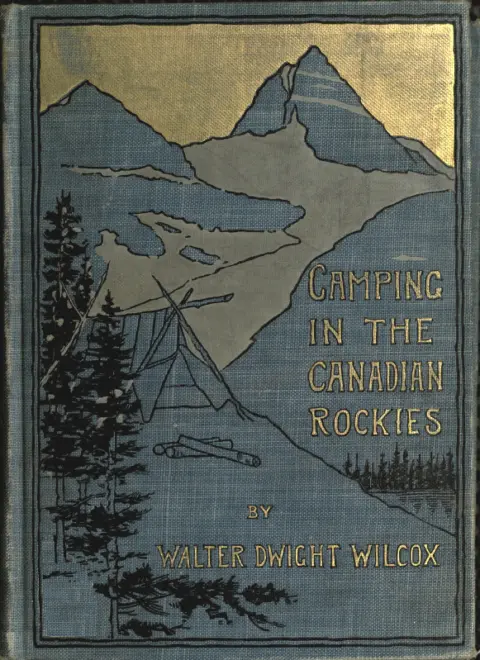
"Camping in the Canadian Rockies" by Walter Dwight Wilcox is a travel memoir and exploration account written in the late 19th century. The book vividly captures the author's experiences during camping excursions in the Canadian Rockies, focusing on the breathtaking landscapes around Banff, Lake Louise, and Glacier, along with details about early explorations of the region. Wilcox shares his passion for the natural beauty and adventure of the mountains, aiming to inspire readers with the allure of this wilderness. The opening portion of "Camping in the Canadian Rockies" introduces Banff as a focal point for tourists and adventurers exploring the Canadian Rockies. Wilcox describes the village's location and its surrounding natural attractions alongside historical insights about early explorations by figures such as Sir George Simpson and missionary Rundle. He paints a lively picture of the village's atmosphere, detailing the hustle of arriving tourists and the serene beauty of the mountains. The intricacies of Banff’s geography are explored, setting the stage for the adventures and natural marvels to come.
Introduction adapted from the source catalogue; source summaries may be automatically generated.
Free to read · English · 73,483 words · No account needed
MAKE TIME FOR A GOOD BOOK
On by default. Untick to stop anonymous reading totals. Each page counts after 10 seconds in view. How this works.
Anonymous counting is on unless you have switched it off.
So strong had this picture become that I felt the most intense anxiety to succeed in reaching the top of our pass, and gain at length a view of the reality, even at the risk of shattering these pleasant air castles, and annihilating, in a single instant, one of my best mental pleasure-grounds.
There were many dangers to be risked, however, and many obstacles to be overcome before this advantage might be gained. The steep slope was rendered formidable by reason of many great schrunds, or horizontal crevasses, caused by the ice of the glacier below, moving downward. In the intense cold of winter the moving ice becomes rigid and nearly stagnant, while the drifting snows accumulate, so as partly to fill these rents in the ice and bridge them over by cornices built out from one side or the other. When the increasing warmth of summer causes the ice to become plastic and to move more rapidly, these rents grow wider and the snow-bridges melt away and eventually fall into the crevasses so as to leave impassable chasms, dangerous to approach. Fortunately, it was not so late in the season that all the bridges were broken down, else we should have been completely defeated, for, on either side, the glacier was hemmed in by dangerous rock precipices. The south side of the glacier, moreover, was subject to frequent rock falls from the disintegrating cliffs of the Mitre. As we advanced over the extensive névé, the slope increased gradually but constantly, and soon became so steep that steps had to be cut, and great care was necessary not to slip. We crossed some of the schrunds by bridges of snow, where it was necessary to proceed with great caution, and, by sliding the feet along, apply the weight gently, lest the bridge should break through. We passed round others by walking along the lower edge or lip of the crevasse, which gave us a splendid but almost terrifying view of the gloomy caverns, extending down through the snow and ice to unknown depths. The dark-blue roofs of these crevasses were hung with dripping icicles, while from far below could be heard the sound of rushing, sub-glacial streams. Three hours of this slow, toilsome work were necessary to gain 1000 feet in altitude. We were now more than 8000 feet above the sea, and the atmosphere was raw and cold. Large damp flakes of snow and granular hail fell occasionally from a cloudy sky, silently and swiftly, through a quiet atmosphere. The whole horizon was bounded by high mountains, covered with glaciers and patches of snow, altogether barren and destitute of vegetation. Not a single tree or shrub, nor even a grassy slope at the far end of the great amphitheatre of mountain walls by which we were hemmed in, relieved the stern, cold monotony of the scene. So far as we might judge by our surroundings, we might have been exploring the lonely, desolate mountains of Spitzbergen, or some distant polar land, where frost and winter rule perpetual. Our progress up the slope of the glacier was very slow, as each step had to be cut out with the ice-axe. The pitch was so steep that a misstep might have resulted in our all sliding down and making further exploration of the schrunds below. The whole party was, in consequence, more or less affected by these cheerless circumstances, and became much depressed in spirit. As, however, the condition of the body is in great part responsible for all mental and moral ailments, so it was in our case. Had we been walking rapidly, so that the circulation of the blood had been vigorous and strong, both mind and body would have been in good condition, and the cold air, the snow, and bleak mountains would have been powerless to discourage. It is always at such times that mountain climbers begin to ask themselves whether the results are worth the efforts to attain them. Any one who has climbed at all, as we learn by reading the experiences of mountaineers, at many times has said to himself: “If I get home safely this time I shall never again venture from the comforts of civilization.” The ancients, when in the thick of battle, or at the point of shipwreck, were accustomed to vow temples to the gods should they be kind enough to save them, but they usually forgot their oaths when safely home. Mountaineers in like manner forget their resolves, under the genial influence of rest and food, when they reach camp.
Your reading position is saved on this browser. Take it to another device with a library code. Reading pages adapt to text, rather than matching a printed edition.
BEHIND THE BOOK
This eBook is for the use of anyone anywhere in the United States and most other parts of the world at no cost and with almost no restrictions whatsoever. You may copy it, give it away or re-use it under the terms of the Project Gutenberg License included with this eBook or online at www.gutenberg.org. If you are not located in the United States, you will have to check the laws of the country where you are located before using this eBook. Read the source licence.
The original source file, including credits and licence, is retained by this library. Request an original-format copy at no charge. Please include the book title and Project Gutenberg identifier #49292.
KEEP YOUR CURIOSITY GOING
Wilfrid Scawen Blunt
Wilfrid Scawen Blunt

E. W. (Edgar Watson) Howe
Francis Greenleaf Allinson & Anne C. E. (Anne Crosby Emery) Allinson
Cyrenus Cole

John Martineau