THE CLASSIC COLLECTION✦Found in the Philippines: The Story of a Woman’s LettersCLASSIC FREE BOOKS
Found in the Philippines: The Story of a Woman’s Letters
Charles King
THE CLASSIC COLLECTION · 1890
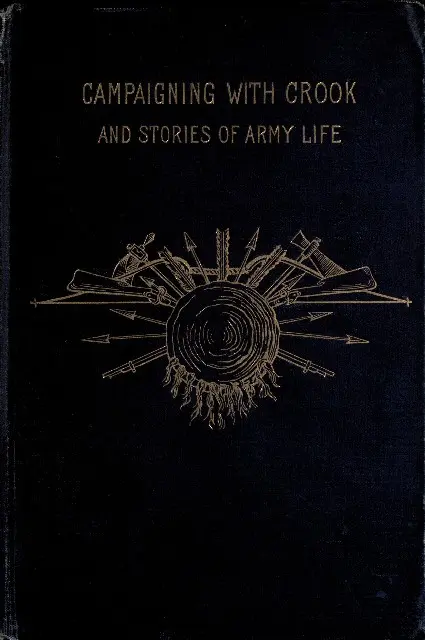
"Campaigning with Crook and Stories of Army Life" by Captain Charles King is a historical account written in the late 19th century. The book provides an insider's perspective on military campaigns, particularly focusing on the Sioux Campaign of 1876, and highlights the experiences of soldiers and their interactions with Native Americans during this turbulent period in American history. The opening of the narrative introduces the reader to the preparations at Fort Hays, where King and his fellow soldiers are eagerly awaiting orders amidst a backdrop of army life filled with social engagements and camaraderie. He recounts the recent battle on the Little Horn and the impending sense of action as news arrives regarding General Crook's campaign against the Sioux. With vivid descriptions of the regiment's significance and the environment, the text sets the stage for a gripping tale of bravery, strategy, and the harsh realities faced by soldiers on the frontier, culminating in a sense of duty and anticipation for the challenges ahead.
Introduction adapted from the source catalogue; source summaries may be automatically generated.
Free to read · English · 80,894 words · No account needed
MAKE TIME FOR A GOOD BOOK
On by default. Untick to stop anonymous reading totals. Each page counts after 10 seconds in view. How this works.
Anonymous counting is on unless you have switched it off.
"Back, every man of you!" he said. "He killed my father, but, by God, it has got to be a fair trial!" Lowrie, the doctor, and the detective were at his back, and Nemahbin hesitated, thought better of its mad impulse, and retired. That night Frost lay behind the prison bars, accused of an array of crimes, with cold-blooded murder as the climax, and Sam Morrow, Dick Graham, and Nellie met once more at the old home.
In less than a month Frost's last hope had gone. Whether his pluck and nerve had given out entirely, whether the rapid accumulation of damaging evidence had made him fearful that even hanging would be too good for him if all his past were "ferreted out," as now seemed likely, or whether he hoped, by confession, to gain mercy, is not known; but, before his trial, he made full admission of his guilt. He had come to Nemahbin hoping to get such a hold on the old man by telling him he could find Sam that he would be welcomed, and allowed to prosecute his suit with Nellie, who was plainly fascinated. If he could gain her love and her hand, he might settle down, be respectable on old Morrow's money, and then, even if Sam did come home, he would not be apt to expose the man his sister loved and married. But his efforts to convince the old man that he was trying to find Sam, while all the time he was doing all he knew how to keep him on the wrong track, were at constant cross-purposes. The old man soon became suspicious of him, would advance him no money, paid him a nominal sum for keeping books, etc., the first three months he was there, then relieved him of that duty, and kept up incessant cross-questioning. At last Frost found out that Graham suspected him of being a deserter, and that the old man had got that idea and also that his own boy was somewhere in the army. Then came the news of the Custer massacre, and by that time he felt sure he could win Nellie's hand if her father's consent could be gained; but Morrow was all suspicion and eagerness, and Frost knew by his manner that he was on the trail of his lost boy by means of letters--and these letters would plainly betray him, who had deserted from Sam's own regiment. He hurried to Chicago, and there--there he came upon that list of killed in the battle of the Little Big Horn, and among the names was the one he wanted to see, Sergeant Sam Moore. It decided him at once. He went to his uncle, claiming that he was about to marry Nellie Morrow, got from him a small supply of money, and came back determined to win her at once. She was the old man's only child and sole heir. That very day Morrow had told him that he had found him out, that in his absence he had received letters proving him to be a scoundrel, and, giving him just one chance to tell him where his lost boy was or to leave. Frost feared to tell then, as he knew the miller would insist on proofs, and in some way his own connection with the regiment would be known. That evening, before tea, Morrow, in an angry interview, which Schaffer partially overheard, told him he had proofs of his rascality--letters to settle his case for good and all. Then he became desperate. Soon as Dick had gone to town with the ladies he went to Graham's room, got the revolver, and once more went to the mill, and found Morrow at the office door. It was then almost dark. Then came the accusation of desertion, and, once in the office, Morrow had called him by his soldier name, and Frost knew "all was up." He must have those papers. He drew the revolver to frighten the old man, and it went off, killing him instantly. He was horror-stricken, but strove to collect himself. Flight would betray him at once as the murderer. Why not make it a case of suicide--leave the pistol by him? No--that would not do. It was Graham's--Ha! why not make Graham the guilty one? Quickly he got the safe key from the old man's pocket, unlocked and obtained the cash-drawer, with its five hundred dollars in green-backs--opened the desk, and rummaged through the letters till he found one from the headquarters of the Seventh Cavalry, which gave a description of several men almost his height and general appearance who had deserted. Among them he recognized his own and his soldier name. With these he went to the cottage, leaving all dark at the mill, burned the letter, hid portions of the money in Graham's mattress, and was thinking, in terror, what to do next, when he heard voices on the road. He dare not go out, and so wasted some time in the house. When he heard Graham drive back with the buggy he hurriedly undressed and went to bed. Then Schaffer came home and he called him in, that the boy might say that he was in bed and undressed; but when Graham entered he shammed sleep. Roused, at last, by Graham's demand for his money and the news that he was going away, an idea occurred to him. Cutting a slit in his finger with a razor, he let the blood fall on a couple of five-dollar bills--smeared and quickly dried it--gave them to Graham before he started, and as soon as he was gone went busily to work. Going down to the mill as soon as satisfied that all was safe--Schaffer asleep and Dick far on his way to the railroad--he found the east door locked. Then he knew that Graham had been there; had locked the door and taken the key to the hall of the mill-house, and of course had seen nothing of the body. He got the key, obtained Graham's overalls from the mill, burned them in the stove at the cottage--as he argued Dick could have done had he bloodied them in the affray--and then in Graham's room had found his cambric handkerchief. Once more he went down to the ghostly mill, and dipped this into the blood of his victim; then locked the mill door (he had locked the office door, leaving the key inside), put the key back in the house, returned to the cottage, and to bed. He had woven a chain for Graham that, added to the poor fellow's flight and his previous disagreements, would fasten all suspicion on him as the murderer. Then he thought of the money. He rose, bundled it loosely in an old oyster-can, stole out in the gray light of approaching dawn, and buried it in the loose sand down on the shore of the mill-pond, just where all the cattle would go for water, and trample out all traces within an hour; then once more he went back to bed, and to the counterfeited sleep from which Schaffer had such difficulty in rousing him. It was well planned--and when he heard the boy declare he had seen Graham coming from the mill at 11 o'clock he thought it perfect.
Your reading position is saved on this browser. Take it to another device with a library code. Reading pages adapt to text, rather than matching a printed edition.
Charles King

Charles King

Charles King

Charles King
BEHIND THE BOOK
This eBook is for the use of anyone anywhere in the United States and most other parts of the world at no cost and with almost no restrictions whatsoever. You may copy it, give it away or re-use it under the terms of the Project Gutenberg License included with this eBook or online at www.gutenberg.org. If you are not located in the United States, you will have to check the laws of the country where you are located before using this eBook. Read the source licence.
The original source file, including credits and licence, is retained by this library. Request an original-format copy at no charge. Please include the book title and Project Gutenberg identifier #37480.
KEEP YOUR CURIOSITY GOING
Cécile Tormay

Moritz Busch
John L. Ransom
Frances Wright
Cécile Tormay

Mabel Potter Daggett