THE CLASSIC COLLECTION✦Found in the Philippines: The Story of a Woman’s LettersCLASSIC FREE BOOKS
Found in the Philippines: The Story of a Woman’s Letters
Charles King
THE CLASSIC COLLECTION · 1890
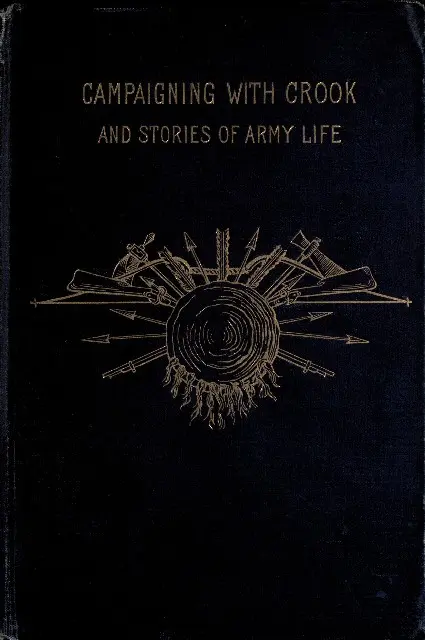
"Campaigning with Crook and Stories of Army Life" by Captain Charles King is a historical account written in the late 19th century. The book provides an insider's perspective on military campaigns, particularly focusing on the Sioux Campaign of 1876, and highlights the experiences of soldiers and their interactions with Native Americans during this turbulent period in American history. The opening of the narrative introduces the reader to the preparations at Fort Hays, where King and his fellow soldiers are eagerly awaiting orders amidst a backdrop of army life filled with social engagements and camaraderie. He recounts the recent battle on the Little Horn and the impending sense of action as news arrives regarding General Crook's campaign against the Sioux. With vivid descriptions of the regiment's significance and the environment, the text sets the stage for a gripping tale of bravery, strategy, and the harsh realities faced by soldiers on the frontier, culminating in a sense of duty and anticipation for the challenges ahead.
Introduction adapted from the source catalogue; source summaries may be automatically generated.
Free to read · English · 80,894 words · No account needed
MAKE TIME FOR A GOOD BOOK
On by default. Untick to stop anonymous reading totals. Each page counts after 10 seconds in view. How this works.
Anonymous counting is on unless you have switched it off.
A week of intense excitement followed. Not only in Nemahbin was the mysterious death of old Morrow the one subject of conversation, but all through the surrounding counties people talked of nothing else. By sunset of that beautiful Monday the news had spread far and wide; the reporters of the city journals were already on the spot, and by Tuesday night the verdict of the coroner's jury had gone forth and the officers of the law were in search of the criminal, whose name flashed over the humming wires from one ocean to another. Richard Graham stood accused of the murder of his employer, and Richard Graham had gone, no one knew whither.
But there were those who could not and would not believe it of him, and foremost among them was the minister. The evidence against him was mainly circumstantial; the principal accuser was Frost, and the chain of circumstances that linked Graham with the crime were substantially as follows:
The boy who worked around the mill-house and slept in the second story of the Graham's cottage testified that about half an hour before sunset Sunday evening he heard old Morrow "cussing and swearing" at somebody down in the mill, while he was going out to drive the cows home; didn't see who it was, but ten minutes afterwards as he came back he saw Graham pitching stones into the stream down below the mill, "looking queer;" called to him twice, but Graham did not answer; supposed he was mad at the old man for cussing him so--they had had lots of trouble for a week; heard the old man tell him he was going to get rid of him if he didn't do different.
That night he (the witness) went out in the country a piece and did not come home until half-past ten. It was all dark around the mill when he got back. It had been raining, but the sky was brighter then, and as he passed the south door he was surprised to see it open. The old man generally locked it and went home early. He was just going to go and shut it when a man came out. It "skeered" him because the old man had given him fits for being out late and lying abed in the morning, so he stopped short to wait until he got away. The man shut and locked the door, and walked up the road ahead of him, and then he saw that it was not the old man, but young Graham, and that Mr. Graham was going straight up to the mill-house, so he cut across to the cottage and got in soft as he could. Yes, it might have been eleven o'clock by that time, and he did not want Mr. Frost, or Mr. Graham either, to know he was out so late. It was all dark at the mill-house, and all dark at the cottage, but Mr. Frost heard him and called him into his room and asked for a dipper of water. Mr. Frost was in bed and asked him what time it was, and said he had been asleep, but waked up with a headache; told him he did not know the time; didn't want him to know it was so late, 'cause he might tell the old man. Mr. Frost asked him where Dick was, and just then they heard Dick coming up the front steps, and the witness went up to his own room. Heard them talking down-stairs for a little while, but could not understand what they were saying; did not listen particularly; went to sleep, and slept a good while; was awakened by hearing some noise in Dick's room, which was directly under his--sounded like something glass being broken, but everything was quiet right off, and he thought he might have dreamed it. Next thing he knowed it was morning, and Mandy, the cook over at the mill-house, was calling to him from the bottom of the stairs to get up right off--the master hadn't come home all night, and there was people waitin' down at the mill. Dick's room was open and the bed hadn't been slept on, and his clothes and things were all thrown all round on the floor; it looked queer, she said; he was gone, too; ran down as quick as he could dress and called Mr. Frost, who was asleep in bed and did not wake easy; called him three or four times and banged on the door, and at last opened it and called him louder; then he woke up slowly and wanted to know the matter; told him Mandy said Mr. Morrow had not been home and that Dick was not there, and there was farmers with wheat at the mill. He said go and open the mill and he would be down in a minute; told him that Dick had the key and had locked the mill late last night; saw him do it. Mr. Frost jumped right up in bed excited like and said, "You saw him do it! When, where were you?" and so had to tell him about Dick's being there, coming out of the mill late as nearly eleven o'clock. Then Mandy came back and said she found the key hanging on the peg inside the hall-door, and witness took it and went down and opened the south door. The office window-shade was down and the office door on the east side was shut, and so it was kinder dark, but he and the two men waiting there went right through the mill into the office, and there they found the old man dead on the floor, with lots of blood streaming from his head. It skeered him awful, and they ran out. Then Mr. Frost came, and he was pale, and said, "My God, what an awful thing!" and they sent right to 'Mahbin for Dr. Green, and the mayor and constable; and that was all he knowed.
Your reading position is saved on this browser. Take it to another device with a library code. Reading pages adapt to text, rather than matching a printed edition.
Charles King

Charles King

Charles King

Charles King
BEHIND THE BOOK
This eBook is for the use of anyone anywhere in the United States and most other parts of the world at no cost and with almost no restrictions whatsoever. You may copy it, give it away or re-use it under the terms of the Project Gutenberg License included with this eBook or online at www.gutenberg.org. If you are not located in the United States, you will have to check the laws of the country where you are located before using this eBook. Read the source licence.
The original source file, including credits and licence, is retained by this library. Request an original-format copy at no charge. Please include the book title and Project Gutenberg identifier #37480.
KEEP YOUR CURIOSITY GOING
Cécile Tormay

Moritz Busch
John L. Ransom
Frances Wright
Cécile Tormay

Mabel Potter Daggett