THE CLASSIC COLLECTION✦Little Guzzy, and other storiesCLASSIC FREE BOOKS
Little Guzzy, and other stories
John Habberton
THE CLASSIC COLLECTION · 1901
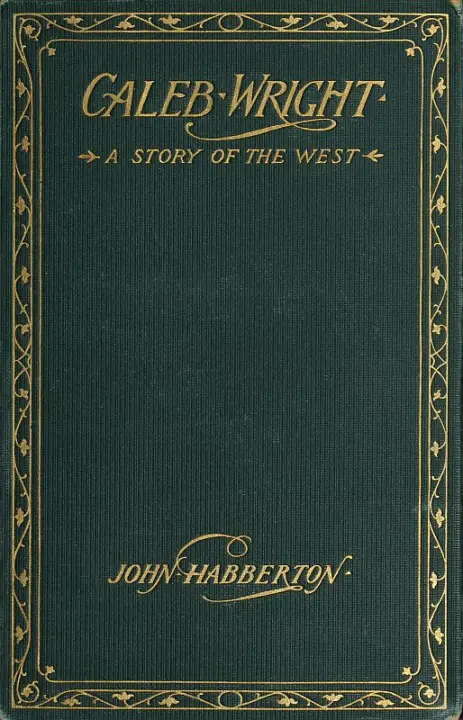
"Caleb Wright: A Story of the West" by John Habberton is a novel written in the early 20th century. The book follows Philip Somerton and his wife, Grace, as they navigate the challenges of newfound wealth and the transition from city life in New York to an inheritance in a small Western town named Claybanks. The couple's journey explores themes of ambition, identity, and the cultural contrasts between urban and rural life. At the start of the story, Philip, a young clerk, discovers he has inherited his uncle's property and responsibilities in the town of Claybanks, which includes managing a general store and providing for a clerk named Caleb Wright. Philip and Grace's excitement about their fortune quickly turns to concern as they face the realities of rural living and their roles in a small community. The couple's dynamics are tested as they adapt to their new life, encountering the quirks of their surroundings, including Caleb's peculiarities and the challenges of running a business in an unfamiliar environment. The opening chapter sets the stage for their personal growth and hints at the adventures that await them as they settle into their new identities.
Introduction adapted from the source catalogue; source summaries may be automatically generated.
Free to read · English · 82,830 words · No account needed
MAKE TIME FOR A GOOD BOOK
On by default. Untick to stop anonymous reading totals. Each page counts after 10 seconds in view. How this works.
Anonymous counting is on unless you have switched it off.
"As I remarked before I left, you're a rabid Westerner," Philip said, in admiration of the young man's enthusiasm.
"Give it any name you like," was the reply, "though I'm suggesting only what any Eastern man would do. Besides, I'd like to see everything well started or arranged before Caleb can reach here."
"You seem to have become remarkably fond of Caleb on very short
acquaintance," said Philip.
"I have," was the reply, "and since I've learned that he was sent East principally to regain his health, I'd like, in justice to both you and him, that he should find nothing to give him a setback. That's only fair, isn't it?"
"'Tis more than fair. 'Tis very hearty, and greatly to your credit."
"Oh, well; put it that way, if you like."
Philip's goods began to arrive a day later, in farm wagons, moving almost in procession to and from Claybanks and the railway town, and several men worked at unpacking them, while Philip and Grace arranged them on the shelves and under the counters. When Saturday night ended the fourth day, the merchant and his wife were fit to enjoy a day of rest on Sunday. Sunday morning came, and while Philip and Grace were leisurely preparing their breakfast, there was a knock at the door. Philip opened it, and shouted:--
"Grace!"
Grace hurried from the kitchen, embraced a lady whom she saw, and
exclaimed:--
"Mary Truett!"
"Mrs. Wright, if you please," replied the lady.
"I beg a thousand pardons!" Grace gasped. She soon recovered herself and looked very roguish as she continued, "Won't you kindly introduce me to the distinguished-looking stranger beside you?"
Then Caleb pushed his hat to the back of his head, slapped his leg
noisily, and exclaimed:--
"Distinguished--looking--stranger! Hooray!"
"NOW, Caleb," said Philip, after the four had been seated at the breakfast table so long that most of the food had disappeared, "tell us all about it. Don't leave out anything."
"All right," said Caleb, after emptying his coffee-cup. "I'll begin at the beginning. I don't s'pose 'tis necessary to tell any of you that New York is a mighty big city, an' London is another, so--"
"New York savors of business, and so does London," said Philip, "and as this is Sunday, I must decline to hear a word about worldly things. I'm amazed that so orthodox a man as you should think of such matters on Sunday."
Your reading position is saved on this browser. Take it to another device with a library code. Reading pages adapt to text, rather than matching a printed edition.
John Habberton

John Habberton
John Habberton

John Habberton
BEHIND THE BOOK
This eBook is for the use of anyone anywhere in the United States and most other parts of the world at no cost and with almost no restrictions whatsoever. You may copy it, give it away or re-use it under the terms of the Project Gutenberg License included with this eBook or online at www.gutenberg.org. If you are not located in the United States, you will have to check the laws of the country where you are located before using this eBook. Read the source licence.
The original source file, including credits and licence, is retained by this library. Request an original-format copy at no charge. Please include the book title and Project Gutenberg identifier #43994.
KEEP YOUR CURIOSITY GOING
Coulson Kernahan

Maurice Baring
Frances Wright
Cécile Tormay

Frederic Jesup Stimson

W. H. P. (William Henry Pope) Jarvis