Enoch Crane
Francis Hopkinson Smith & F. Berkeley (Frank Berkeley) Smith
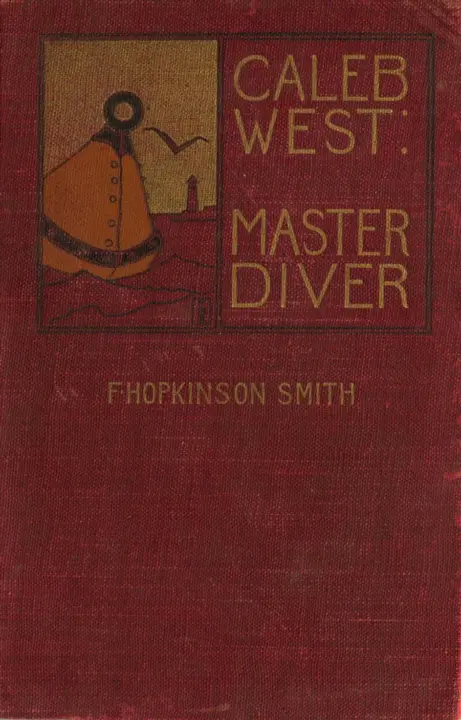
THE CLASSIC COLLECTION · 1897
"Caleb West, Master Diver" by Francis Hopkinson Smith is a novel written in the late 19th century. The story follows the character of Henry Sanford, an ambitious and optimistic young engineer, as he embarks on the construction of a challenging lighthouse on Shark Ledge, relying on the expertise of his friend Captain Joe and the skilled diver Caleb West. The narrative transports readers into the maritime world, blending themes of friendship, work ethic, and the natural elements that shape the lives of its characters. At the start of the novel, we are introduced to a bustling city awakening to the morning sun, setting the stage for Henry Sanford, who is eager to begin work on his lighthouse project. We see his excitement rise as he receives news from Captain Joe about a vital sloop, the Screamer, which is essential for transporting heavy stones to the construction site. Sanford's anticipation is palpable, and as he prepares for the task ahead, the reader is introduced to a cast of characters including the sturdy and reliable Captain Joe and the experienced diver Caleb West. Their camaraderie and determination to overcome the challenges posed by the sea convey a sense of adventure and resilience, drawing readers into the unfolding story.
Introduction adapted from the source catalogue; source summaries may be automatically generated.
Free to read · English · 88,321 words · No account needed
MAKE TIME FOR A GOOD BOOK
On by default. Untick to stop anonymous reading totals. Each page counts after 10 seconds in view. How this works.
Anonymous counting is on unless you have switched it off.
“I don’t know nothin’ about your transit, nor who fixed it to suit you,” snarled Carleton.
Sanford bit his lip, and made no answer. There were more important things to be done in the building of a light than the resenting of such insults or quarreling with a superintendent. The skipper, however, to whom the superintendent was a first experience, and who took his answer as in some way a reflection on his own veracity, walked quickly toward him with his fist tightly clinched. His big frame towered over Carleton’s.
“Thank you, Captain Brandt,” said Sanford, noticing the skipper’s expression and intent. “But Mr. Carleton isn’t in earnest. His transit is not here, and we cannot tell who fixed that.”
The men laughed, and the skipper stopped and stood aside, awaiting any further developments that might require his aid.
“In view of these measurements,” asked Sanford, as he held before Carleton’s eyes the piece of plank bearing Captain Joe’s record, “do you still order the six inches of concrete put in?”
“Certainly I do,” said Carleton. His ugly temper was gradually being hidden under an air of authority. Sanford’s tact had regained him a debating position.
“And you take the responsibility of the change?”
“I do,” replied Carleton in a blustering voice.
“Then please put that order in writing,” said Sanford quietly, “and I will see it done as soon as the tide lowers.”
Carleton’s manner changed; he saw the pit that lay before him. If he were wrong, the written order would fix his responsibility; without that telltale record he could deny afterward having given the order, if good policy so demanded.
“Well, that ain’t necessary; you go ahead,” said Carleton, with less
vehemence.
“I think it is, Mr. Carleton. You ask me to alter a bench-mark level which I know to be right, and which every man about us knows to be right. You refuse a written certificate if I do not carry out your orders, and yet you expect me to commit this engineering crime because of your personal opinion,—an opinion which you now refuse to back up by your signature.”
“I ain’t given you a single written order this season: why should I now?” in an evasive tone.
“Because up to this time you have asked for nothing unreasonable. Then
you refuse?”
“I do, and I’m not to be bulldozed, neither.”
“Caleb,” said Sanford, with the air of a man who had made up his mind, raising his voice to the diver, still standing in the water, “put that rod on the edge of the iron band.”
Your reading position is saved on this browser. Take it to another device with a library code. Reading pages adapt to text, rather than matching a printed edition.
Francis Hopkinson Smith & F. Berkeley (Frank Berkeley) Smith
Francis Hopkinson Smith

Francis Davis Millet & W. Hamilton (William Hamilton) Gibson & Will H. (Will Hicok) Low & John Ames Mitchell & Francis Hopkinson Smith
Francis Hopkinson Smith
BEHIND THE BOOK
This eBook is for the use of anyone anywhere in the United States and most other parts of the world at no cost and with almost no restrictions whatsoever. You may copy it, give it away or re-use it under the terms of the Project Gutenberg License included with this eBook or online at www.gutenberg.org. If you are not located in the United States, you will have to check the laws of the country where you are located before using this eBook. Read the source licence.
The original source file, including credits and licence, is retained by this library. Request an original-format copy at no charge. Please include the book title and Project Gutenberg identifier #42362.
KEEP YOUR CURIOSITY GOING
Coulson Kernahan

Maurice Baring
Frances Wright
Cécile Tormay

Frederic Jesup Stimson

W. H. P. (William Henry Pope) Jarvis