
In the Name of the People
Arthur W. Marchmont
THE CLASSIC COLLECTION · 1923
"By Wit of Woman" by Arthur W. Marchmont is a novel written in the early 20th century. The book unfolds in a backdrop filled with intrigue and personal conflict, centering around Christabel von Dreschler, a young woman who grapples with her father's disgrace and her own journey for justice. The narrative promises themes of deception, love, and the pursuit of truth, as Christabel navigates the treacherous waters of society, politics, and personal relationships. The opening of the novel introduces us to Christabel, who discovers letters revealing the story of her father's wrongful imprisonment and dishonor, stemming from a murder he did not commit. As she reads about the pain and persistence of Ernst von Dreschler, her father, it becomes clear that Christabel is determined to uncover the truth behind his demise. The plot thickens with the introduction of General von Erlanger, a powerful figure in the local government, and his connection to her father's past. Christabel quickly realizes that to clear her father's name and make sense of her own place in the world, she must employ her wit and charm, as she positions herself against formidable forces, including Madame d'Artelle and Count Karl. This sets the stage for a blend of personal growth and wider societal conflicts, suggesting a compelling and multi-layered narrative to follow.
Introduction adapted from the source catalogue; source summaries may be automatically generated.
Free to read · English · 82,166 words · No account needed
MAKE TIME FOR A GOOD BOOK
On by default. Untick to stop anonymous reading totals. Each page counts after 10 seconds in view. How this works.
Anonymous counting is on unless you have switched it off.
"Will you send her here?" and I stamped my foot angrily, and so drove her out of the room in the condition of nervous doubt and anxiety I desired.
With the maid's help my trunks were soon packed, and the work was nearly finished when Madame d'Artelle came back.
"Count Gustav is here," she said.
"Very well. You can close that box, Ernestine, and try to pack this toque in the top of the black one. You got everything I said for the voyage in the cabin trunk."
"He insists on seeing you, Christabel."
"I'll come down when I've finished." I spoke irritably. Irritation is the natural result of a couple of hours' packing.
Everything was ready when I went downstairs.
"I hear you are going away, Miss----"
"Gilmore," I broke in, giving him a look.
"I congratulate you on your--prudence." He too, like Madame d'Artelle, was obviously both relieved and pleased at the news.
"You need not smile at it. I am not doing it to please you, Count
Gustav."
"I wish to ask you a question if Madame d'Artelle----" and he paused
and looked at her.
"I don't see the need of all this mystery," she answered, tossing her
head as she left the room.
"Please be quick," I said, snappishly. "I am both in a hurry and a bad temper--a trying combination even for a woman of my disposition."
"You have not slept well, perhaps."
"No. I had to think. What is your question?"
"About Gareth?"
"I shall not answer it," I said shortly, and frowned as though the subject were particularly unwelcome and disturbing.
"I think I can understand;" he answered believing he could read my mood. "And about Karl and Madame?"
"I have not forgotten your sneer. I will not disgrace him." I spoke with as much bitterness and concentrated anger as I could simulate, and was pleased by the covert smile my words produced, although I appeared to be goaded to anger by it.
"I will tell you one thing. She shall not either. By to-morrow some one will be here from Paris who will see to that."
"That may be too late."
"No. You dare not do anything to-day. You dare not," I exclaimed,
passionately.
"You have told that to Madame?"
"No. She is nothing to me."
"You are very bitter."
"Again, no. You have only made me indifferent;" and as if I could bear no more, I hurried out of the room. I knew as well as if he had told me that the effect of my words would be to drive him to use the time of grace I had left him.
Your reading position is saved on this browser. Take it to another device with a library code. Reading pages adapt to text, rather than matching a printed edition.
Arthur W. Marchmont
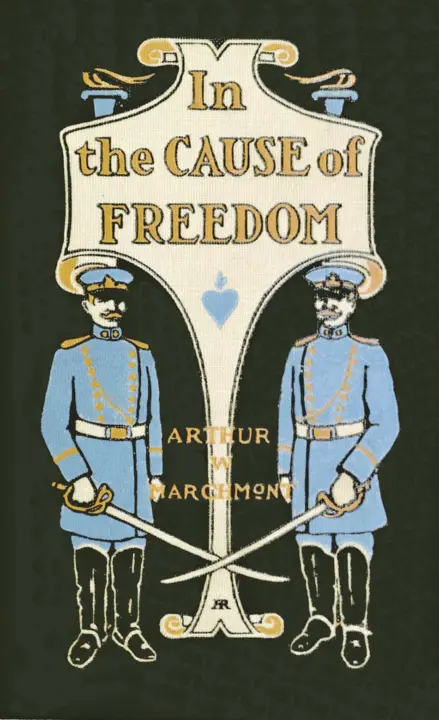
Arthur W. Marchmont
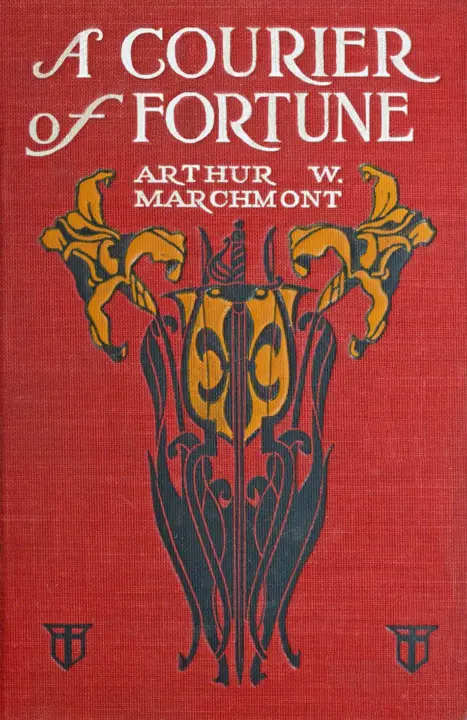
Arthur W. Marchmont
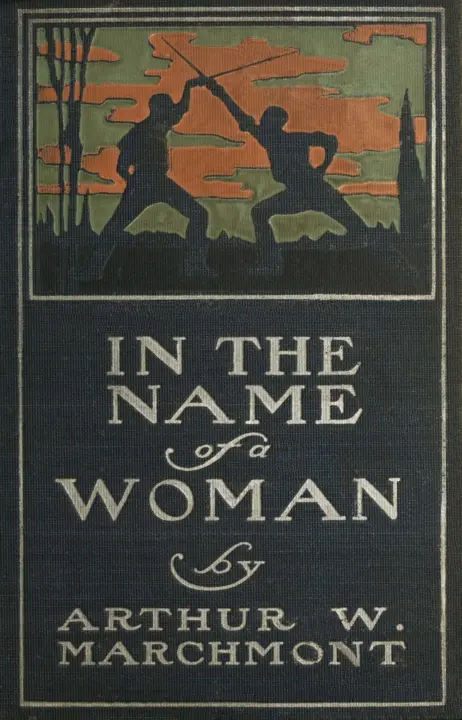
Arthur W. Marchmont
BEHIND THE BOOK
This eBook is for the use of anyone anywhere in the United States and most other parts of the world at no cost and with almost no restrictions whatsoever. You may copy it, give it away or re-use it under the terms of the Project Gutenberg License included with this eBook or online at www.gutenberg.org. If you are not located in the United States, you will have to check the laws of the country where you are located before using this eBook. Read the source licence.
The original source file, including credits and licence, is retained by this library. Request an original-format copy at no charge. Please include the book title and Project Gutenberg identifier #35828.
KEEP YOUR CURIOSITY GOING
Coulson Kernahan

Maurice Baring
Frances Wright
Cécile Tormay

Frederic Jesup Stimson

W. H. P. (William Henry Pope) Jarvis