
The William Henry Letters
Abby Morton Diaz
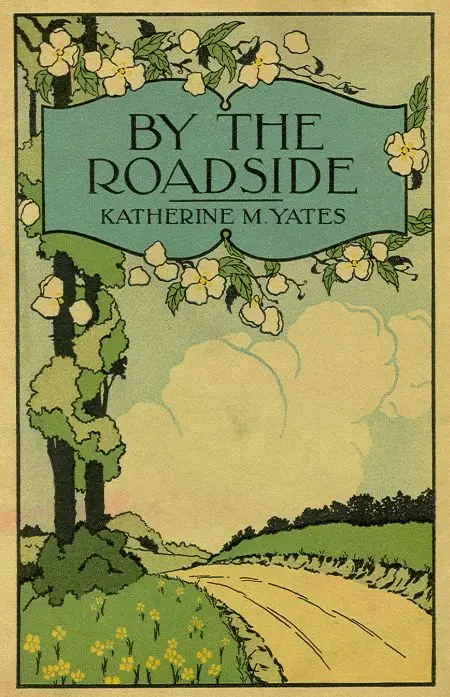
THE CLASSIC COLLECTION · 1908
"By the Roadside" by Katherine M. Yates is a philosophical children’s tale written in the early 20th century. The narrative follows a young girl named Marjorie who is guided by a character referred to as the Dream as she navigates various life lessons while embarking on her journey. The book addresses themes of self-discovery, the importance of honest intentions, and the idea that every individual has an essential role to play in helping others. In this charming story, Marjorie encounters numerous scenarios that prompt her to reflect on her motivations and actions. Through her adventures, she grapples with the balance between her desires to be helpful and her tendency to act impulsively. Each interaction, whether it’s about assisting a girl with a basket, a boy building a rabbit pen, or sharing her roses with those in need, serves as a catalyst for Marjorie’s personal growth. The Dream continually guides her to question her intentions and concludes that true work arises from genuine love and a readiness to assist others, regardless of whether the tasks seem significant or not. In the end, Marjorie realizes that even small acts of kindness contribute to a larger purpose, shaping her understanding of what it means to be genuinely helpful.
Introduction adapted from the source catalogue; source summaries may be automatically generated.
Free to read · English · 6,889 words · No account needed
MAKE TIME FOR A GOOD BOOK
On by default. Untick to stop anonymous reading totals. Each page counts after 10 seconds in view. How this works.
Anonymous counting is on unless you have switched it off.
"Probably he does it that way because he wants it that way," said the
Dream carelessly.
"But they don't look well that way, and it takes more pickets and more
nails and a longer time."
The Dream looked at the boy and the fence, critically. "It's not such a bad fence," he said, dryly; "and the boy looks fairly smart, doesn't he?--and he handles his tools as if he had built fences before. Perhaps he knows what he is about."
"Y-e-s, he looks smart enough," agreed Marjorie; "but he is certainly making a mistake now, and I think I ought to tell him about it."
"All right," said the Dream. "Go ahead."
So Marjorie approached the boy, who stopped hammering and looked up at her pleasantly. "I thought that I would better tell you--" began Marjorie, somewhat embarrassed, "that--that--" she found it more difficult than she had expected, "--well, you see, you are making a mistake."
"What do you mean?" asked the boy glancing along the trim row of
palings.
"Why, you are putting the pickets too close together," said Marjorie. "They don't look well that way, and they are too near the ground, besides. I was just speaking to my friend about it, and I thought that I ought to tell you, as well."
"Thank you," said the boy, gravely; and then:--"Do you know what I am
building this fence for?"
"No-o," said Marjorie. "I supposed it was just--just a fence."
"Well," said the boy, "a fence usually has some particular purpose; and, as a general thing, the person building it knows that purpose better than any one else, and just what sort of a fence is best in that especial case."
Marjorie said nothing, and the boy went on.
"I am fencing in a place for some white rabbits. Some of them are very small, and so I had to put the pickets near together and close to the ground. Do you see?"
"Oh," said Marjorie, "I didn't know what you were going to keep inside! Of course you would have to build it this way for the little rabbits. If I had known what it was for, I wouldn't have said anything."
"Was it necessary for you to know?" asked the boy. "It is my fence."
Marjorie flushed, "I don't think that you are very grateful," she said; "and, anyway, the pickets don't look well so close together, even if you do have to have it that way," and she turned and went back to the road.
"Well?" said the Dream, as she approached.
"He was disagreeable," said Marjorie, "and acted as if I had no right to tell him of his mistake."
Your reading position is saved on this browser. Take it to another device with a library code. Reading pages adapt to text, rather than matching a printed edition.
BEHIND THE BOOK
This eBook is for the use of anyone anywhere in the United States and most other parts of the world at no cost and with almost no restrictions whatsoever. You may copy it, give it away or re-use it under the terms of the Project Gutenberg License included with this eBook or online at www.gutenberg.org. If you are not located in the United States, you will have to check the laws of the country where you are located before using this eBook. Read the source licence.
The original source file, including credits and licence, is retained by this library. Request an original-format copy at no charge. Please include the book title and Project Gutenberg identifier #18409.
KEEP YOUR CURIOSITY GOING
Abby Morton Diaz
Helen Hunt Jackson
Mary Frances Blaisdell
Stuart Dodgson Collingwood

Kate Douglas Smith Wiggin
Hesba Stretton