THE CLASSIC COLLECTION✦A dead man’s diaryCLASSIC FREE BOOKS
A dead man’s diary
Coulson Kernahan
THE CLASSIC COLLECTION · 1890
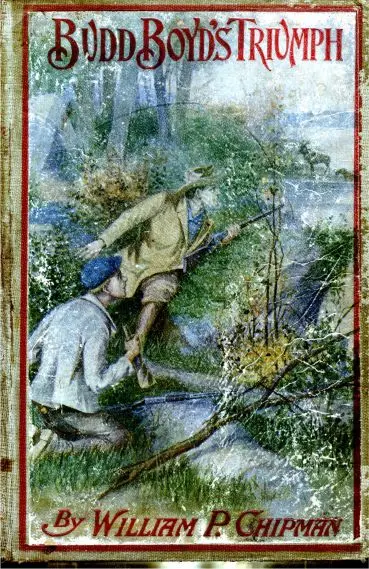
"Budd Boyd's Triumph; or, The Boy-Firm of Fox Island" by William P. Chipman is a novel written in the late 19th century. The book follows the journey of a young boy named Budd Boyd as he seeks employment and navigates the challenges of farm life, eventually embarking on an entrepreneurial venture with a newfound friend, Judd Floyd. As Budd grapples with hardships and develops resilience, themes of friendship, ambition, and the pursuit of a better life are central to the narrative. The opening of the story sets a somber mood, describing a cold March day as Budd Boyd walks along a highway in search of work. He is a determined and strong young man, despite the challenges he faces, and the narrative explores his interactions with Mr. Benton, a strict and unkind farmer who hires him. Budd endures hard labor under Benton’s harsh conditions, reflecting on his troubled past while displaying a remarkable spirit of perseverance. Through his journey, including a significant accident and the arrival of his friend, the foundation is laid for Budd's transition from a life of labor to an enterprising venture as he and Judd explore the potential of starting their own business on Fox Island.
Introduction adapted from the source catalogue; source summaries may be automatically generated.
Free to read · English · 65,815 words · No account needed
MAKE TIME FOR A GOOD BOOK
On by default. Untick to stop anonymous reading totals. Each page counts after 10 seconds in view. How this works.
Anonymous counting is on unless you have switched it off.
"I give him ten dollers a munth an' bord for six munths, which, as he knowed nuthin' 'bout farm in' when he come, is fair pay," explained Mr. Benton.
"No it is not, and you know it as well as anyone. He has done a man's work ever since he has been with you; and admitting his ignorance on some things, fifteen dollars a month is little enough. Does he pay you?"
This last question was addressed to Budd.
"No, sir," he said. "You see, the night I hired out to him he drew up a paper for me to sign, and in that, though I did not so understand it at the time, he is to pay me only at the end of the six months. At least that is his interpretation of the paper."
"Benton, let me see it," demanded Mr. Wright.
With evident reluctance Mr. Benton took the paper from his pocket-book and handed it to his neighbor.
Mr. Wright read it over carefully; then he deliberately tore it up,
saying:
"The paper is worthless, for there are no witnesses; but even if there were, it could be set aside, as you have taken an unfair advantage of the lad. You meant to get rid of paying him anything, and I suspected it, for it is an old trick of yours."
Budd here explained how Mr. Benton had used the paper at the time he had asked for his first month's pay.
"Exactly," said Mr. Wright; "it served his purpose then, and would every time you asked for money until he had got ready to get rid of you. Then he would have seen to it that you quitted the farm before the six months were up, and so refused to pay you your wages. Now admit, Benton, that that was your game."
Mr. Benton, thus appealed to, looked sheepish enough, but would not admit that it had been his purpose to defraud the lad. He was afraid that Budd might demand the amount due him and leave at once. This he did not want the boy to do, for he preferred to have him remain, even though he should have to pay him full wages. He was hardly prepared, however, for Mr. Wright's next demand.
"Here, Benton," he said, as the man was about to return his wallet to his pocket, "before you put that away I want you to pay Budd twenty dollars."
"But his two months are not up yet," objected Benton.
"Never mind, he has earned it," said Mr. Wright; and as the man, to Budd's great astonishment, meekly handed over two ten-dollar bills, Mr. Wright with a twinkle in his eyes added:
Your reading position is saved on this browser. Take it to another device with a library code. Reading pages adapt to text, rather than matching a printed edition.
BEHIND THE BOOK
This eBook is for the use of anyone anywhere in the United States and most other parts of the world at no cost and with almost no restrictions whatsoever. You may copy it, give it away or re-use it under the terms of the Project Gutenberg License included with this eBook or online at www.gutenberg.org. If you are not located in the United States, you will have to check the laws of the country where you are located before using this eBook. Read the source licence.
The original source file, including credits and licence, is retained by this library. Request an original-format copy at no charge. Please include the book title and Project Gutenberg identifier #39732.
KEEP YOUR CURIOSITY GOING
Coulson Kernahan

Maurice Baring
Frances Wright
Cécile Tormay

Frederic Jesup Stimson

W. H. P. (William Henry Pope) Jarvis