THE CLASSIC COLLECTION✦A dead man’s diaryCLASSIC FREE BOOKS
A dead man’s diary
Coulson Kernahan
THE CLASSIC COLLECTION · 1890
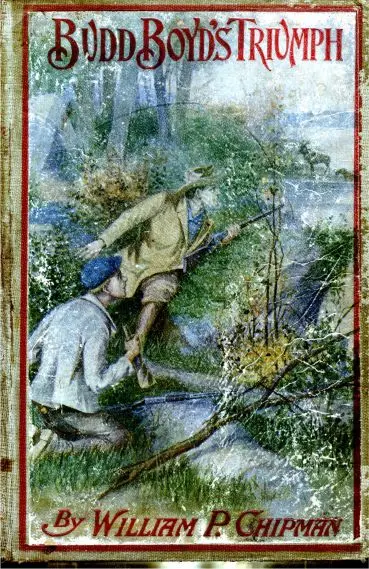
"Budd Boyd's Triumph; or, The Boy-Firm of Fox Island" by William P. Chipman is a novel written in the late 19th century. The book follows the journey of a young boy named Budd Boyd as he seeks employment and navigates the challenges of farm life, eventually embarking on an entrepreneurial venture with a newfound friend, Judd Floyd. As Budd grapples with hardships and develops resilience, themes of friendship, ambition, and the pursuit of a better life are central to the narrative. The opening of the story sets a somber mood, describing a cold March day as Budd Boyd walks along a highway in search of work. He is a determined and strong young man, despite the challenges he faces, and the narrative explores his interactions with Mr. Benton, a strict and unkind farmer who hires him. Budd endures hard labor under Benton’s harsh conditions, reflecting on his troubled past while displaying a remarkable spirit of perseverance. Through his journey, including a significant accident and the arrival of his friend, the foundation is laid for Budd's transition from a life of labor to an enterprising venture as he and Judd explore the potential of starting their own business on Fox Island.
Introduction adapted from the source catalogue; source summaries may be automatically generated.
Free to read · English · 65,815 words · No account needed
MAKE TIME FOR A GOOD BOOK
On by default. Untick to stop anonymous reading totals. Each page counts after 10 seconds in view. How this works.
Anonymous counting is on unless you have switched it off.
It was a fine, sunny afternoon. Everything was still. There was not even the cawing of crows to be heard. Presently, looking across to the shore, we saw a large black creature watching us from an old pine stump, that was some four or five rods from the water.
"Fisher-cat, isn't it?" said Rod.
It did look like one, certainly. It was black, and about the same size.
"Suppose he'd show fight if we should go round there?" continued Rod, looking leisurely for the hatchet.
Poor success fishing had made him a little pugnacious, I suppose; and a scrimmage with a fisher-cat, or carcajoe, when you can get one to face about, isn't bad fun for those who enjoy such sport, and are willing to run the risk of getting scratched and bitten.
In explanation, I should say that the "fisher-cat" is a member of the weasel family. Naturalists call it the Mustela Canadensis, or Canada weasel; a pretty big weasel, to be sure. Hunters and trappers hate it most heartily, for it will follow them all day on their rounds, taking the bait out of their traps as fast as they can set them.
Well, if we could not catch any pickerel, perhaps a little fracas with Mr. Snarly-face, over there, would be the next best thing; and I was just drawing up my line, when there came a heavy tug at the bait, nearly jerking the line from my hands. There was not only one tug, but a series of tugs and rushes to and fro, making the water fairly boil in the hole.
I had hooked a big one, and he was testing the line to the utmost, and rasping it across the sharp edges of the ice. Holding it steadily, however, the struggle gradually ceased, and looking down into the water, we saw a noble fellow, slowly waving his fins on the sand, at the bottom of the pond.
"Isn't he a thumper!" exclaimed Rod. "Five or six pounds, certain!
Fish enough for one day."
He had become pretty docile, and I had drawn him up within six or seven feet of the surface, when, with a sudden plunge, a long, dark animal darted through the water, and seizing the fish, passed out of sight under the ice, like a black streak. I pulled sharply at the line, once, twice--then it snapped.
Here was a surprise.
"What on earth was that?" cried Rod.
But there was nothing further to be seen. A few bubbles came struggling up through the water, but the creature had gone, and so had the fish.
"It couldn't have been that fisher-cat," said Rod.
Your reading position is saved on this browser. Take it to another device with a library code. Reading pages adapt to text, rather than matching a printed edition.
BEHIND THE BOOK
This eBook is for the use of anyone anywhere in the United States and most other parts of the world at no cost and with almost no restrictions whatsoever. You may copy it, give it away or re-use it under the terms of the Project Gutenberg License included with this eBook or online at www.gutenberg.org. If you are not located in the United States, you will have to check the laws of the country where you are located before using this eBook. Read the source licence.
The original source file, including credits and licence, is retained by this library. Request an original-format copy at no charge. Please include the book title and Project Gutenberg identifier #39732.
KEEP YOUR CURIOSITY GOING
Coulson Kernahan

Maurice Baring
Frances Wright
Cécile Tormay

Frederic Jesup Stimson

W. H. P. (William Henry Pope) Jarvis