THE CLASSIC COLLECTION✦A dead man’s diaryCLASSIC FREE BOOKS
A dead man’s diary
Coulson Kernahan
THE CLASSIC COLLECTION · 1890
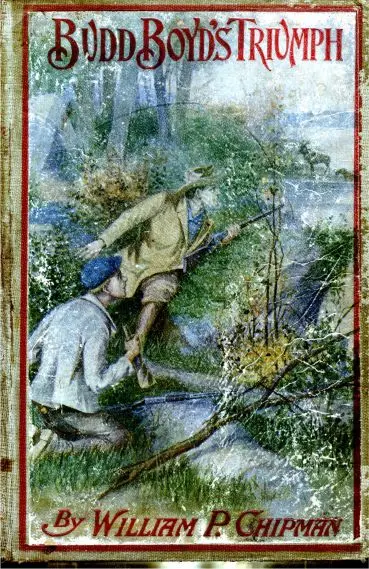
"Budd Boyd's Triumph; or, The Boy-Firm of Fox Island" by William P. Chipman is a novel written in the late 19th century. The book follows the journey of a young boy named Budd Boyd as he seeks employment and navigates the challenges of farm life, eventually embarking on an entrepreneurial venture with a newfound friend, Judd Floyd. As Budd grapples with hardships and develops resilience, themes of friendship, ambition, and the pursuit of a better life are central to the narrative. The opening of the story sets a somber mood, describing a cold March day as Budd Boyd walks along a highway in search of work. He is a determined and strong young man, despite the challenges he faces, and the narrative explores his interactions with Mr. Benton, a strict and unkind farmer who hires him. Budd endures hard labor under Benton’s harsh conditions, reflecting on his troubled past while displaying a remarkable spirit of perseverance. Through his journey, including a significant accident and the arrival of his friend, the foundation is laid for Budd's transition from a life of labor to an enterprising venture as he and Judd explore the potential of starting their own business on Fox Island.
Introduction adapted from the source catalogue; source summaries may be automatically generated.
Free to read · English · 65,815 words · No account needed
MAKE TIME FOR A GOOD BOOK
On by default. Untick to stop anonymous reading totals. Each page counts after 10 seconds in view. How this works.
Anonymous counting is on unless you have switched it off.
There were pickaxes and shovels, powder and boots, needles and coffee, spikes and tea, horseshoes and tobacco; there were wooden houses ready to be put up; canvas tents and mattresses; there were jackknives, hatchets, revolvers, rifles, socks, books, hats, clothes, barrels of flour, soap, coal, towels, sugar, potatoes, grindstones, locks, quack medicines, old periodicals, cheap watches, buttons, cotton, glass, tape, bottles, jewsharps, nails, rubbers; and everything else that the imaginative mind of a wild speculator could possibly think of as being likely to sell to a young and rich but destitute community.
Whether the speculation was successful or not, is no business of ours. My business is with Tom Allan, the cabin boy of the Janet.
The Janet took out about fifty passengers on their way to the gold diggings. Allan was a stout lad of about seventeen. When he left home he had no idea of digging gold, but the talk of the passengers on the way out fairly turned the heads of the crew of the Janet, and even of the officers, so that when the brig reached San Francisco, and the passengers landed, the entire crew, together with the cook, the second mate, and even the first mate, landed with them.
The captain was left alone with the cabin boy. The captain was in despair. He couldn't get anybody to unload his vessel. He couldn't get any crew to take her away. And so the end of it was that Allan yielded to the universal feeling and took his departure from the ship.
For about a year he led a queer kind of a life. He worked at various diggings without much success, until at length he got possession of a claim all to himself, in a remote locality, which he proceeded to work at with desperate determination.
He erected a little hut, and made himself as comfortable as possible, and set to work vigorously, and soon found, to his great delight, that the claim was one of unusual richness.
At last, then, after more than a year of adverse fortune, he saw his way
to success.
One day he was hard at work. He had found a rich vein of quartz in which the gold was very plentiful, so much so, indeed, that it was possible for him to extract it by his own clumsy tools without having recourse to a crushing mill.
He had that day been drilling a hole to make ready for a blast, and was working away diligently with his drill. The hole was just finished, when suddenly he was startled by a deep and formidable growl close behind him.
Your reading position is saved on this browser. Take it to another device with a library code. Reading pages adapt to text, rather than matching a printed edition.
BEHIND THE BOOK
This eBook is for the use of anyone anywhere in the United States and most other parts of the world at no cost and with almost no restrictions whatsoever. You may copy it, give it away or re-use it under the terms of the Project Gutenberg License included with this eBook or online at www.gutenberg.org. If you are not located in the United States, you will have to check the laws of the country where you are located before using this eBook. Read the source licence.
The original source file, including credits and licence, is retained by this library. Request an original-format copy at no charge. Please include the book title and Project Gutenberg identifier #39732.
KEEP YOUR CURIOSITY GOING
Coulson Kernahan

Maurice Baring
Frances Wright
Cécile Tormay

Frederic Jesup Stimson

W. H. P. (William Henry Pope) Jarvis