THE CLASSIC COLLECTION✦A dead man’s diaryCLASSIC FREE BOOKS
A dead man’s diary
Coulson Kernahan
THE CLASSIC COLLECTION · 1890
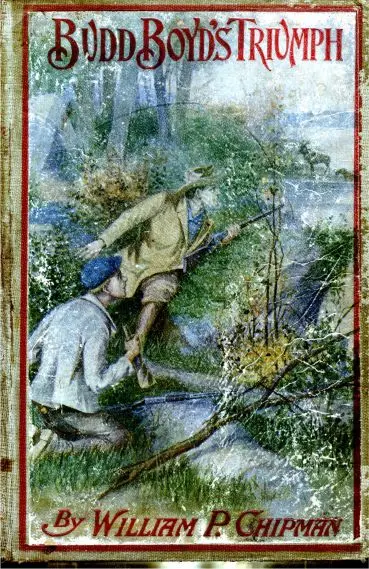
"Budd Boyd's Triumph; or, The Boy-Firm of Fox Island" by William P. Chipman is a novel written in the late 19th century. The book follows the journey of a young boy named Budd Boyd as he seeks employment and navigates the challenges of farm life, eventually embarking on an entrepreneurial venture with a newfound friend, Judd Floyd. As Budd grapples with hardships and develops resilience, themes of friendship, ambition, and the pursuit of a better life are central to the narrative. The opening of the story sets a somber mood, describing a cold March day as Budd Boyd walks along a highway in search of work. He is a determined and strong young man, despite the challenges he faces, and the narrative explores his interactions with Mr. Benton, a strict and unkind farmer who hires him. Budd endures hard labor under Benton’s harsh conditions, reflecting on his troubled past while displaying a remarkable spirit of perseverance. Through his journey, including a significant accident and the arrival of his friend, the foundation is laid for Budd's transition from a life of labor to an enterprising venture as he and Judd explore the potential of starting their own business on Fox Island.
Introduction adapted from the source catalogue; source summaries may be automatically generated.
Free to read · English · 65,815 words · No account needed
MAKE TIME FOR A GOOD BOOK
On by default. Untick to stop anonymous reading totals. Each page counts after 10 seconds in view. How this works.
Anonymous counting is on unless you have switched it off.
"It must be a beautiful place to live, and I hope to find a home here," he remarked, as he resumed his journey.
A few rods farther on he came to a farm-house, and turned up to its nearest door. As he was about to knock, a man came from the barn-yard, a little distance away, and accosted him:
"Good-evening!"
"Good-evening!" responded the lad.
Then he asked:
"Is this Mr. Benton?"
"No; I'm Mr. Wright," answered the man, pleasantly. "Benton lives on the next farm. You will have to turn into the next gateway and go down the lane, as his house stands some distance from the road."
"I was told," explained the lad, "that he wished to hire help, and I hoped to get work there. Could you tell me what the prospect is?"
The man had now reached the boy's side, and was looking him over with
evident curiosity.
"Well," he replied, slowly, "I think he wants to get a young fellow for the coming season, and hadn't hired anyone the last I knew. But I guess you must be a stranger in these parts."
"Yes," the lad answered, briefly; and then thanking the man for his
information he turned away.
"I thought so," the man called after him, "else you wouldn't want to go
there to work."
The boy scarcely gave heed to the remark then; but it was not long before he knew by hard experience the meaning of it.
A quarter of a mile farther on he reached a gate, and passing through it, he hastened down the narrow lane till he came to a long, low, dilapidated house; but in the darkness, which had by this time fallen, he was not able to form any definite idea of his surroundings.
A feeble light came forth from a back window, and guided by this, he found the rear door of the building. To his knock there was a chorus of responses. Dogs barked, children screamed, and above the din a gruff voice shouted:
"Come in!"
A little disconcerted by the unusual sounds, the lad, instead of obeying the invitation, knocked again. Then there was a heavy step across the floor, the door swung open with a jerk, and a tall, raw-boned man, shaggy-bearded and shock-haired, stood on the threshold.
Eying the lad for a moment in surprise, he asked, somewhat surlily:
"What do you want, youngster?"
"Are you Mr. Benton?" the lad asked.
"Yes; what of it?" the man answered, sharply.
"I was told you wanted help, and I have called to see about it,"
explained the boy.
"Come in, then," said the man, and his tones were wonderfully modified.
Your reading position is saved on this browser. Take it to another device with a library code. Reading pages adapt to text, rather than matching a printed edition.
BEHIND THE BOOK
This eBook is for the use of anyone anywhere in the United States and most other parts of the world at no cost and with almost no restrictions whatsoever. You may copy it, give it away or re-use it under the terms of the Project Gutenberg License included with this eBook or online at www.gutenberg.org. If you are not located in the United States, you will have to check the laws of the country where you are located before using this eBook. Read the source licence.
The original source file, including credits and licence, is retained by this library. Request an original-format copy at no charge. Please include the book title and Project Gutenberg identifier #39732.
KEEP YOUR CURIOSITY GOING
Coulson Kernahan

Maurice Baring
Frances Wright
Cécile Tormay

Frederic Jesup Stimson

W. H. P. (William Henry Pope) Jarvis