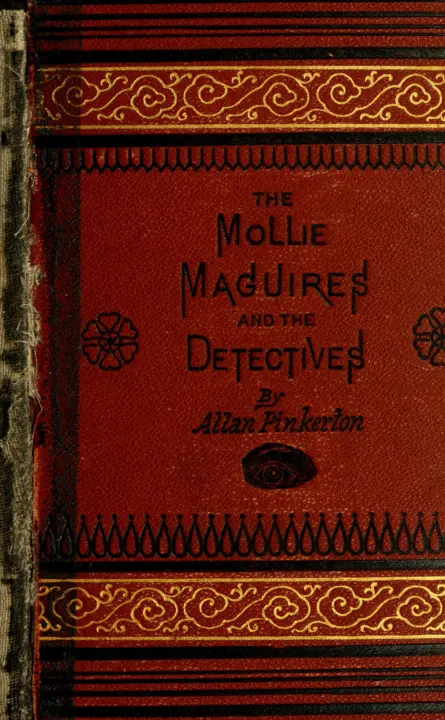
The Molly Maguires and the detectives
Allan Pinkerton
THE CLASSIC COLLECTION · 1880
"Bucholz and the Detectives" by Allan Pinkerton is a detective novel written in the late 19th century. The narrative centers around the mysterious murder of a miserly old man named Henry Schulte, whose background and financial dealings create intrigue in the village of South Norwalk, Connecticut. The story follows his servant, William Bucholz, who becomes the prime suspect in the investigation, as well as his relationships with the townsfolk and the unfolding suspense surrounding the crime. The opening of the novel sets the stage for the plot through a detailed portrayal of the village of South Norwalk and the arrival of Henry Schulte, introducing him as an eccentric and reclusive character known for his peculiarities and miserly behavior. On a fateful night, after returning from a trip to New York, Schulte is violently murdered, with Bucholz leaving in a panic to alert the townspeople. The narrative quickly establishes the ensuing chaos and fear among the villagers as they confront the horror of the crime, setting up the intricate layers of suspicion, investigation, and the eventual hunt for the true murderer amidst mounting evidence against Bucholz himself.
Introduction adapted from the source catalogue; source summaries may be automatically generated.
Free to read · English · 56,573 words · No account needed
MAKE TIME FOR A GOOD BOOK
On by default. Untick to stop anonymous reading totals. Each page counts after 10 seconds in view. How this works.
Anonymous counting is on unless you have switched it off.
The judge charged the jury, and before the force of his sound, legal utterances, the airy castles which had been so ingeniously builded fell to the ground, and the hopes of the prisoner and his friends were buried in their ruins.
The case was handed to the twelve men, and many scrutinizing glances were directed toward them as they slowly retired to deliberate upon their verdict. Faint hopes were entertained of a disagreement, but all felt that conviction would be but a natural result.
Slowly the crowd of spectators dispersed, as it became apparent that no report would be received that evening, and many ladies, moved by that latent sympathy which is usually manifested for great criminals, approached the prisoner, and, together with their condolences, bestowed upon him their offerings of flowers and fruits.
At twelve o'clock the next day--during a recess of the court--a loud knock was heard upon the door which led to the jury-room. Instantly every voice was hushed and every eye was strained to watch the countenances of these arbiters of fate who slowly entered and took their seats.
Bucholz was laughing gayly with some acquaintances, but he became instantly serious--the smile died away from his lips, and he anxiously awaited the announcement that was to convey to him the blessing of life or the doom of death.
Slowly the jurors arose and faced the court.
"Gentlemen of the jury, have you determined upon your verdict?"
Breathlessly they all listened.
"We have."
These words fell like a thunderbolt upon the assembly. The prisoner's face grew pale; he grasped the railing in front of him and gazed wistfully at the jurors who stood beside him.
"Prisoner at the bar, stand up," said the clerk; and Bucholz arose immediately, turning his pallid face toward the jury-box.
The gray-haired foreman, whose elbow almost touched the prisoner, looked at him with a glance in which was depicted a sympathy, which, while it was heartfelt and sincere, was not of sufficient force to outweigh a conscientious discharge of duty.
"Gentlemen of the jury, how say you? Is the prisoner at the bar
guilty or not guilty?"
With trembling voice the venerable foreman said, slowly:
"Guilty of murder in the first degree!"
The guilty man fell back in his seat, as though he had been struck a heavy blow, and bowing his head upon the railing, he sobbed wildly.
The trial was over. Justice had triumphed, and this crime-stained man, who was now the object of so much attention, was decreed to pay the penalty of his misdeeds.
The mystery of the murder of Henry Schulte had been judiciously solved, and the detective had triumphed over the assassin.
Your reading position is saved on this browser. Take it to another device with a library code. Reading pages adapt to text, rather than matching a printed edition.
Allan Pinkerton
Allan Pinkerton
Allan Pinkerton
Allan Pinkerton
BEHIND THE BOOK
This eBook is for the use of anyone anywhere in the United States and most other parts of the world at no cost and with almost no restrictions whatsoever. You may copy it, give it away or re-use it under the terms of the Project Gutenberg License included with this eBook or online at www.gutenberg.org. If you are not located in the United States, you will have to check the laws of the country where you are located before using this eBook. Read the source licence.
The original source file, including credits and licence, is retained by this library. Request an original-format copy at no charge. Please include the book title and Project Gutenberg identifier #20497.
KEEP YOUR CURIOSITY GOING
Coulson Kernahan

Maurice Baring
Frances Wright
Cécile Tormay

Frederic Jesup Stimson

W. H. P. (William Henry Pope) Jarvis