THE CLASSIC COLLECTION✦Excursion to the Orkney IslandsCLASSIC FREE BOOKS
Excursion to the Orkney Islands
Jacob Abbott
THE CLASSIC COLLECTION · 1854
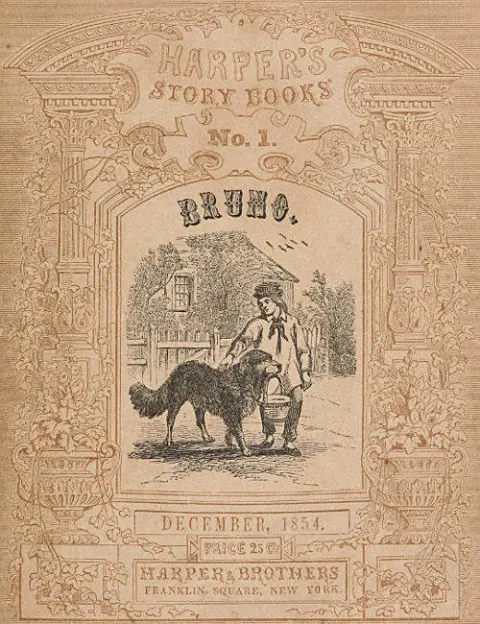
"Bruno; or, Lessons of Fidelity, Patience, and Self-Denial Taught by a Dog" by Jacob Abbott is a children’s narrative written in the mid-19th century. This charming tale follows the adventures of Bruno, a loyal dog, as he demonstrates virtues such as fidelity, patience, and self-denial in various situations involving his owner, a hunter living in the Alps. The book aims to impart moral lessons to young readers through the dog's experiences and interactions. The opening of the book sets the stage with a hunter who hears a wolf howling at night, stirring a sense of urgency and danger. Determined to protect his family, the hunter prepares for a confrontation with the beast, taking Bruno along. As they venture into the wilderness, Bruno exhibits bravery and loyalty, ultimately engaging in a fierce battle with the wolf, showcasing his courage and the bond between the dog and his master. The stage is thus established for a series of adventures that highlight the dog's noble qualities and the lessons he imparts throughout the story.
Introduction adapted from the source catalogue; source summaries may be automatically generated.
Free to read · English · 41,038 words · No account needed
MAKE TIME FOR A GOOD BOOK
On by default. Untick to stop anonymous reading totals. Each page counts after 10 seconds in view. How this works.
Anonymous counting is on unless you have switched it off.
In a few minutes the sailor came back, and told the captain that he could not find the boys; and that Jack, who was at work outside on the pier, said that they had not been seen about there for more than an hour, and that the boat was missing too; and he was afraid that they had got into it, and had gone adrift.
“Send Jack to me,” said the captain.
When Jack came into the cabin, the captain was at work, as usual, on his accounts. Jack stood by his side a moment, with his cap in his hand, waiting for the captain to be at leisure to speak to him. At length the captain looked up.
“Jack,” said he, “do you say that the boys have gone off with the boat?”
“I don’t know, sir,” said Jack. “The boat is gone, and the boys are gone, but whether the boat has gone off with the boys, or the boys with the boat, I couldn’t say.”
The captain paused a moment, with a thoughtful expression upon his
countenance, and then said,
“Tell Nelson to take the glass, and go aloft, and look around to see if he can see any thing of them.”
“Ay, ay, sir,” said Jack.
The captain then resumed his work as if nothing particular had happened.
[Sidenote: Mr. Nelson discovers them by means of his spy-glass.]
Nelson was the mate of the ship. The mate is the second in command
under the captain.
When Nelson received the captain’s order, he took the spy-glass, and went up the shrouds to the mast-head. In about ten minutes he came down again, and gave Jack a message for the captain. Jack came down again into the cabin. He found the captain, as before, busy at his work. The captain had been exposed to too many great and terrible dangers at sea to be much alarmed at the idea of two boys being adrift, in a strong boat and in a crowded harbor.
“Mr. Nelson says, sir,” said Jack, “that he sees our boat, with two boys in it, about a mile and a half down the harbor. She is lying a little to the eastward of the red buoy.”
A buoy is a floating beam of wood, or other light substance, anchored on the point of a shoal, or over a ledge of rocks, to warn the seamen that they must not sail there. The different buoys are painted of different colors, so that they may be easily distinguished one from another.
Your reading position is saved on this browser. Take it to another device with a library code. Reading pages adapt to text, rather than matching a printed edition.
Jacob Abbott

Jacob Abbott

Jacob Abbott

Jacob Abbott
BEHIND THE BOOK
This eBook is for the use of anyone anywhere in the United States and most other parts of the world at no cost and with almost no restrictions whatsoever. You may copy it, give it away or re-use it under the terms of the Project Gutenberg License included with this eBook or online at www.gutenberg.org. If you are not located in the United States, you will have to check the laws of the country where you are located before using this eBook. Read the source licence.
The original source file, including credits and licence, is retained by this library. Request an original-format copy at no charge. Please include the book title and Project Gutenberg identifier #51859.
KEEP YOUR CURIOSITY GOING
Coulson Kernahan

Maurice Baring
Frances Wright
Cécile Tormay

Frederic Jesup Stimson

W. H. P. (William Henry Pope) Jarvis