THE CLASSIC COLLECTION✦Excursion to the Orkney IslandsCLASSIC FREE BOOKS
Excursion to the Orkney Islands
Jacob Abbott
THE CLASSIC COLLECTION · 1854
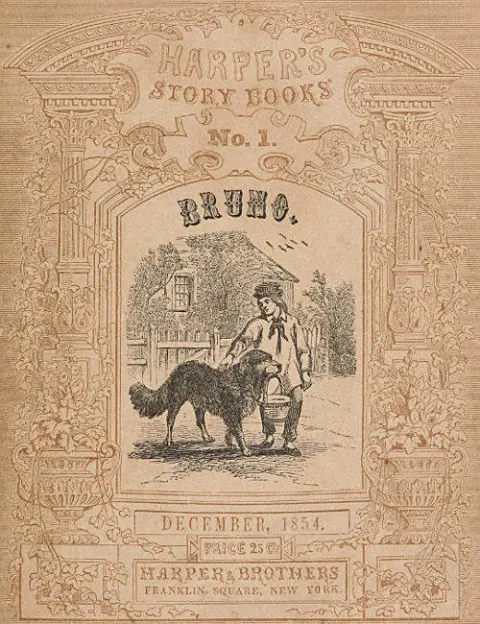
"Bruno; or, Lessons of Fidelity, Patience, and Self-Denial Taught by a Dog" by Jacob Abbott is a children’s narrative written in the mid-19th century. This charming tale follows the adventures of Bruno, a loyal dog, as he demonstrates virtues such as fidelity, patience, and self-denial in various situations involving his owner, a hunter living in the Alps. The book aims to impart moral lessons to young readers through the dog's experiences and interactions. The opening of the book sets the stage with a hunter who hears a wolf howling at night, stirring a sense of urgency and danger. Determined to protect his family, the hunter prepares for a confrontation with the beast, taking Bruno along. As they venture into the wilderness, Bruno exhibits bravery and loyalty, ultimately engaging in a fierce battle with the wolf, showcasing his courage and the bond between the dog and his master. The stage is thus established for a series of adventures that highlight the dog's noble qualities and the lessons he imparts throughout the story.
Introduction adapted from the source catalogue; source summaries may be automatically generated.
Free to read · English · 41,038 words · No account needed
MAKE TIME FOR A GOOD BOOK
On by default. Untick to stop anonymous reading totals. Each page counts after 10 seconds in view. How this works.
Anonymous counting is on unless you have switched it off.
Bruno looked up on the shelf where the bowl was usually placed, and
barked louder than ever.
“Where’s my bowl?” exclaimed Lorenzo, looking at the vacant place, and beginning to feel alarmed. “Where’s my bowl?”
He spoke in a tone of great astonishment and alarm. He looked about on all the shelves; the bowl was nowhere to be seen.
“Where can my bowl be gone to?” said he, more and more frightened. He went out of the closet into the kitchen, and looked all about there for his bowl. Of course, his search was vain. Bruno followed him all the time, barking incessantly, and looking up very eagerly into Lorenzo’s face with an appearance of great excitement.
“Bruno,” said Lorenzo, “you know something about it, I am sure, if you
could only tell.”
[Sidenote: The wind-mill.]
Lorenzo, however, did not yet suspect that his bowl had been stolen. He presumed that his mother had put it away in some other place, and that, when she came down, it would readily be found again. So he went out into the yard, and sat on a stone step, and went to work to finish a wind-mill he had begun the day before.
[Sidenote: Lorenzo’s mother explains the mystery.]
By-and-by his mother came down; and as soon as she had heard Lorenzo’s story about the bowl, and learned, too, that the outer door had been found open when Lorenzo first came down stairs, she immediately expressed the opinion that the bowl had been stolen.
“Some thief has been breaking into the house,” said she, “I’ve no doubt, and has stolen it.”
“Stolen it!” exclaimed Lorenzo.
“Yes,” replied his mother; “I’ve no doubt of it.”
So saying, she went into the closet again, to see if she could discover any traces of the thieves there. But she could not. Every thing seemed to have remained undisturbed, just as she had left it the night before, except that the bowl was missing.
“Somebody has been in and stolen it,” said she, “most assuredly.”
Bruno, who had followed Lorenzo and his mother into the room, was standing up at this time upon his hind legs, with his paws upon the edge of the shelf, and he now began to bark loudly, by way of expressing his concurrence in this opinion.
[Sidenote: “Seek him, Bruno!”]
“Seize him, Bruno!” said Lorenzo. “Seize him!”
Bruno, on hearing this command, began smelling about the floor, and barking more eagerly than ever.
“Bruno smells his tracks, I verily believe,” said Lorenzo, speaking to his mother. Then, addressing Bruno again, he clapped his hands together and pointed to the ground, saying,
Your reading position is saved on this browser. Take it to another device with a library code. Reading pages adapt to text, rather than matching a printed edition.
Jacob Abbott

Jacob Abbott

Jacob Abbott

Jacob Abbott
BEHIND THE BOOK
This eBook is for the use of anyone anywhere in the United States and most other parts of the world at no cost and with almost no restrictions whatsoever. You may copy it, give it away or re-use it under the terms of the Project Gutenberg License included with this eBook or online at www.gutenberg.org. If you are not located in the United States, you will have to check the laws of the country where you are located before using this eBook. Read the source licence.
The original source file, including credits and licence, is retained by this library. Request an original-format copy at no charge. Please include the book title and Project Gutenberg identifier #51859.
KEEP YOUR CURIOSITY GOING
Coulson Kernahan

Maurice Baring
Frances Wright
Cécile Tormay

Frederic Jesup Stimson

W. H. P. (William Henry Pope) Jarvis