THE CLASSIC COLLECTION✦Little MetacometCLASSIC FREE BOOKS
Little Metacomet
Hezekiah Butterworth
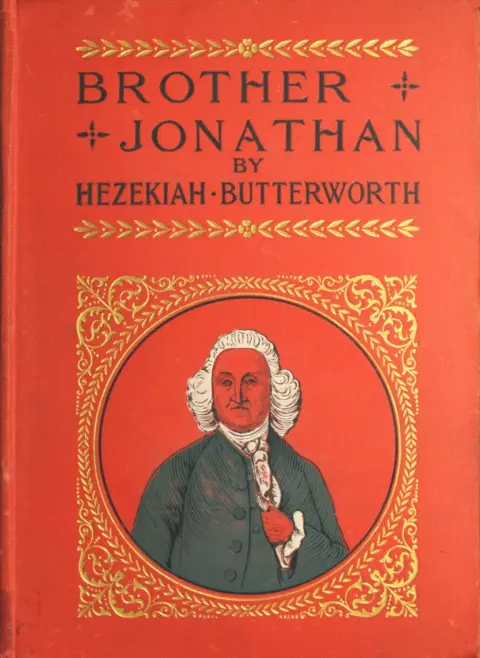
THE CLASSIC COLLECTION · 1903
"Brother Jonathan" by Hezekiah Butterworth is a historical novel written in the early 20th century. The story revolves around Jonathan Trumbull, a key figure during the American Revolutionary War, and presents a rich tapestry of colonial life, intertwined with folk tales and the heroic narratives of the time. The main character, Dennis O’Hay, an Irish shipwrecked mariner, embarks on his journey to seek guidance from “Brother Jonathan,” who symbolizes the spirit of patriotism and nobility in the quest for American independence. The opening of "Brother Jonathan" introduces readers to Dennis O’Hay, who has just arrived in Connecticut after being rescued from a shipwreck. His vibrant and earnest character shines as he searches for support and guidance in this new land, ultimately seeking out Governor Jonathan Trumbull, known for his benevolence and patriotism. The narrative paints a bustling town setting, complete with colorful encounters—including a humorous dialogue with a somewhat suspicious Englishman—and hints at the complexity of the political landscape during the Revolutionary War. As Dennis makes his way to Trumbull’s home, he encounters a blend of wonder and adversity, setting the stage for a deeper exploration of duty, friendship, and the heart of a nation striving for freedom.
Introduction adapted from the source catalogue; source summaries may be automatically generated.
Free to read · English · 61,849 words · No account needed
MAKE TIME FOR A GOOD BOOK
On by default. Untick to stop anonymous reading totals. Each page counts after 10 seconds in view. How this works.
Anonymous counting is on unless you have switched it off.
The great generals next faced Yorktown, with their forces, some 16,000 men. They saw the helplessness of Cornwallis, and as De Grasse wished to return soon to the West Indies, the combined forces prepared to move on the British fortifications at once. Seven redoubts and six batteries faced the allies, with abatis, field-works, and barricades of fallen trees.
The allies began to prepare for an immediate conflict. They erected advancing earthworks, in a semicircle, and with the French fleet in the bay, the 1st of October heard the sound of the cannonade.
The peninsula thundered and smoked, and the drama there begun was watched by Washington, Rochambeau, Chastellux, and Count de Grasse. What men were these with Lafayette at the front!
A great cannonade began on the 9th of October, Washington himself putting the match to the first gun.
Governor Nelson of Virginia was in the field. His house was there, too, within the enemy’s lines in Yorktown. “Do you see yonder house?” said he to a commander of the artillery. It was the headquarters of the enemy. “It is my house, but fire upon it.”
This recalls John Hancock’s message to Washington at the beginning of the war. “Burn Boston, if need be, and leave John Hancock a beggar.”
The enemy responded. The shells of each crossed each other in the bright, smoky October air. The British fired red-hot shot, and set on fire some of their own shipping. The nights seemed full of meteors, as though red armies were battling in the sky.
The 14th of October came――a day of heroes. That day the redoubts were
to be stormed.
Lafayette prepared his own men for the assault.
Then Baron de Viomenil led out the heroes of Gatinais.
Before this regiment De Rochambeau appeared to give them their orders, which meant death. He had won, as we have said, his own fame in Europe with these mountain heroes. The attack to which he was to order them now was to be made at night.
“My lads,” said he, “I have need of you this night, and I hope that you will not forget that we have served together in that brave regiment of Auvergne sans tache.”
A cheer went up in memory of old, followed by:
“Restore to us our name of ‘Auvergne sans tache’ and we will die.”
“That name shall be restored,” said Rochambeau.
They marched to death side by side with the bold regiment of Lafayette, who was to lead the advance.
About eight o’clock the signal rockets for the attack reddened the sky.
Your reading position is saved on this browser. Take it to another device with a library code. Reading pages adapt to text, rather than matching a printed edition.
Hezekiah Butterworth

Hezekiah Butterworth
Hezekiah Butterworth
Hezekiah Butterworth
BEHIND THE BOOK
This eBook is for the use of anyone anywhere in the United States and most other parts of the world at no cost and with almost no restrictions whatsoever. You may copy it, give it away or re-use it under the terms of the Project Gutenberg License included with this eBook or online at www.gutenberg.org. If you are not located in the United States, you will have to check the laws of the country where you are located before using this eBook. Read the source licence.
The original source file, including credits and licence, is retained by this library. Request an original-format copy at no charge. Please include the book title and Project Gutenberg identifier #64126.
KEEP YOUR CURIOSITY GOING
Cécile Tormay

Moritz Busch
Coulson Kernahan
John L. Ransom

Maurice Baring
Frances Wright