THE CLASSIC COLLECTION✦Little MetacometCLASSIC FREE BOOKS
Little Metacomet
Hezekiah Butterworth
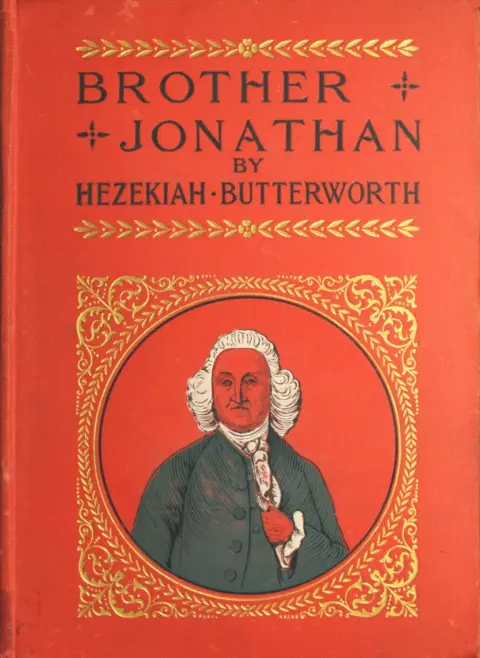
THE CLASSIC COLLECTION · 1903
"Brother Jonathan" by Hezekiah Butterworth is a historical novel written in the early 20th century. The story revolves around Jonathan Trumbull, a key figure during the American Revolutionary War, and presents a rich tapestry of colonial life, intertwined with folk tales and the heroic narratives of the time. The main character, Dennis O’Hay, an Irish shipwrecked mariner, embarks on his journey to seek guidance from “Brother Jonathan,” who symbolizes the spirit of patriotism and nobility in the quest for American independence. The opening of "Brother Jonathan" introduces readers to Dennis O’Hay, who has just arrived in Connecticut after being rescued from a shipwreck. His vibrant and earnest character shines as he searches for support and guidance in this new land, ultimately seeking out Governor Jonathan Trumbull, known for his benevolence and patriotism. The narrative paints a bustling town setting, complete with colorful encounters—including a humorous dialogue with a somewhat suspicious Englishman—and hints at the complexity of the political landscape during the Revolutionary War. As Dennis makes his way to Trumbull’s home, he encounters a blend of wonder and adversity, setting the stage for a deeper exploration of duty, friendship, and the heart of a nation striving for freedom.
Introduction adapted from the source catalogue; source summaries may be automatically generated.
Free to read · English · 61,849 words · No account needed
MAKE TIME FOR A GOOD BOOK
On by default. Untick to stop anonymous reading totals. Each page counts after 10 seconds in view. How this works.
Anonymous counting is on unless you have switched it off.
There had landed at Newport with Rochambeau a most brilliant French officer of cavalry, who was destined to become the general-in-chief of the Army of the Rhine, and to lose his head in the French Revolution. It was the Duke de Lauzun, born in Paris, 1747. He commanded a force known as Lauzun’s Legion, which consisted of some six hundred Hussars, with the French enthusiasm for liberty. They were well equipped, wore brilliant uniforms, and bore the banners of heroes.
The alarm-post became the seat of numerous orders; the roads were dusty
with hurrying feet.
The people met on the green as soon as the bugles were heard.
Peter was there. He heard the bugles ring out, and cried:
“Auvergne! They are the bugles of Auvergne!”
Dennis listened as the air rung merrily.
“Yes, Peter, those are the bugles of Auvergne.”
Faith Trumbull came out and stood on the green beside Peter.
“Do you think those are the French bugles?” she asked. “If so, the
cause is saved.”
An advance horseman, a Hussar, came riding up the hill. The bugles blew behind him, now near to the town.
“The Duke is at hand,” said he in French.
The people sank upon their knees.
The Governor heard and stood like a statue on the green.
“They are coming!” he said. “They are on the way of victory!”
Six hundred horsemen, glittering in insignia, banners, and trappings, swept into the town, and their dashing leader, the Duke de Lauzun, threw up his hand and took off his hat before the war office. No one had ever dreamed of a scene like that.
The people gathered around him uncovered. The farmers shouted. Children danced in the natural way; old men wept.
Dennis approached a French officer who could speak English.
“An’ have you been blowing the bugles of Auvergne?” asked he, hat in
hand.
“You may well call them so,” said the courtly officer. “The bugles of Auvergne are the heralds of victory!”
“The cause of liberty in America is won,” said Dennis. “Lafayette said it would be so when the French bugles should blow.”
Peter fell down on the green and wept like a child, saying, over and over: “The bugles of Auvergne! The bugles of Auvergne!”
It was a glorious day. The very earth seemed to be glad.
The Hussars sat for a time on their restless horses, surveying a scene unusual to their eyes. That simple church was not Notre Dame; the Governor’s house was not the Tuileries, nor Versailles, nor Marley, nor Saint Cloud. The green was not the Saint Cloud garden, the people were not courtiers. Yet their hearts glowed. They saluted the simple Governor.
Your reading position is saved on this browser. Take it to another device with a library code. Reading pages adapt to text, rather than matching a printed edition.
Hezekiah Butterworth

Hezekiah Butterworth
Hezekiah Butterworth
Hezekiah Butterworth
BEHIND THE BOOK
This eBook is for the use of anyone anywhere in the United States and most other parts of the world at no cost and with almost no restrictions whatsoever. You may copy it, give it away or re-use it under the terms of the Project Gutenberg License included with this eBook or online at www.gutenberg.org. If you are not located in the United States, you will have to check the laws of the country where you are located before using this eBook. Read the source licence.
The original source file, including credits and licence, is retained by this library. Request an original-format copy at no charge. Please include the book title and Project Gutenberg identifier #64126.
KEEP YOUR CURIOSITY GOING
Cécile Tormay

Moritz Busch
Coulson Kernahan
John L. Ransom

Maurice Baring
Frances Wright