THE CLASSIC COLLECTION✦An outlaw’s diary: the CommuneCLASSIC FREE BOOKS
An outlaw’s diary: the Commune
Cécile Tormay
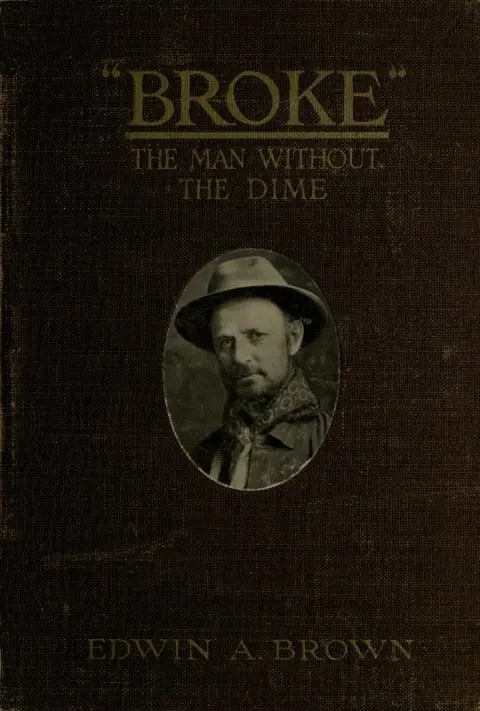
THE CLASSIC COLLECTION · 1913
"Broke, The Man Without the Dime" by Edwin A. Brown is a social reform narrative written in the early 20th century. The book explores the plight of the homeless and unemployed in society, particularly focusing on the author's firsthand experiences as he investigates their conditions across various American cities. The central theme revolves around advocating for a "Municipal Emergency Home" in every city to provide essential support and dignity to the needy. The opening of the work introduces the author’s personal background and motivation for embarking on his crusade. Brown shares his childhood and the loss of his father, which deeply affected him and fueled his compassion for the less fortunate. He describes the urgency he felt after encountering homeless individuals in Denver, which prompts him to investigate conditions across cities like Chicago and New York. He underscores the systemic issues leading to homelessness, including societal neglect and inefficient charity, setting the stage for his calls for practical reforms oriented towards compassion and justice for those in need.
Introduction adapted from the source catalogue; source summaries may be automatically generated.
Free to read · English · 88,045 words · No account needed
MAKE TIME FOR A GOOD BOOK
On by default. Untick to stop anonymous reading totals. Each page counts after 10 seconds in view. How this works.
Anonymous counting is on unless you have switched it off.
The beds had no mattresses,--a blanket was simply thrown over the woven wires,--and as I sank down on one, it became a string beneath me. A blanket was our only covering, and the pillows, filled with excelsior, were as hard as boards.
I said to the man on my right:
"Did you have any supper to-night?"
"No, I didn't, and I feel pretty weak and hungry. I spent my last thirty cents this morning for a breakfast, and what do you think I got for it? I got a piece of beefsteak four inches square so tough I could scarcely eat it, and some potatoes fried in rancid lard."
I made no reply and the exhausted and half-starved man fell asleep.
"I wish I had a couple of drinks of whiskey," said the man on my left.
"Oh," I replied, "you don't want much; one drink would do me."
"Yes, but I've got beyond that," he said; "it takes a good many drinks to do me, and they can't come too fast, either." Then, with a sigh, he added, "My dear old Daddy, God bless him, I have one thing to blame him for. He taught me to drink, and here I am in this charity business--a drunkard."
And he, too, turned over and fell asleep. But I could not sleep; asthmatics and consumptives were coughing constantly, and the wreckage around me was too much for my sympathies.
The coming of the daylight through the windows was a welcome sight. I got up and went to the drinking place, and asked a burly looking attendant if it was time to get up.
"Naw, taint!" he snapped, with a wicked scowl.
When I went back to bed I saw this man lock the two doors leading from our dormitory to the outside toilet rooms, and for half an hour the men were obliged to use the basin at the drinking place for sanitary convenience!
When the doors were finally unlocked, supposing it to be the signal for us to get up, I went with hat and shoes in my hands and sat down in a chair by the door. When the attendant to whom I had spoken earlier, came up the stairs and saw me there, without a moment's warning he seized me by the wrists, jerked me to my feet, and giving me a shove thrust me in a most brutal manner through the door, exclaiming:
"Now, will you stay in there until you are told to come out?"
I shuddered to think what would have happened if I had been a half-starved boy, and had resented that man's insult. Doubtless I would have been beaten into insensibility.
Your reading position is saved on this browser. Take it to another device with a library code. Reading pages adapt to text, rather than matching a printed edition.
BEHIND THE BOOK
This eBook is for the use of anyone anywhere in the United States and most other parts of the world at no cost and with almost no restrictions whatsoever. You may copy it, give it away or re-use it under the terms of the Project Gutenberg License included with this eBook or online at www.gutenberg.org. If you are not located in the United States, you will have to check the laws of the country where you are located before using this eBook. Read the source licence.
The original source file, including credits and licence, is retained by this library. Request an original-format copy at no charge. Please include the book title and Project Gutenberg identifier #45412.
KEEP YOUR CURIOSITY GOING
Cécile Tormay

Moritz Busch
John L. Ransom
Frances Wright
Cécile Tormay

Mabel Potter Daggett