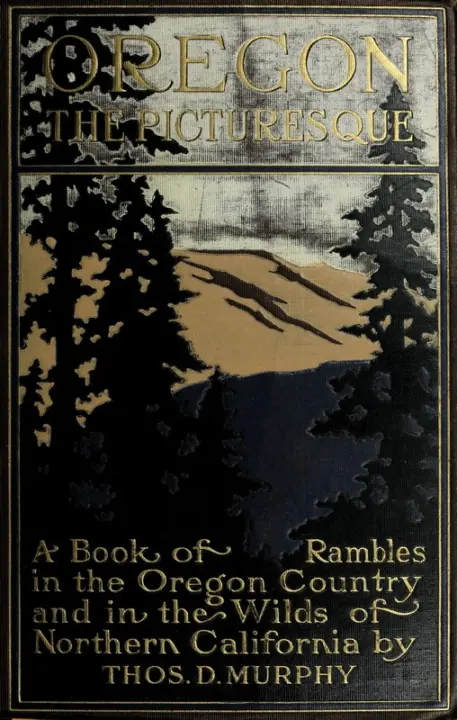
Oregon, the Picturesque A Book of Rambles in the Oregon Country and in the Wilds of Northern California
Thos. D. (Thomas Dowler) Murphy
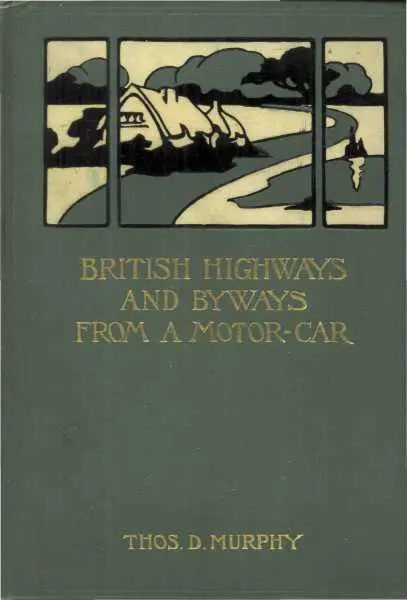
THE CLASSIC COLLECTION · 1908
"British Highways and Byways from a Motor Car" by Thos. D. Murphy is a travelogue written in the early 20th century. This work chronicles a five-thousand-mile motor tour through England, Wales, and Scotland, focusing on the various landscapes, historic sites, and towns encountered along the way. The narrative captures the charm of the British countryside while eschewing common tourist paths, aiming to provide insights valuable for anyone interested in exploring Britain, whether by car, train, or even on foot. The opening of the book sets the stage for this unique journey, beginning with reflections on the author's initial visit to Stratford-on-Avon. He compares traveling by train to the freedom and beauty of traveling by motor car, emphasizing the advantages of seeing the countryside and lesser-known locales from behind the wheel. The author discusses the preparation for the trip, including essential mapping resources and the benefits of having a personal vehicle for exploring off-the-beaten-path destinations. His account encourages readers to embrace the adventures that motor travel can afford while providing a glimpse of the alluring English landscapes and remarkable historical places waiting to be discovered.
Introduction adapted from the source catalogue; source summaries may be automatically generated.
Free to read · English · 74,198 words · No account needed
MAKE TIME FOR A GOOD BOOK
On by default. Untick to stop anonymous reading totals. Each page counts after 10 seconds in view. How this works.
Anonymous counting is on unless you have switched it off.
Oban is one of the most charming of the north of Scotland resort towns, and is becoming one of the most popular. It is situated on a little land-locked bay, generally white in summer time with the sails of pleasure vessels. Directly fronting the town, just across the harbor, are several ranges of hills fading away into the blue mists of the distance and forming, together with the varying moods of sky and water, a delightful picture. Overhanging the town from the east is the scanty ruin of Dunollie Castle, little more than a shapeless pile of stone covered over with masses of ivy. Viewed from the harbor, the town presents a striking picture, and the most remarkable feature is the great colosseum on the hill. This is known as McCaig's Tower and was built by an eccentric citizen some years ago merely to give employment to his fellow townsmen. One cannot get an adequate idea of the real magnitude of the structure without climbing the steep hill and viewing it from the inside. It is a circular tower, pierced by two rows of windows, and is not less than three hundred feet in diameter, the wall ranging in height from thirty to seventy-five feet from the ground. It lends a most striking and unusual appearance to the town, but among the natives it goes by the name of "McCaig's Folly."
From Oban as a center, numberless excursions may be made to old castles, lakes of surpassing beauty and places of ancient and curious history. None of the latter are more famous than the island of Iona, lying about thirty-five miles distant and accessible by steamer two or three days of each week in summer time. We never regretted that we abandoned the car a day for the trip to this quaint spot and its small sister island, Staffa, famed for Fingall's cave and the curious natural columns formed by volcanic action. The round trip covers a distance of about seventy-five miles and occupies eight or ten hours. Iona is a very small island, with a population of no more than fifty, but it was a place of importance in the early religious history of Scotland; and its odd little cathedral, which is now in ruins--except the nave, but recently restored--was originally built in the Eleventh Century. Weird and strange indeed is the array of memorials rudely cut from Scotch granite that mark the resting places of the chiefs of many forgotten clans, while a much higher degree of art is shown in the regular and even delicate designs traced on the numerous old crosses still standing. In olden days Iona was counted sacred ground after the landing of St. Columba in 563, and its fame even extended to Sweden and Denmark, whose kings at one time were brought here for interment. We were fortunate in having a fine day, the sky being clear and the sea perfectly smooth. We were thus enabled to make landing at both isles, a thing that is often impossible on account of the weather. This circular trip--for the return is made by the Sound of Mull--is a remarkably beautiful one, the steamer winding in and out through the straits among the islands and between shores wild and broken, though always picturesque and often impressive. Many of the hills are crowned with ruined fortresses and occasionally an imposing modern summer residence is to be seen. Competent judges declare that provided the weather is fine no more delightful short excursion by steamer can be made on the British coast than the one just described. Three miles from Oban lies Dunstafnage Castle, a royal residence of the Pictish kings, bearing the marks of extreme antiquity. It occupies a commanding position on a point of land extending far into the sea and almost surrounded by water at high tide. We visited it in the fading twilight, and a lonelier, more ghostly place it would be hard to imagine. From this old castle was taken the stone of destiny upon which the Pictish kings were crowned, but which is now the support of the coronation chair in Westminster Abbey. A place so rich in romantic legend could not be expected to escape the knowledge of the Wizard of the North and Scott made more than one visit to this solitary ruin. As a result the story of Dunstafnage has been woven into the "Legend of Montrose" as "Ardenvohr" and the description may be easily recognized by any one who visits the old castle.
Your reading position is saved on this browser. Take it to another device with a library code. Reading pages adapt to text, rather than matching a printed edition.
Thos. D. (Thomas Dowler) Murphy
Thos. D. (Thomas Dowler) Murphy
BEHIND THE BOOK
This eBook is for the use of anyone anywhere in the United States and most other parts of the world at no cost and with almost no restrictions whatsoever. You may copy it, give it away or re-use it under the terms of the Project Gutenberg License included with this eBook or online at www.gutenberg.org. If you are not located in the United States, you will have to check the laws of the country where you are located before using this eBook. Read the source licence.
The original source file, including credits and licence, is retained by this library. Request an original-format copy at no charge. Please include the book title and Project Gutenberg identifier #17297.
KEEP YOUR CURIOSITY GOING
Wilfrid Scawen Blunt
Wilfrid Scawen Blunt

E. W. (Edgar Watson) Howe
Cécile Tormay

Moritz Busch
John L. Ransom