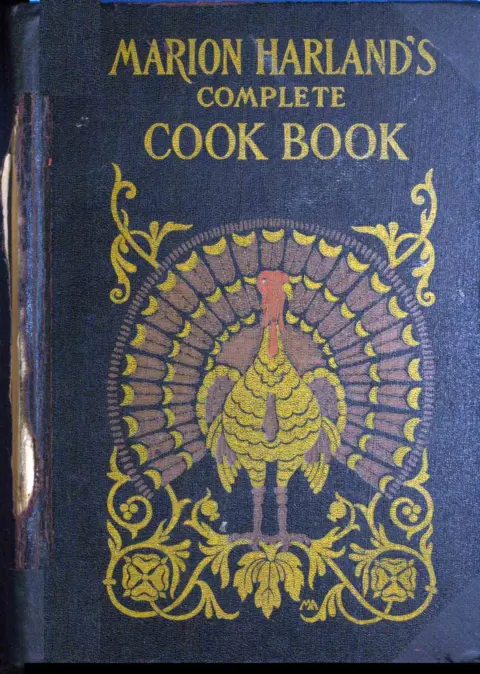
Marion Harland’s Complete Cook Book A Practical and Exhaustive Manual of Cookery and Housekeeping
Marion Harland
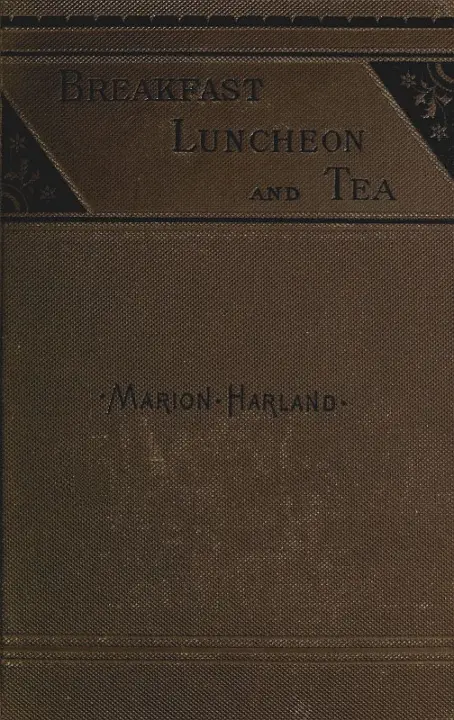
THE CLASSIC COLLECTION · 1875
"Breakfast, Luncheon and Tea" by Marion Harland is a comprehensive guide on culinary practices and household management written in the late 19th century. The book delves into the intricacies of meal planning, preparation, and presentation, reflecting the societal norms and expectations of the time. Harland addresses various aspects of cooking, with an emphasis on making meals not only nutritious but also enjoyable for the family. The opening of the book establishes a friendly and conversational tone as Harland introduces the idea of "Common Sense in the Household." She reflects on her gratitude towards readers for their support, sharing her insights on the importance of creating a welcoming environment for meals, particularly breakfast. She discusses the challenges that householders face in managing their duties while maintaining a warm atmosphere at the dining table. Various anecdotes illustrate her points, setting up the subsequent detailed recipes and practical advice that follow, aimed at enhancing the overall dining experience in a traditional household.
Introduction adapted from the source catalogue; source summaries may be automatically generated.
Free to read · English · 103,959 words · No account needed
MAKE TIME FOR A GOOD BOOK
On by default. Untick to stop anonymous reading totals. Each page counts after 10 seconds in view. How this works.
Anonymous counting is on unless you have switched it off.
1 quart milk.
½ cup yeast.
Flour for thick batter.
Set a sponge with these ingredients. When it is very light, add,—
1 cup butter rubbed to a cream, with
2 cups powdered sugar.
3 eggs—well beaten.
Flour to make soft dough. Knead briskly, and set to rise for four hours. Then make into rolls, and let these stand an hour longer, or until light and “puffy,” before baking. Glaze, just before drawing them from the oven, with a little cream and sugar.
Rusk are best fresh.
1 quart of flour.
2 heaping table-spoonfuls butter, chopped up in the flour.
2 cups cold water.
2 teaspoonfuls cream tartar, sifted thoroughly with the flour.
1 teaspoonful soda, dissolved in boiling water.
A little salt.
When flour, cream of tartar, salt and butter are well incorporated, stir the soda into the cold water, and mix the dough very quickly, handling as little as may be. It should be just stiff enough to roll out. Stiff soda biscuits are always failures. Roll half an inch thick with a few rapid strokes, cut out, and bake at once in a quick oven.
CREAM TOAST. (Very nice.) +
Slices of stale baker’s bread, from which the crust has been pared.
1 quart of milk.
3 table-spoonfuls of butter.
Whites of 3 eggs, beaten stiff.
Salt, and 2 table-spoonfuls best flour or corn-starch.
Boiling water.
Toast the bread to a golden brown. Burnt toast is detestable. Have on the range, or hearth, a shallow bowl or pudding-dish, more than half full of boiling water, in which a table-spoonful of butter has been melted. As each slice is toasted dip in this for a second, sprinkle lightly with salt, and lay in the deep heated dish in which it is to be served. Have ready, by the time all the bread is toasted, the milk scalding hot—but not boiled. Thicken this with the flour; let it simmer until cooked; put in the remaining butter, and when this is melted, the beaten whites of the eggs. Boil up once, and pour over the toast, lifting the lower slices one by one, that the creamy mixture may run in between them. Cover closely, and set in the oven two or three minutes before sending to table.
If you can get real cream, add only a teaspoonful of flour and the
whites of two eggs, but the same quantity of butter used in this
receipt.
SOUR MILK CAKES. (Good.) +
1 quart sour, or “loppered” milk.
About 4 cups sifted flour.
2 teaspoonfuls soda, dissolved in boiling water.
3 table-spoonfuls molasses.
Salt to taste.
Your reading position is saved on this browser. Take it to another device with a library code. Reading pages adapt to text, rather than matching a printed edition.
Marion Harland
Marion Harland
Marion Harland
Marion Harland
BEHIND THE BOOK
This eBook is for the use of anyone anywhere in the United States and most other parts of the world at no cost and with almost no restrictions whatsoever. You may copy it, give it away or re-use it under the terms of the Project Gutenberg License included with this eBook or online at www.gutenberg.org. If you are not located in the United States, you will have to check the laws of the country where you are located before using this eBook. Read the source licence.
The original source file, including credits and licence, is retained by this library. Request an original-format copy at no charge. Please include the book title and Project Gutenberg identifier #49944.
KEEP YOUR CURIOSITY GOING

Charles G. (Charles Griffith) Ross
Hannah Webster Foster

Emily Lawless
Edwin Hamlin Carr

Charles De Lano Hine
Andrew Ure