READ · DISCOVER · ENJOYClassic literature · Always free
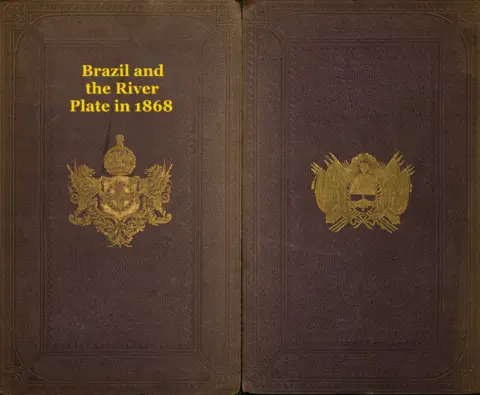
Brazil and the River Plate in 1868 — digital edition cover

THE CLASSIC COLLECTION · 1869

Brazil and the River Plate in 1868

"Brazil and the River Plate in 1868" by William Hadfield is a historical account written in the late 19th century. The book explores the significant changes and developments in Brazil and the River Plate region since the author's previous visit in 1853, focusing on topics such as emigration, commerce, and the impact of the war in Paraguay. Hadfield's narrative aims to shed light on these countries, which, despite their growing importance to England, remain largely unknown to the public. The opening portion of the work sets the stage for an in-depth exploration of South America, beginning with the author's voyage from England to Brazil. Hadfield provides observations about the state of steam navigation, highlighting advances since his last trip and the increased passenger and commercial traffic between these regions and Europe. He reflects on the socio-economic conditions, including the status of African slavery in Brazil and ongoing issues related to health crises, such as cholera, which affected both Rio de Janeiro and Buenos Ayres. The introduction establishes both the personal and broader contextual significance of the author's journey, illustrating the transformations within these vibrant territories.

Introduction adapted from the source catalogue; source summaries may be automatically generated.

Start reading ↓

Free to read · English · 79,226 words · No account needed

MAKE TIME FOR A GOOD BOOK

Brazil and the River Plate in 1868

On by default. Untick to stop anonymous reading totals. Each page counts after 10 seconds in view. How this works.

Anonymous counting is on unless you have switched it off.

Brazil and the River Plate in 1868

The population of Rio, on the arrival of the royal family, did not amount to 50,000, but afterwards rapidly augmented; so that in 1815, when declared independent, the number had nearly doubled, and now is estimated at about 400,000 with the suburbs and the provincial capital of Nitherohy, on the opposite shore of the Bay. This increase is partly to be ascribed to the afflux of Portuguese, who have at different times left their country in consequence of the civil commotions which have disturbed its peace, as well as of English, French, Dutch, German, and Italians, who, after the opening of the port, settled here, some as merchants, others as mechanics, and have contributed largely to its wealth and importance. These accessions of Europeans have affected a great change in the character of the population, for at the commencement of the century, and for many years afterwards, the blacks and coloured persons far exceeded the whites, whereas now they are reduced to less than half the inhabitants. In the aggregate population of the empire, however, the coloured portion is still supposed to be treble the white.

Footnote 5:

The difference between reporting proceedings of the Brazilian and English legislatures is that the latter appear daily, whilst it takes many days before speeches in the Brazilian Chambers are published, and frequently a large double sheet is issued to make up for arrears.

THE WAR IN PARAGUAY.

Leaving for the moment the narrative form, I devote a chapter to this lamentable struggle, which has entailed such serious consequences on Brazil, and which at the time I am writing is yet undetermined. Writers have differed much as to the origin of the war, but none have shown how it could have been avoided. I may observe en passant that so far from having entertained any prejudices against Paraguay, my sympathies have always been in favour of that country as evinced during my visit to the River Plate in 1853, at which period the elder Lopez was alive, and there appeared to be dawning in the future, not only an era of internal development for a very fine, fertile territory, but also a relaxation of the iron rule under which the people had so long groaned, by encouraging, to a limited extent it might be, commercial relations with other countries. Lopez had joined Brazil in putting down the tyranny of Rozas and in restoring a free government to the Argentine provinces; the rivers were to be opened by treaty to all nations, and an era of peace and prosperity appeared to be the natural result of these arrangements. The visit of the younger Lopez to Europe, it was thought, would have instilled into his mind the fact that all the wealth he saw there emanated from commerce, and that his first object would be to render Paraguay a commercial country. Unfortunately, however, he seems to have become more enamoured with the martial attitude of France than anything else, and determined on his return home to develop the military instead of the commercial resources of Paraguay. His ambition was centered in organizing a large army, fortifying the river approaches to Asuncion, and creating a small but efficient steam fleet. The experience of the past was thrown away, and on succeeding his father in the dictatorship, it became evident that his policy was to be one of aggrandisement, if it meant anything at all, and that, in other respects Paraguay was to continue isolated from her neighbours, and to stand aloof from participation in the business of the world. Paraguay had no enemies, nor was there any desire to trouble her; her territorial position secured her safety from attack, and it is impossible that all this military and naval preparation on the part of Lopez could have been merely intended for purposes of self-defence. The truth is, that Lopez had always coveted that portion of territory called the Missions, formerly a great stronghold of the Jesuits, but now part of the Argentine Confederation; and the possession of this would bring him close upon Uruguay, where the sea port of Monte Video afforded a tempting prize. At the same time, all this involved the prospect of a collision with other Powers, against which it was necessary to provide, and this I believe to be the true reason for the great military preparations of Lopez. I have already said that Paraguay joined with Brazil in putting an end to the tyranny of Rozas, and entered into a treaty by which the navigation of the upper rivers was to be free and the independence of Uruguay to be recognised. If ever Brazil had any sinister design on the latter State this was the time when she would have been most likely to assert it, but no such disposition was evinced. On the contrary, it was the wish as well as the interest of Brazil to keep Monte Video a free port, and the rivers open to the flags of all nations. Unfortunately for the peace of South America, Monte Video has never had a strong and independent Government, and during the presidency of Berro disorders broke out on the frontier. The persons and properties of Brazilian subjects were exposed to the inroads of lawless marauders from Uruguay, until at length the patience of the people of Rio Grande was exhausted, and they threatened to take up arms in their own defence, if the Imperial Government did not at once interfere for their protection. This statement has been personally confirmed to me by large landed proprietors who were themselves on the spot and suffered from the causes here referred to. Brazil was, therefore, compelled to send troops to the frontier and to follow the marauders into Uruguay, until such time as she could obtain fresh guarantees from a Government which had proved itself totally incompetent to deal with the matter. Then came the Colorado movement, headed by Flores, and further complications ensued, which might have been settled by the timely intervention of foreign Governments, but the men in power were quite deaf to all friendly remonstrances. The flag of Brazil was grossly insulted, trampled on in the streets of Monte Video, and the treaty with her publicly burnt. Recent melancholy occurrences in that city have shown what excesses can be committed from party spirit, and how difficult it was at the period I allude to, to avoid an armed intervention. How these acts affected the interests of Paraguay it is not easy to conceive. Brazil agreed to recognise the independence of Uruguay, and she left it in that condition, stronger than it had been for some years previously. It is true that about this time Lopez had given notice to Brazil that any interference in the affairs of Uruguay, or the entry of Brazilian troops into Uruguayan territory, would be considered by him as a casus belli—a piece of impertinence that Brazil might well disregard, as the rights of nations allowed reprisals for injuries received, and this was all Brazil carried into effect. Up to the point mentioned Lopez had, therefore, no real or ostensible cause of war against Brazil, but she stood in the way of the consummation of his ambitious designs, and so he made what he termed an interference in Uruguay the pretext for setting his legions in motion. Without any declaration of war, he seized and took forcible possession of the steamer Marquis de Olinda whilst on a peaceable errand up the River, with Carneiro de Campos, the President of Matto Grosso on board, and has retained him prisoner ever since; he marched a division into Brazil, and occupied the frontier town of Uruguayana, simultaneously sending his fleet down, no doubt to co-operate with his troops, but this was prevented by the gallant action of the Riachuello, in which the Paraguayan navy was nearly destroyed by the Brazilians. The proceedings of Lopez towards Brazil were, therefore, offensive and insulting in the highest degree, and still more so towards the Argentine Republic, which had really given him no cause of offence beyond daring to remain neutral, and consequently refusing to allow the passage of troops through its territory. Upon the refusal of General Mitre to grant such permission, he crossed the Parana and invaded Corrientes, seizing two Argentine vessels as well as the persons and property of Argentine subjects, on whom he levied black mail. These extreme measures taken by Lopez towards both countries were in pigmy imitation of the first Napoleon, whose tactics Lopez affected to follow by seizing the persons, property, and territory of his neighbours before it was possible for them to offer any opposition. Such an offence against the laws of nations could lead only to an alliance against him as a common enemy, with the condition that the aggrieved nations would not lay down their arms until the offender was punished by expulsion from Paraguay. In Europe this course was adopted against Napoleon I. and in South America, under nearly identical circumstances, an equally strong measure was rendered necessary for the future peace and security of the allies. If a case in point was required on the spot, Paraguay itself had joined in the expulsion of Rozas, because no security existed for any one so long as that tyrant dominated at Buenos Ayres. That neither Brazil nor the Argentine Republic anticipated such conduct on the part of Lopez is evident from the unprepared state of both, the latter being at the time literally without army or navy; indeed, the first check given to the advance of Lopez was by the late General Flores, at the head of a gallant little band of Oriental troops in conjunction with those of Brazil. No impartial person can question, therefore, that Lopez has been the sole cause of this long and bloody war, and that he committed a glaring act of violence towards his neighbours, who were compelled in self-defence to enter into a league for the expulsion of so dangerous a character. To have made peace on any other terms would have been only playing with a firebrand.

Your reading position is saved on this browser. Take it to another device with a library code. Reading pages adapt to text, rather than matching a printed edition.

BEHIND THE WORDS

About William Hadfield

William Hadfield (1806–1887). Explore Brazil and the River Plate in 1868 in this collection. These books span history, travel & exploration.

Explore this author’s books →

THE READERS’ VERDICT

How did this story stay with you?

Not rated yet
Your rating for Brazil and the River Plate in 1868

Be the first to share your verdict.

One rating per browser, which you can change or remove. A necessary browser identifier remembers your vote. How ratings work

A GOOD STORY DESERVES COMPANY

Pass this book along.

A great read is even better when it’s shared.

SEND A LITTLE INSPIRATION

Share this book

BEHIND THE BOOK

Edition & source details.

Title
Brazil and the River Plate in 1868
Author
William Hadfield
First publication (Open Library catalogue match)
1869
Digital edition publisher
Project Gutenberg
Gutenberg release date
2016-09-02
Language
English
Source edition imprint
Not stated in source catalogue
Source identifier
Project Gutenberg #52965
Contributors
No additional named contributors in source metadata

Public-domain source & licence

This eBook is for the use of anyone anywhere in the United States and most other parts of the world at no cost and with almost no restrictions whatsoever. You may copy it, give it away or re-use it under the terms of the Project Gutenberg License included with this eBook or online at www.gutenberg.org. If you are not located in the United States, you will have to check the laws of the country where you are located before using this eBook. Read the source licence.

Full source licence and obtaining an original copy

The original source file, including credits and licence, is retained by this library. Request an original-format copy at no charge. Please include the book title and Project Gutenberg identifier #52965.

the full Project Gutenberg License must appear
prominently whenever any copy of a Project Gutenberg work (any work
on which the phrase “Project Gutenberg” appears, or with which the
phrase “Project Gutenberg” is associated) is accessed, displayed,
performed, viewed, copied or distributed:

This eBook is for the use of anyone anywhere in the United States and most
other parts of the world at no cost and with almost no restrictions
whatsoever. You may copy it, give it away or re-use it under the terms
of the Project Gutenberg™ License included with this eBook or online
at www.gutenberg.org. If you
are not located in the United States, you will have to check the laws
of the country where you are located before using this eBook.

1.E.2. If an individual Project Gutenberg electronic work is
derived from texts not protected by U.S. copyright law (does not
contain a notice indicating that it is posted with permission of the
copyright holder), the work can be copied and distributed to anyone in
the United States without paying any fees or charges. If you are
redistributing or providing access to a work with the phrase “Project
Gutenberg” associated with or appearing on the work, you must comply
either with the requirements of paragraphs 1.E.1 through 1.E.7 or
obtain permission for the use of the work and the Project Gutenberg
trademark as set forth in paragraphs 1.E.8 or 1.E.9.

1.E.3. If an individual Project Gutenberg electronic work is posted
with the permission of the copyright holder, your use and distribution
must comply with both paragraphs 1.E.1 through 1.E.7 and any
additional terms imposed by the copyright holder. Additional terms
will be linked to the Project Gutenberg License for all works
posted with the permission of the copyright holder found at the
beginning of this work.

1.E.4. Do not unlink or detach or remove the full Project Gutenberg
License terms from this work, or any files containing a part of this
work or any other work associated with Project Gutenberg.

1.E.5. Do not copy, display, perform, distribute or redistribute this
electronic work, or any part of this electronic work, without
prominently displaying the sentence set forth in paragraph 1.E.1 with
active links or immediate access to the full terms of the Project
Gutenberg License.

1.E.6. You may convert to and distribute this work in any binary,
compressed, marked up, nonproprietary or proprietary form, including
any word processing or hypertext form. However, if you provide access
to or distribute copies of a Project Gutenberg work in a format
other than “Plain Vanilla ASCII” or other format used in the official
version posted on the official Project Gutenberg website
(www.gutenberg.org), you must, at no additional cost, fee or expense
to the user, provide a copy, a means of exporting a copy, or a means
of obtaining a copy upon request, of the work in its original “Plain
Vanilla ASCII” or other form. Any alternate format must include the
full Project Gutenberg License as specified in paragraph 1.E.1.

1.E.7. Do not charge a fee for access to, viewing, displaying,
performing, copying or distributing any Project Gutenberg works
unless you comply with paragraph 1.E.8 or 1.E.9.

1.E.8. You may charge a reasonable fee for copies of or providing
access to or distributing Project Gutenberg electronic works
provided that:

• You pay a royalty fee of 20% of the gross profits you derive from
the use of Project Gutenberg works calculated using the method
you already use to calculate your applicable taxes. The fee is owed
to the owner of the Project Gutenberg trademark, but he has
agreed to donate royalties under this paragraph to the Project
Gutenberg Literary Archive Foundation. Royalty payments must be paid
within 60 days following each date on which you prepare (or are
legally required to prepare) your periodic tax returns. Royalty
payments should be clearly marked as such and sent to the Project
Gutenberg Literary Archive Foundation at the address specified in
Section 4, “Information about donations to the Project Gutenberg
Literary Archive Foundation.”

• You provide a full refund of any money paid by a user who notifies
you in writing (or by e-mail) within 30 days of receipt that s/he
does not agree to the terms of the full Project Gutenberg™
License. You must require such a user to return or destroy all
copies of the works possessed in a physical medium and discontinue
all use of and all access to other copies of Project Gutenberg™
works.

• You provide, in accordance with paragraph 1.F.3, a full refund of
any money paid for a work or a replacement copy, if a defect in the
electronic work is discovered and reported to you within 90 days of
receipt of the work.

• You comply with all other terms of this agreement for free
distribution of Project Gutenberg™ works.


1.E.9. If you wish to charge a fee or distribute a Project
Gutenberg™ electronic work or group of works on different terms than
are set forth in this agreement, you must obtain permission in writing
from the Project Gutenberg Literary Archive Foundation, the manager of
the Project Gutenberg™ trademark. Contact the Foundation as set
forth in Section 3 below.

1.F.

1.F.1. Project Gutenberg volunteers and employees expend considerable
effort to identify, do copyright research on, transcribe and proofread
works not protected by U.S. copyright law in creating the Project
Gutenberg™ collection. Despite these efforts, Project Gutenberg™
electronic works, and the medium on which they may be stored, may
contain “Defects,” such as, but not limited to, incomplete, inaccurate
or corrupt data, transcription errors, a copyright or other
intellectual property infringement, a defective or damaged disk or
other medium, a computer virus, or computer codes that damage or
cannot be read by your equipment.

1.F.2. LIMITED WARRANTY, DISCLAIMER OF DAMAGES - Except for the “Right
of Replacement or Refund” described in paragraph 1.F.3, the Project
Gutenberg Literary Archive Foundation, the owner of the Project
Gutenberg™ trademark, and any other party distributing a Project
Gutenberg™ electronic work under this agreement, disclaim all
liability to you for damages, costs and expenses, including legal
fees. YOU AGREE THAT YOU HAVE NO REMEDIES FOR NEGLIGENCE, STRICT
LIABILITY, BREACH OF WARRANTY OR BREACH OF CONTRACT EXCEPT THOSE
PROVIDED IN PARAGRAPH 1.F.3. YOU AGREE THAT THE FOUNDATION, THE
TRADEMARK OWNER, AND ANY DISTRIBUTOR UNDER THIS AGREEMENT WILL NOT BE
LIABLE TO YOU FOR ACTUAL, DIRECT, INDIRECT, CONSEQUENTIAL, PUNITIVE OR
INCIDENTAL DAMAGES EVEN IF YOU GIVE NOTICE OF THE POSSIBILITY OF SUCH
DAMAGE.

1.F.3. LIMITED RIGHT OF REPLACEMENT OR REFUND - If you discover a
defect in this electronic work within 90 days of receiving it, you can
receive a refund of the money (if any) you paid for it by sending a
written explanation to the person you received the work from. If you
received the work on a physical medium, you must return the medium
with your written explanation. The person or entity that provided you
with the defective work may elect to provide a replacement copy in
lieu of a refund. If you received the work electronically, the person
or entity providing it to you may choose to give you a second
opportunity to receive the work electronically in lieu of a refund. If
the second copy is also defective, you may demand a refund in writing
without further opportunities to fix the problem.

1.F.4. Except for the limited right of replacement or refund set forth
in paragraph 1.F.3, this work is provided to you ‘AS-IS’, WITH NO
OTHER WARRANTIES OF ANY KIND, EXPRESS OR IMPLIED, INCLUDING BUT NOT
LIMITED TO WARRANTIES OF MERCHANTABILITY OR FITNESS FOR ANY PURPOSE.

1.F.5. Some states do not allow disclaimers of certain implied
warranties or the exclusion or limitation of certain types of
damages. If any disclaimer or limitation set forth in this agreement
violates the law of the state applicable to this agreement, the
agreement shall be interpreted to make the maximum disclaimer or
limitation permitted by the applicable state law. The invalidity or
unenforceability of any provision of this agreement shall not void the
remaining provisions.

1.F.6. INDEMNITY - You agree to indemnify and hold the Foundation, the
trademark owner, any agent or employee of the Foundation, anyone
providing copies of Project Gutenberg™ electronic works in
accordance with this agreement, and any volunteers associated with the
production, promotion and distribution of Project Gutenberg™
electronic works, harmless from all liability, costs and expenses,
including legal fees, that arise directly or indirectly from any of
the following which you do or cause to occur: (a) distribution of this
or any Project Gutenberg work, (b) alteration, modification, or
additions or deletions to any Project Gutenberg work, and (c) any
Defect you cause.

Section 2. Information about the Mission of Project Gutenberg

Project Gutenberg is synonymous with the free distribution of
electronic works in formats readable by the widest variety of
computers including obsolete, old, middle-aged and new computers. It
exists because of the efforts of hundreds of volunteers and donations
from people in all walks of life.

Volunteers and financial support to provide volunteers with the
assistance they need are critical to reaching Project Gutenberg’s
goals and ensuring that the Project Gutenberg collection will
remain freely available for generations to come. In 2001, the Project
Gutenberg Literary Archive Foundation was created to provide a secure
and permanent future for Project Gutenberg and future
generations. To learn more about the Project Gutenberg Literary
Archive Foundation and how your efforts and donations can help, see
Sections 3 and 4 and the Foundation information page at www.gutenberg.org.

Section 3. Information about the Project Gutenberg Literary Archive Foundation

The Project Gutenberg Literary Archive Foundation is a non-profit
501(c)(3) educational corporation organized under the laws of the
state of Mississippi and granted tax exempt status by the Internal
Revenue Service. The Foundation’s EIN or federal tax identification
number is 64-6221541. Contributions to the Project Gutenberg Literary
Archive Foundation are tax deductible to the full extent permitted by
U.S. federal laws and your state’s laws.

The Foundation’s business office is located at 41 Watchung Plaza #516,
Montclair NJ 07042, USA, +1 (862) 621-9288. Email contact links and up
to date contact information can be found at the Foundation’s website
and official page at www.gutenberg.org/contact

Section 4. Information about Donations to the Project Gutenberg
Literary Archive Foundation

Project Gutenberg™ depends upon and cannot survive without widespread
public support and donations to carry out its mission of
increasing the number of public domain and licensed works that can be
freely distributed in machine-readable form accessible by the widest
array of equipment including outdated equipment. Many small donations
($1 to $5,000) are particularly important to maintaining tax exempt
status with the IRS.

The Foundation is committed to complying with the laws regulating
charities and charitable donations in all 50 states of the United
States. Compliance requirements are not uniform and it takes a
considerable effort, much paperwork and many fees to meet and keep up
with these requirements. We do not solicit donations in locations
where we have not received written confirmation of compliance. To SEND
DONATIONS or determine the status of compliance for any particular state
visit www.gutenberg.org/donate.

While we cannot and do not solicit contributions from states where we
have not met the solicitation requirements, we know of no prohibition
against accepting unsolicited donations from donors in such states who
approach us with offers to donate.

International donations are gratefully accepted, but we cannot make
any statements concerning tax treatment of donations received from
outside the United States. U.S. laws alone swamp our small staff.

Please check the Project Gutenberg web pages for current donation
methods and addresses. Donations are accepted in a number of other
ways including checks, online payments and credit card donations. To
donate, please visit: www.gutenberg.org/donate.

Section 5. General Information About Project Gutenberg electronic works

Professor Michael S. Hart was the originator of the Project
Gutenberg concept of a library of electronic works that could be
freely shared with anyone. For forty years, he produced and
distributed Project Gutenberg eBooks with only a loose network of
volunteer support.

Project Gutenberg eBooks are often created from several printed
editions, all of which are confirmed as not protected by copyright in
the U.S. unless a copyright notice is included. Thus, we do not
necessarily keep eBooks in compliance with any particular paper
edition.

Most people start at our website which has the main PG search
facility: www.gutenberg.org.

This website includes information about Project Gutenberg,
including how to make donations to the Project Gutenberg Literary
Archive Foundation, how to help produce our new eBooks, and how to
subscribe to our email newsletter to hear about new eBooks.


KEEP YOUR CURIOSITY GOING

Your next chapter awaits.