THE CLASSIC COLLECTION✦The Torch Bearer: A Camp Fire Girls’ StoryCLASSIC FREE BOOKS
The Torch Bearer: A Camp Fire Girls’ Story
I. T. (Ida Treadwell) Thurston
THE CLASSIC COLLECTION · 1896
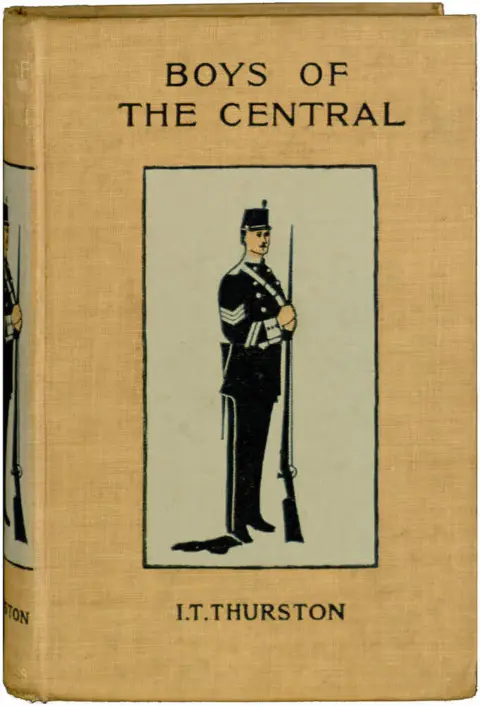
"Boys of the Central: A High-School Story" by I. T. Thurston is a novel written in the late 19th century. The story takes place in a traditional high school setting, following the experiences of a group of boys in section D, particularly focusing on two characters: the vulnerable Freeman and the morally upright Stanley Clark. The narrative explores themes of bullying, courage, loyalty, and the social dynamics of adolescence. The opening portion introduces readers to section D during an algebra recitation, highlighting the struggles of Freeman, who faces bullying from fellow classmate Crawford. Despite his quick mind, Freeman falters during class, leading to the embarrassment that invites verbal threats from Crawford when he tries to help. As friendships and rivalries unfold, the text establishes tensions that hint at the challenges of growing up, including the pressure to conform and the conflicts between the morally steadfast boys and the unruly ones like Crawford. In this first chapter, we see the early formation of social cliques and the dramatic impact of peer relationships, setting the stage for further developments in the story.
Introduction adapted from the source catalogue; source summaries may be automatically generated.
Free to read · English · 62,239 words · No account needed
MAKE TIME FOR A GOOD BOOK
On by default. Untick to stop anonymous reading totals. Each page counts after 10 seconds in view. How this works.
Anonymous counting is on unless you have switched it off.
“Come now, pitch in, Ray,” he said, “I’m as hungry as a bear, and I hope you are too. I don’t want to have anything to lug home but the basket and kettle. Here--try my lemonade,” and he filled a glass, and passed it to his cousin.
“I’m not hungry,” objected Freeman, but Clark laughed at him.
“Well, you ought to be. Take hold and keep me company, else I shall be ashamed of my healthy appetite.”
With merry talk and gay jokes he beguiled Freeman out of his despondent mood, and presently the little fellow found himself eating and drinking, and felt much the better for it. When the meal was finished, Clark threw himself down on the grass, and again a silence fell between the two. Clark was wondering how he could win his cousin’s confidence, and Freeman had fallen again into troubled thought.
“Ray, you don’t look happy,” said Clark, suddenly.
“Happy!” echoed the other, “I’m too miserable to live.”
“Can’t you tell me all about it, Ray?” said Clark, in a voice so full of sympathy, that, in spite of himself, Ray’s eyes filled with tears, but he choked them back.
“I’ve nothing to tell,” he said, coldly.
Silence again, and once again Clark broke it.
“Ray,” he said, “do you remember your father?”
Freeman looked up in surprise at the question.
“Yes, I remember him well,” he said. “I was eight, you know, when he died. Oh, Stanley, I wish my father had lived. I believe I’d be a better fellow to-day, if he had.”
“I remember him so well,” said Clark, slowly. “Mother used to tell me stories about him when he was a boy. He was her twin brother, you know, and she was as devoted to him as Edith is to you. I used to think that if I could ever be such a boy as Uncle Raymond was, I should be about right.”
Freeman’s eyes were shining now. He had forgotten all about himself, and was thinking only of the father whose death he had never ceased to mourn.
“Yes,” he said eagerly, “almost the first thing I can remember is walking in the street with him, and feeling so proud because he was so grand and handsome, and even now, it seems to me that he must have been nobler and finer than most men. It makes me proud to think I bear his name.”
“Raymond,” said Clark, earnestly, “are you bearing it so that he would be proud of you--if he were here now?”
Your reading position is saved on this browser. Take it to another device with a library code. Reading pages adapt to text, rather than matching a printed edition.
BEHIND THE BOOK
This eBook is for the use of anyone anywhere in the United States and most other parts of the world at no cost and with almost no restrictions whatsoever. You may copy it, give it away or re-use it under the terms of the Project Gutenberg License included with this eBook or online at www.gutenberg.org. If you are not located in the United States, you will have to check the laws of the country where you are located before using this eBook. Read the source licence.
The original source file, including credits and licence, is retained by this library. Request an original-format copy at no charge. Please include the book title and Project Gutenberg identifier #63156.
KEEP YOUR CURIOSITY GOING
Coulson Kernahan

Maurice Baring
Frances Wright
Cécile Tormay

Frederic Jesup Stimson

W. H. P. (William Henry Pope) Jarvis