THE CLASSIC COLLECTION✦The Torch Bearer: A Camp Fire Girls’ StoryCLASSIC FREE BOOKS
The Torch Bearer: A Camp Fire Girls’ Story
I. T. (Ida Treadwell) Thurston
THE CLASSIC COLLECTION · 1896
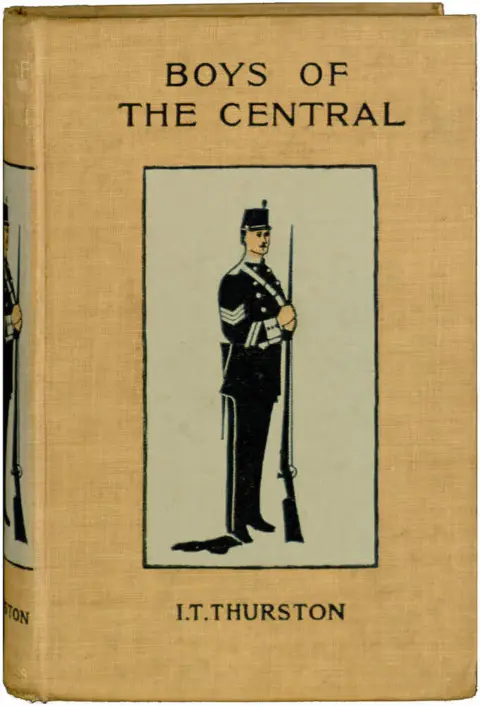
"Boys of the Central: A High-School Story" by I. T. Thurston is a novel written in the late 19th century. The story takes place in a traditional high school setting, following the experiences of a group of boys in section D, particularly focusing on two characters: the vulnerable Freeman and the morally upright Stanley Clark. The narrative explores themes of bullying, courage, loyalty, and the social dynamics of adolescence. The opening portion introduces readers to section D during an algebra recitation, highlighting the struggles of Freeman, who faces bullying from fellow classmate Crawford. Despite his quick mind, Freeman falters during class, leading to the embarrassment that invites verbal threats from Crawford when he tries to help. As friendships and rivalries unfold, the text establishes tensions that hint at the challenges of growing up, including the pressure to conform and the conflicts between the morally steadfast boys and the unruly ones like Crawford. In this first chapter, we see the early formation of social cliques and the dramatic impact of peer relationships, setting the stage for further developments in the story.
Introduction adapted from the source catalogue; source summaries may be automatically generated.
Free to read · English · 62,239 words · No account needed
MAKE TIME FOR A GOOD BOOK
On by default. Untick to stop anonymous reading totals. Each page counts after 10 seconds in view. How this works.
Anonymous counting is on unless you have switched it off.
“I call that right down mean,” said Crawford, in a tone that all about him could hear, “and I won’t stand much more such treatment.”
“Crawford, you may go to Professor Keene’s office,” said Mr. Horton,
gravely.
Muttering something half aloud, Crawford arose and swaggered across the room, turning at the door to make an elaborate bow, first to Mr. Horton and then to the class. He did not go to the office, however, but straight to his rooms, where he ordered his ponies brought around, and then driving back to the school, sent in a note to Henderson.
Henderson read it, and then passing it to Coyle, he went to the desk and said, “Mr. Horton, I’ve just had word that my father has been taken suddenly ill. Can I be excused?”
Mr. Horton looked at him sharply, but Henderson’s face was grave and troubled, and after a moment’s hesitation, he said, “Yes, you may go.”
He did not see the wink and grimace with which Henderson favored his classmates as he turned away and left the room.
Two minutes later, he was seated beside Crawford, and the horses were bearing them swiftly along, while they chuckled over the neat way in which they had “done old Bobby.”
“Now the ringleaders are out of the way, I hope there will be no more disturbance to-day,” thought the teacher; but his hope was not destined to be realized.
As the door closed behind Henderson, somebody snapped a marble up to the ceiling. As it dropped, it struck Raleigh’s glasses. He started up with the blood streaming from his face where a sliver of glass had cut it.
“Who threw that marble?” said Mr. Horton in a tone that none of them had ever heard from his lips before. Then, as no one answered, he stepped quickly to Raleigh’s side. “Did any of the glass go in your eyes?” he asked anxiously.
“No, sir, I think not,” answered Raleigh, putting his handkerchief up to his cheek, which was bleeding quite freely.
“Come with me to the dressing-room, Raleigh, and Hamlin, you may take charge of the room until I return,” said Mr. Horton, still in that stern tone that boded ill for the one who had caused the trouble.
The room was very quiet while Mr. Horton was absent. When he returned, having sent Raleigh home, he said slowly, “I call upon the boy who threw the marble that injured Raleigh to stand.”
He waited, amid a silence that could almost be felt, but no one moved.
Your reading position is saved on this browser. Take it to another device with a library code. Reading pages adapt to text, rather than matching a printed edition.
BEHIND THE BOOK
This eBook is for the use of anyone anywhere in the United States and most other parts of the world at no cost and with almost no restrictions whatsoever. You may copy it, give it away or re-use it under the terms of the Project Gutenberg License included with this eBook or online at www.gutenberg.org. If you are not located in the United States, you will have to check the laws of the country where you are located before using this eBook. Read the source licence.
The original source file, including credits and licence, is retained by this library. Request an original-format copy at no charge. Please include the book title and Project Gutenberg identifier #63156.
KEEP YOUR CURIOSITY GOING
Coulson Kernahan

Maurice Baring
Frances Wright
Cécile Tormay

Frederic Jesup Stimson

W. H. P. (William Henry Pope) Jarvis