THE CLASSIC COLLECTION✦The Torch Bearer: A Camp Fire Girls’ StoryCLASSIC FREE BOOKS
The Torch Bearer: A Camp Fire Girls’ Story
I. T. (Ida Treadwell) Thurston
THE CLASSIC COLLECTION · 1896
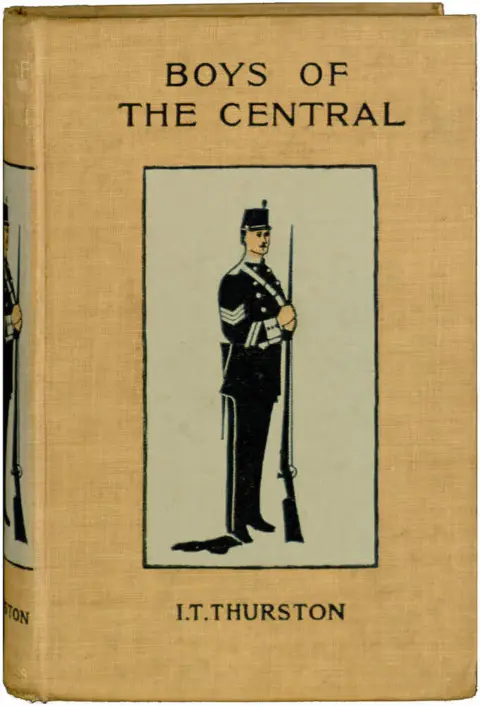
"Boys of the Central: A High-School Story" by I. T. Thurston is a novel written in the late 19th century. The story takes place in a traditional high school setting, following the experiences of a group of boys in section D, particularly focusing on two characters: the vulnerable Freeman and the morally upright Stanley Clark. The narrative explores themes of bullying, courage, loyalty, and the social dynamics of adolescence. The opening portion introduces readers to section D during an algebra recitation, highlighting the struggles of Freeman, who faces bullying from fellow classmate Crawford. Despite his quick mind, Freeman falters during class, leading to the embarrassment that invites verbal threats from Crawford when he tries to help. As friendships and rivalries unfold, the text establishes tensions that hint at the challenges of growing up, including the pressure to conform and the conflicts between the morally steadfast boys and the unruly ones like Crawford. In this first chapter, we see the early formation of social cliques and the dramatic impact of peer relationships, setting the stage for further developments in the story.
Introduction adapted from the source catalogue; source summaries may be automatically generated.
Free to read · English · 62,239 words · No account needed
MAKE TIME FOR A GOOD BOOK
On by default. Untick to stop anonymous reading totals. Each page counts after 10 seconds in view. How this works.
Anonymous counting is on unless you have switched it off.
“There, fellows!” cried Gordon, turning to a group near him, “that’s the kind of thing that has brought our section down so low. It isn’t just fun, or even carelessness and disorder. It is low, filthy talk, and the oaths that some of us use so constantly, that make everybody so down on us, and I don’t wonder at it.”
“Pretty little boy! Does his mammy know he’s out?” said Henderson,
tauntingly.
“’Course she does. He’s still tied to her apron-string,” put in Coyle.
“I suppose you think such talk is very smart,” said Gordon, trying hard to look undisturbed, “but I think we are all old enough to begin to act like gentlemen, to say the least, and some of us mean to show that we are gentlemen. We are going to form a law and order society, and elect a president and secretary, and see what we can do to make our section one to be proud of.”
“Suppose one of our crowd should get the most votes for president,” queried Crawford, “what then?”
“I’m perfectly willing one of your crowd should be president, provided he will pledge himself to forward the objects of the society,” said Gordon, as he pulled a book from his desk, and opening it, added, “A few of us who feel pretty deeply on this subject have drawn up a rough pledge which every member joining our association must sign--and keep.”
“Go ahead, Deacon, read it out,” called Henderson.
“Yes, stand up like a little man and read right out,” added Crawford;
and Gordon read:--
“We, the undersigned deeply regretting that our section has gained such an undesirable reputation, do pledge ourselves to do all in our power to maintain order in school hours, and to raise the standard of scholarship, of conduct and of conversation in section D.”
To this ten names were affixed--including Gordon, Graham and Sherman.
“You must think we are all fools if you believe we’re going to tie ourselves up like that,” shouted Henderson with his coarse laugh as Gordon finished reading.
“A fellow wants a little fun even in school,” said another.
“Might as well join the church, an’ done with it, as to sign that
thing,” said Green.
“Boys,” cried Gordon, trying to make himself heard above the clamor of voices, “I know there are some, whose names are not here, who will join us. Please come on and sign now--all who will--and then we’ll withdraw to some place where we can talk this thing over quietly.”
Six other boys signed their names amid taunts and jeers from Crawford
and his cronies.
Your reading position is saved on this browser. Take it to another device with a library code. Reading pages adapt to text, rather than matching a printed edition.
BEHIND THE BOOK
This eBook is for the use of anyone anywhere in the United States and most other parts of the world at no cost and with almost no restrictions whatsoever. You may copy it, give it away or re-use it under the terms of the Project Gutenberg License included with this eBook or online at www.gutenberg.org. If you are not located in the United States, you will have to check the laws of the country where you are located before using this eBook. Read the source licence.
The original source file, including credits and licence, is retained by this library. Request an original-format copy at no charge. Please include the book title and Project Gutenberg identifier #63156.
KEEP YOUR CURIOSITY GOING
Coulson Kernahan

Maurice Baring
Frances Wright
Cécile Tormay

Frederic Jesup Stimson

W. H. P. (William Henry Pope) Jarvis