THE CLASSIC COLLECTION✦The Torch Bearer: A Camp Fire Girls’ StoryCLASSIC FREE BOOKS
The Torch Bearer: A Camp Fire Girls’ Story
I. T. (Ida Treadwell) Thurston
THE CLASSIC COLLECTION · 1896
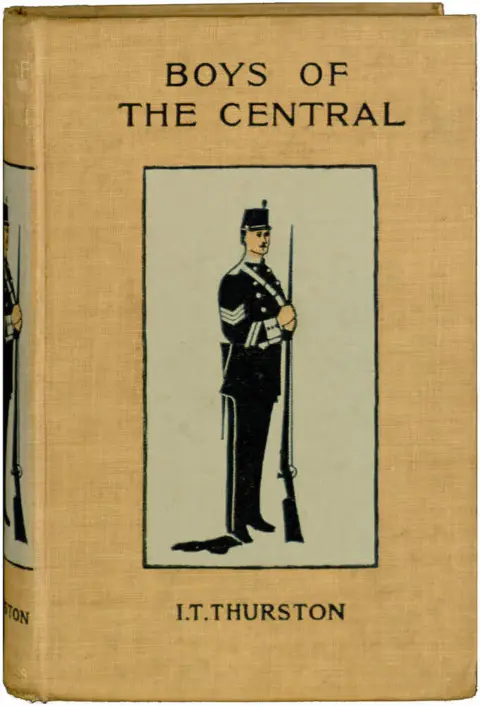
"Boys of the Central: A High-School Story" by I. T. Thurston is a novel written in the late 19th century. The story takes place in a traditional high school setting, following the experiences of a group of boys in section D, particularly focusing on two characters: the vulnerable Freeman and the morally upright Stanley Clark. The narrative explores themes of bullying, courage, loyalty, and the social dynamics of adolescence. The opening portion introduces readers to section D during an algebra recitation, highlighting the struggles of Freeman, who faces bullying from fellow classmate Crawford. Despite his quick mind, Freeman falters during class, leading to the embarrassment that invites verbal threats from Crawford when he tries to help. As friendships and rivalries unfold, the text establishes tensions that hint at the challenges of growing up, including the pressure to conform and the conflicts between the morally steadfast boys and the unruly ones like Crawford. In this first chapter, we see the early formation of social cliques and the dramatic impact of peer relationships, setting the stage for further developments in the story.
Introduction adapted from the source catalogue; source summaries may be automatically generated.
Free to read · English · 62,239 words · No account needed
MAKE TIME FOR A GOOD BOOK
On by default. Untick to stop anonymous reading totals. Each page counts after 10 seconds in view. How this works.
Anonymous counting is on unless you have switched it off.
“Three cheers for Clark!” shouted the irrepressible Reed, actually jumping up on his seat in his excitement, and the cheers were given with a will, while Clark, blushing and confused, bowed his thanks and dropped hastily into his seat.
“Well,” remarked Mr. Horton, looking slowly about the room, “may I ask what this means? What have you been doing, Clark, to awaken all this enthusiasm?”
“Nothing at all, sir. It’s just the boys,” stammered Clark.
“Yes,” said Mr. Horton dryly, “I’m quite aware that it was just the boys.” But now Reed, trying to keep his enthusiasm within bounds, told the story in a few graphic words.
Mr. Horton listened with as great an interest as even Reed could desire, and when the story was ended, said only:--
“Boys, you are perfectly excusable for this once; only remember that this is not a precedent,” but the look he gave the quiet lad whom he had learned to love, assured the boys that their teacher was in fullest sympathy with them.
From this time, Clark’s popularity in the school was very great. Even hot-headed Lee blotted from his memory that unreturned blow, the year before, and not even in the depths of his own heart did he ever again call Stanley Clark “coward.”
Before that day was over, section D had another sensation.
As usual near the close of the year, the rules were relaxed, especially in the senior class, and often some of the boys would remain in the room during part of the recess, talking over their work and surmising about the questions likely to be asked in the examinations. Half a dozen or more were busily talking about the dreaded Latin essays, when Reed came rushing upstairs, exclaiming:--
“I say, you fellows, you missed a picnic, staying in to-day. Didn’t you hear us all yelling outside?”
“Why, yes, we heard you, but it’s nothing unusual for you little chaps to be noisy,” said Hamlin, loftily. Then he added, “but if you’re very anxious to tell us what it was about, this time, we can listen, I suppose,” and with an air of patient endurance, he dropped into his seat.
Reed picked up a book and flung it at him, but he was too full of his story to pursue the mock quarrel, especially as two or three voices called out:--
“Go on, Reedy--tell us what ’twas all about.”
Your reading position is saved on this browser. Take it to another device with a library code. Reading pages adapt to text, rather than matching a printed edition.
BEHIND THE BOOK
This eBook is for the use of anyone anywhere in the United States and most other parts of the world at no cost and with almost no restrictions whatsoever. You may copy it, give it away or re-use it under the terms of the Project Gutenberg License included with this eBook or online at www.gutenberg.org. If you are not located in the United States, you will have to check the laws of the country where you are located before using this eBook. Read the source licence.
The original source file, including credits and licence, is retained by this library. Request an original-format copy at no charge. Please include the book title and Project Gutenberg identifier #63156.
KEEP YOUR CURIOSITY GOING
Coulson Kernahan

Maurice Baring
Frances Wright
Cécile Tormay

Frederic Jesup Stimson

W. H. P. (William Henry Pope) Jarvis