THE CLASSIC COLLECTION✦Building the pacific railwayCLASSIC FREE BOOKS
Building the pacific railway
Edwin L. (Edwin Legrand) Sabin
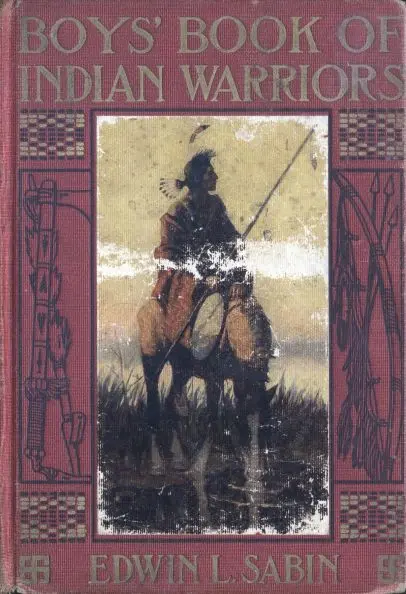
THE CLASSIC COLLECTION · 1918
"Boys' Book of Indian Warriors and Heroic Indian Women" by Edwin L. Sabin is a collection of historical accounts written in the early 20th century. This work explores the lives and exploits of notable Native American warriors and women throughout American history, highlighting their courage and resilience against external pressures and conflicts. The author aims to present the narrative from the perspective of the Native Americans, offering insights into their motivations and beliefs." "The opening of this collection introduces the warrior Piskaret of the Adirondack tribe, recounting his daring exploits during the 17th century as he takes on the formidable Iroquois. Set against the backdrop of a bitter and protracted conflict between various Native tribes and colonizing forces, Piskaret embarks on a solo reconnaissance mission, using cunning tactics to evade his enemies. The narrative vividly details his journey into enemy territory, where he stealthily attacks the Iroquois during the night, showcasing both his bravery and the harsh realities of the times. Through Piskaret’s story, the text sets the stage for a broader exploration of Native American history and identity."
Introduction adapted from the source catalogue; source summaries may be automatically generated.
Free to read · English · 82,783 words · No account needed
MAKE TIME FOR A GOOD BOOK
On by default. Untick to stop anonymous reading totals. Each page counts after 10 seconds in view. How this works.
Anonymous counting is on unless you have switched it off.
However, the Piskaret party had the advantage of position. They hid in the bushes at the place for which the canoes were heading.
"Let us each choose a man in the first canoe," directed Piskaret, "and take sure aim, and fire together."
The volley by the Algonkins was so deadly that every one of the six balls killed an Iroquois. The seventh warrior dived overboard, and escaped by swimming to the other canoe. That had been swift work.
But the Iroquois were brave. Of the Mohawk tribe, these. Instead of turning about, to get help, the eight warriors, whooping in rage, paddled furiously along the shore, to land at another spot and give battle.
Piskaret's Algonkins ran hard to head them off, and met the canoe again. At the shore one of the Iroquois sighted them, and stood up to fire. They shot him, so that he tumbled overboard and capsized the canoe.
The seven Mohawks were now in the water; but the water was shallow, and splashing through, they bored right in, like bulldogs.
The Piskaret Algonkins had need to shoot fast and true. The Mohawks feared nothing, and despised Algonkins. Besides, they now knew that Piskaret was before them, and his scalp they considered a great prize.
The Mohawks lost this battle. Before they could gain shelter, of their seven four had been killed, two had been captured, and there was only one who escaped.
No time was to be lost. The sounds of the battle probably had been
heard.
"We have done well," said Piskaret. "Now we may run."
So they launched their canoes, and with two prisoners and eleven scalps they plied their paddles at best speed for the Richelieu.
Down the Richelieu, and down the St. Lawrence, nothing disagreeable happened, save that, when one of the Mohawks (a large, out-spoken warrior) defied the Algonkins to do their worst upon him, and called them weaklings, he was struck across the mouth, to silence him.
"Where are you taking us, then?"
"We are taking you to the French governor at Quebec. He is our father, and you belong to him, not to us."
That indeed was surprising news. Usually the Hurons and the Algonkins refused to deliver any of their prisoners to the missions or the forts, but carried them away to the torture.
The Richelieu empties into the St. Lawrence below Montreal. On down the St. Lawrence, thick with melting ice, hastened the canoes, until Quebec, the capital of the province, was within sight.
Your reading position is saved on this browser. Take it to another device with a library code. Reading pages adapt to text, rather than matching a printed edition.
Edwin L. (Edwin Legrand) Sabin

Edwin L. (Edwin Legrand) Sabin

Edwin L. (Edwin Legrand) Sabin

Edwin L. (Edwin Legrand) Sabin
BEHIND THE BOOK
This eBook is for the use of anyone anywhere in the United States and most other parts of the world at no cost and with almost no restrictions whatsoever. You may copy it, give it away or re-use it under the terms of the Project Gutenberg License included with this eBook or online at www.gutenberg.org. If you are not located in the United States, you will have to check the laws of the country where you are located before using this eBook. Read the source licence.
The original source file, including credits and licence, is retained by this library. Request an original-format copy at no charge. Please include the book title and Project Gutenberg identifier #31131.
KEEP YOUR CURIOSITY GOING
Cécile Tormay

Moritz Busch
John L. Ransom
Frances Wright
Cécile Tormay

Mabel Potter Daggett