THE CLASSIC COLLECTION✦Building the pacific railwayCLASSIC FREE BOOKS
Building the pacific railway
Edwin L. (Edwin Legrand) Sabin
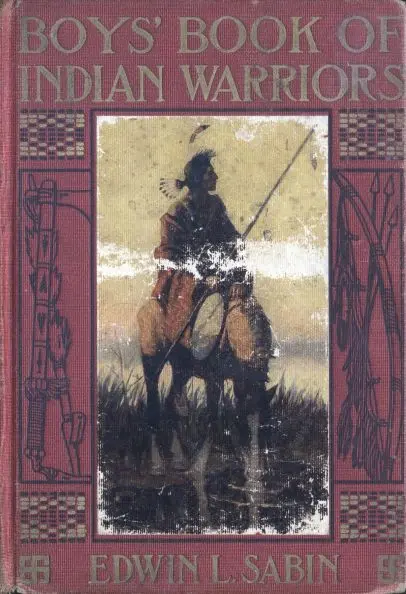
THE CLASSIC COLLECTION · 1918
"Boys' Book of Indian Warriors and Heroic Indian Women" by Edwin L. Sabin is a collection of historical accounts written in the early 20th century. This work explores the lives and exploits of notable Native American warriors and women throughout American history, highlighting their courage and resilience against external pressures and conflicts. The author aims to present the narrative from the perspective of the Native Americans, offering insights into their motivations and beliefs." "The opening of this collection introduces the warrior Piskaret of the Adirondack tribe, recounting his daring exploits during the 17th century as he takes on the formidable Iroquois. Set against the backdrop of a bitter and protracted conflict between various Native tribes and colonizing forces, Piskaret embarks on a solo reconnaissance mission, using cunning tactics to evade his enemies. The narrative vividly details his journey into enemy territory, where he stealthily attacks the Iroquois during the night, showcasing both his bravery and the harsh realities of the times. Through Piskaret’s story, the text sets the stage for a broader exploration of Native American history and identity."
Introduction adapted from the source catalogue; source summaries may be automatically generated.
Free to read · English · 82,783 words · No account needed
MAKE TIME FOR A GOOD BOOK
On by default. Untick to stop anonymous reading totals. Each page counts after 10 seconds in view. How this works.
Anonymous counting is on unless you have switched it off.
This night the warriors ferried the Ohio, above the camp, by means of
seventy-eight rafts. They worked hard, and formed for battle at
daybreak.
"We will make a line behind the Long Knives," ordered Cornstalk, "and drive them forward like bullocks into the two rivers."
Most of the Virginians were asleep in their tents, when, before sunrise, two of their hunters, seeking deer for breakfast, found the Indian army, already in battle array, and covering, as one of the hunters excitedly reported, "four acres of ground."
But these Virginians were no fools. Of the eleven hundred here, wellnigh every man had been a buckskin borderer, deadly with rifle, tomahawk and knife, and up to all Indian tricks. They were fairly drilled, too, as militia. A number of the officers had fought under Major George Washington, when on the fatal Braddock's Field, in 1755, the American Rangers had tried to save the day from the French, and from Pontiac's whooping warriors.
They all had marched for five weeks across one hundred and sixty miles of trackless mountain country, driving their pack-horses and their herds of beef cattle; now they rallied briskly to save their lives. It was nip and tuck.
From before sunrise until sunset raged the great battle of Point Pleasant, or the Big Kanawha. It was the first pitched battle between simon-pure Americans--but the Revolution was near and after this the Americans were to do their own fighting.
The lines were over a mile long, rarely more than twenty yards apart, frequently less than six yards apart, and sometimes mingling. The armies were equal.
Both sides fought Indian fashion, from behind trees and brush. Rifle met rifle, tomahawk met tomahawk, knife met knife. The air was filled with whoops and cheers. Able chiefs faced able chiefs--on the white American side there were leaders who soon became more famous in the Revolution and in the history of the new nation.
It was a long-famous battle. A ballad written upon it was frequently
sung, on the frontier:
Let us mind the tenth day of October,
Seventy-four, which caused woe;
The Indian savages they did cover
The pleasant banks of the O-hi-o.
The battle beginning in the morning,
Throughout the day it lashed sore,
Till the evening shades they were returning
Upon the banks of the O-hi-o.
Seven score lay dead and wounded.
Of champions that did face their foe,
By which the heathens were confounded,
Upon the banks of the O-hi-o.
Col. Lewis and noble captains
Did down to death like Uriah go.
Alas, their heads wound up in napkins,
Upon the banks of the O-hi-o.
Your reading position is saved on this browser. Take it to another device with a library code. Reading pages adapt to text, rather than matching a printed edition.
Edwin L. (Edwin Legrand) Sabin

Edwin L. (Edwin Legrand) Sabin

Edwin L. (Edwin Legrand) Sabin

Edwin L. (Edwin Legrand) Sabin
BEHIND THE BOOK
This eBook is for the use of anyone anywhere in the United States and most other parts of the world at no cost and with almost no restrictions whatsoever. You may copy it, give it away or re-use it under the terms of the Project Gutenberg License included with this eBook or online at www.gutenberg.org. If you are not located in the United States, you will have to check the laws of the country where you are located before using this eBook. Read the source licence.
The original source file, including credits and licence, is retained by this library. Request an original-format copy at no charge. Please include the book title and Project Gutenberg identifier #31131.
KEEP YOUR CURIOSITY GOING
Cécile Tormay

Moritz Busch
John L. Ransom
Frances Wright
Cécile Tormay

Mabel Potter Daggett